Beginner’s Guide to a Wood-Fired Sauna Visit

This guide covers what to expect on your first wood-fired sauna visit — from what to bring and how the heat works, to session structure, safety, and basic etiquette. It is written for someone who has never used a sauna before and wants to arrive prepared.
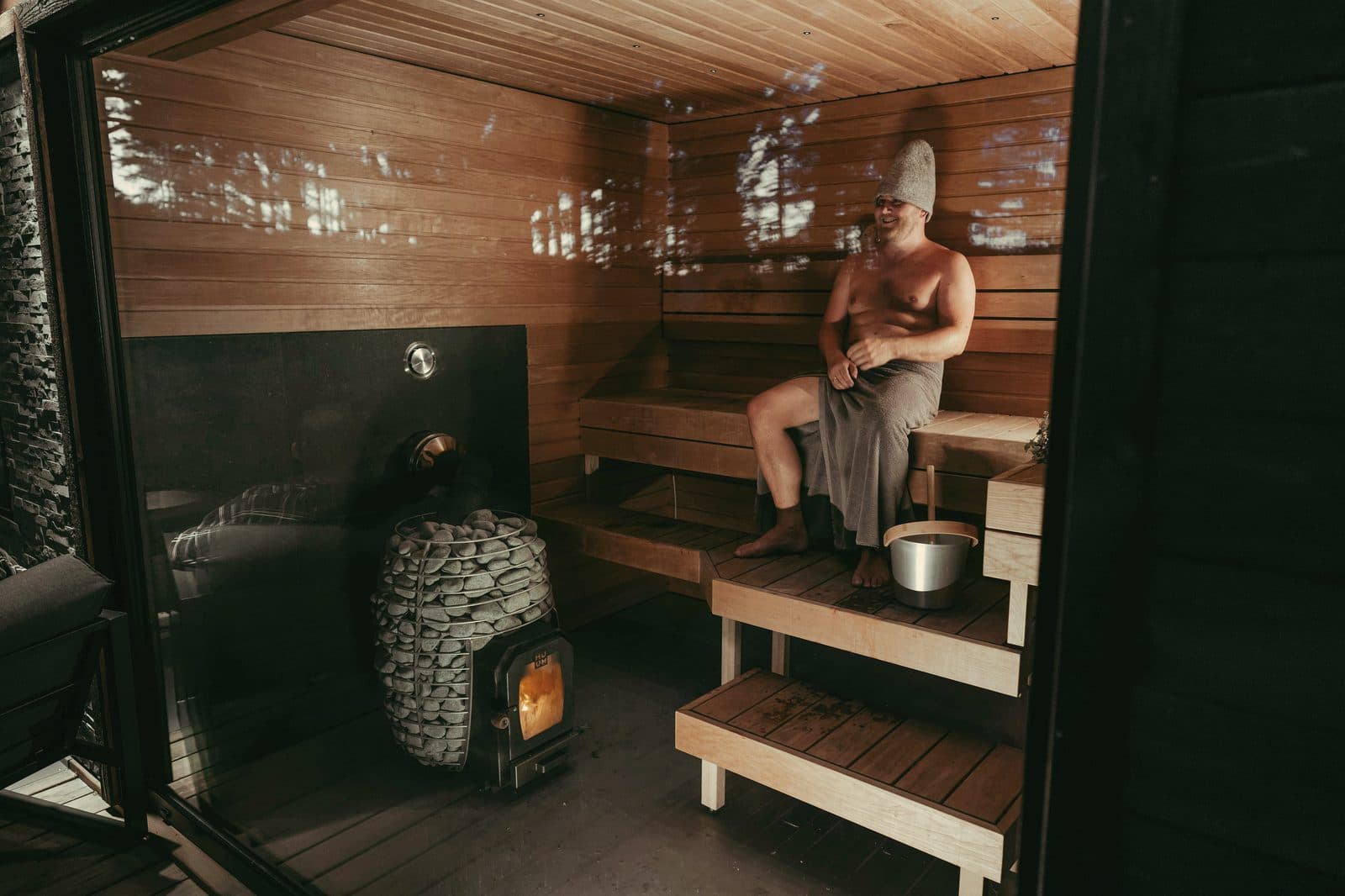
What is a wood-fired sauna
A wood-fired sauna uses a solid-fuel stove to heat a basket or tray of rocks. Logs burn inside the firebox, and the heat transfers to the stones. The room gradually reaches operating temperature — typically 80°C to 100°C — with relatively dry air (around 10–20% relative humidity).
Heating typically takes 45 minutes to over an hour, depending on fire-building skill, wood quality, airflow, and stove and room size. Some setups may take longer or shorter.
Many sauna enthusiasts describe the heat from a wood-fired stove as softer and more enveloping than electric alternatives. The crackling fire and faint wood aroma add a sensory dimension that electric heaters do not replicate. Whether that matters to you is personal — our wood-fired vs electric guide covers the practical differences in more detail.
Löyly is the Finnish word for the burst of steam created by throwing water over the hot rocks. It temporarily raises both the perceived temperature and the humidity in the room. Löyly is central to traditional Finnish sauna bathing.

What to bring
A typical packing list for a first visit:
- One or two towels — one to sit on inside the sauna, one for afterwards
- Swimwear — in most UK public saunas, a swimsuit and a clean towel is always appropriate. Some dedicated sauna venues may allow towel-only or nude bathing — check with the venue beforehand.
- A water bottle — you will need to drink before, during, and after
- Flip-flops or sandals
- A change of clothes
Remove all jewellery and watches before entering. Metal heats up quickly and can cause burns.
Before you go in
- Hydrate well before your session.
- Avoid heavy meals within 1.5 hours of using the sauna.
- Avoid alcohol before, during, and after. Alcohol impairs sweating and temperature regulation, increasing the risk of overheating, dehydration, and dangerous drops in blood pressure.
- Shower first. This removes dirt, lotions, and cosmetics that can clog pores or create unpleasant odours when heated. Dry off completely before entering — dry skin sweats more efficiently than damp skin.
What happens to your body
Skin temperature rises to about 40°C within minutes of entering a sauna. The average person loses roughly a pint (about 500ml) of sweat during a short session.
Your pulse rate can jump by 30% or more, allowing the heart to nearly double the amount of blood it pumps each minute. Most of that extra blood flow is directed to the skin.
None of this is harmful for most healthy adults, but it explains why hydration and moderation matter — especially on a first visit.
How to structure your session
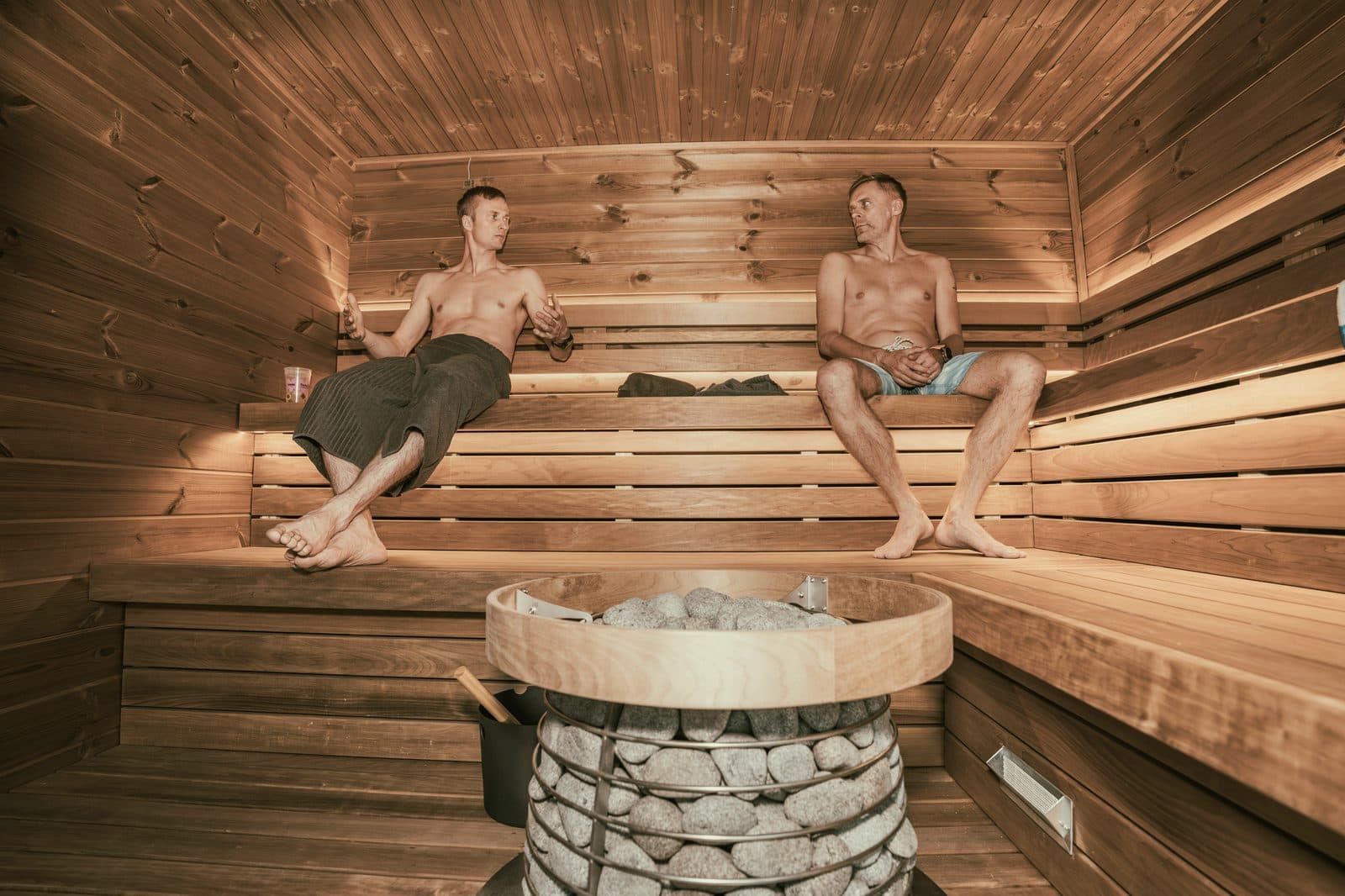
Traditional sauna bathing involves two to four rounds of heat, each followed by a cool-down and a rest period — not a single continuous sit.
Timing
Beginners should start with short rounds of around 5–10 minutes and build up gradually to 15–20 minutes as they become accustomed to the heat. Finns typically spend between 5 and 30 minutes per round, at 80–100°C.
Where to sit
The higher you sit, the hotter it will be, as heat rises. Beginners may prefer a lower bench.
Rest between rounds
Rest for at least 10–15 minutes between rounds. This allows your heart rate to stabilise and your body to cool down.
Hydration
Drink water between rounds. Harvard Health recommends two to four glasses of cool water after each sauna session.

Cooling down
Cool down gradually after exiting the sauna. A lukewarm shower is a good starting point for beginners.
Avoid jumping straight into cold water unless you are experienced. When you enter cold water after a sauna, blood vessels constrict and blood pressure rises. Returning to heat causes vessels to dilate again, which can cause dizziness or faintness, especially if you are dehydrated.
Cold water safety
Cold water shock can occur in water at 15°C or below, causing involuntary gasping, rapid heart rate, and raised blood pressure. It can happen to anyone, including young and healthy people.
If you do combine sauna with cold water:
- Enter the water gradually
- Keep your face out of the water until your breathing settles
- Never go alone
- Stay within your depth

Etiquette
- Always sit or lie on a towel. This is for hygiene — reducing infection risk — and to protect the wooden benches.
- Keep noise to a minimum in shared saunas. Quiet conversation or silence is the norm.
- Ask before pouring löyly. Before throwing water on the stones, check that other users are comfortable with it. Pour slowly and from a distance to avoid scalding from steam.
- Leave electronic devices outside. High heat can damage phones and tablets, lithium-ion batteries pose a fire risk in extreme heat, and screens disrupt the atmosphere.
Safety
Sauna bathing is generally safe for most healthy adults. Heatstroke from sauna use is rare, but the risks are real when basic precautions are ignored. In one UK case in 2025, prolonged sauna use without adequate hydration led to heatstroke requiring 12 days of hospital treatment.
Key safety rules
- If you feel dizzy, lightheaded, or nauseous, leave the sauna immediately.
- Stand up slowly when exiting to avoid sudden drops in blood pressure.
- Do not touch the heater, stove, or hot rocks — they can cause severe burns. The heater should be guarded to prevent accidental contact.
- Do not use a sauna when you are ill or have a fever. Wait until you have recovered.
Who should check with their GP first
People with the following conditions should consult their GP before using a sauna:
- Heart disease
- High or low blood pressure
- Diabetes
- Epilepsy
- Pregnancy
- Any condition involving impaired ability to perspire
Certain medications — including antihistamines, anticoagulants, vasoconstrictors, vasodilators, stimulants, and tranquillisers — may affect your body’s response to sauna heat. Check with your GP if you are taking any medication.
Children
Some UK venues allow children aged 8 and older to use the sauna under close adult supervision, for no longer than 15 minutes. Policies vary by venue — check before your visit.
What the research says
Research into the health effects of regular sauna use is growing, though most of the evidence comes from observational studies — meaning it shows associations, not proven cause and effect.
Regular sauna bathing (two to three times per week or more) has been associated with reduced risk of cardiovascular disease, high blood pressure, and sudden cardiac death. However, researchers have noted a lack of high-quality randomised controlled trials, and most studies have relied on small samples.
One large observational study, following Finnish men over 20 years, found an association between frequent sauna use (four to seven times per week) and a 66% lower risk of dementia compared to those using a sauna once weekly. This was an observational study in one population and cannot prove causation.
Regular sauna use is also commonly reported to support mental wellbeing and relaxation, though this is difficult to measure objectively.
First visit checklist
- Packed towels, swimwear, water bottle, sandals, change of clothes
- Removed jewellery and watches
- Eaten lightly, at least 1.5 hours before
- Avoided alcohol
- Showered and dried off before entering
- Starting on a lower bench
- First round: 5–10 minutes
- Resting 10–15 minutes between rounds
- Drinking water between rounds
- Cooling down gradually after each round
- Sitting on a towel at all times
Next steps
If this is your first visit, browsing the operator directory is a good place to start — you can filter by location and sauna type to find a wood-fired session near you.
If you have been a few times and are thinking about building your own, the builder directory lists UK sauna builders by region and build type.
Frequently asked questions
- Bring one or two towels (one to sit on, one for after), swimwear, a water bottle, flip-flops or sandals, and a change of clothes. Remove all jewellery and watches before entering — metal heats up quickly and can cause burns.
- Start with short rounds of 5–10 minutes and build up gradually. Traditional sauna bathing involves two to four rounds of heat, each followed by 10–15 minutes of rest. Do not sit through a single continuous session.
- A wood-fired sauna typically operates at 80°C to 100°C with relatively dry air (around 10–20% relative humidity). Throwing water on the hot stones (löyly) temporarily raises the perceived temperature and humidity.
- People with heart disease, high or low blood pressure, diabetes, epilepsy, pregnancy, or conditions affecting perspiration should consult their GP before using a sauna. Certain medications — including antihistamines, anticoagulants, and blood pressure drugs — may also affect your response to sauna heat.
- Beginners should cool down gradually with a lukewarm shower. Cold water shock can occur in water at 15°C or below, causing involuntary gasping and raised blood pressure. If you do use cold water, enter gradually, keep your face out until your breathing settles, never go alone, and stay within your depth.
- Löyly is the Finnish word for the burst of steam created by throwing water over hot sauna stones. It temporarily raises both the perceived temperature and humidity in the room and is central to traditional Finnish sauna bathing. In shared saunas, ask others before pouring water on the stones.
What should I bring to a sauna?
How long should a beginner stay in a sauna?
What temperature is a wood-fired sauna?
Is it safe to use a sauna if I have a health condition?
Should I use cold water after a sauna?
What is löyly?
Related guides
Wood-Fired vs Electric Sauna: What’s the Difference?
Practical comparison of wood-fired and electric saunas covering heat, running costs, installation, UK regulations, and which suits different settings.
Getting startedWhat to Wear to a Sauna in the UK
Swimwear, towels, footwear, and what to leave at home — a practical guide to sauna dress codes at UK venues.
Getting startedHow Often Should You Use a Sauna?
What the research says about sauna frequency, session length, and building a routine — without the overclaiming.
Browse the directory
The monthly digest
New saunas and new guides, once a month. No spam, unsubscribe any time.