How to Start a Mobile Sauna Business in the UK
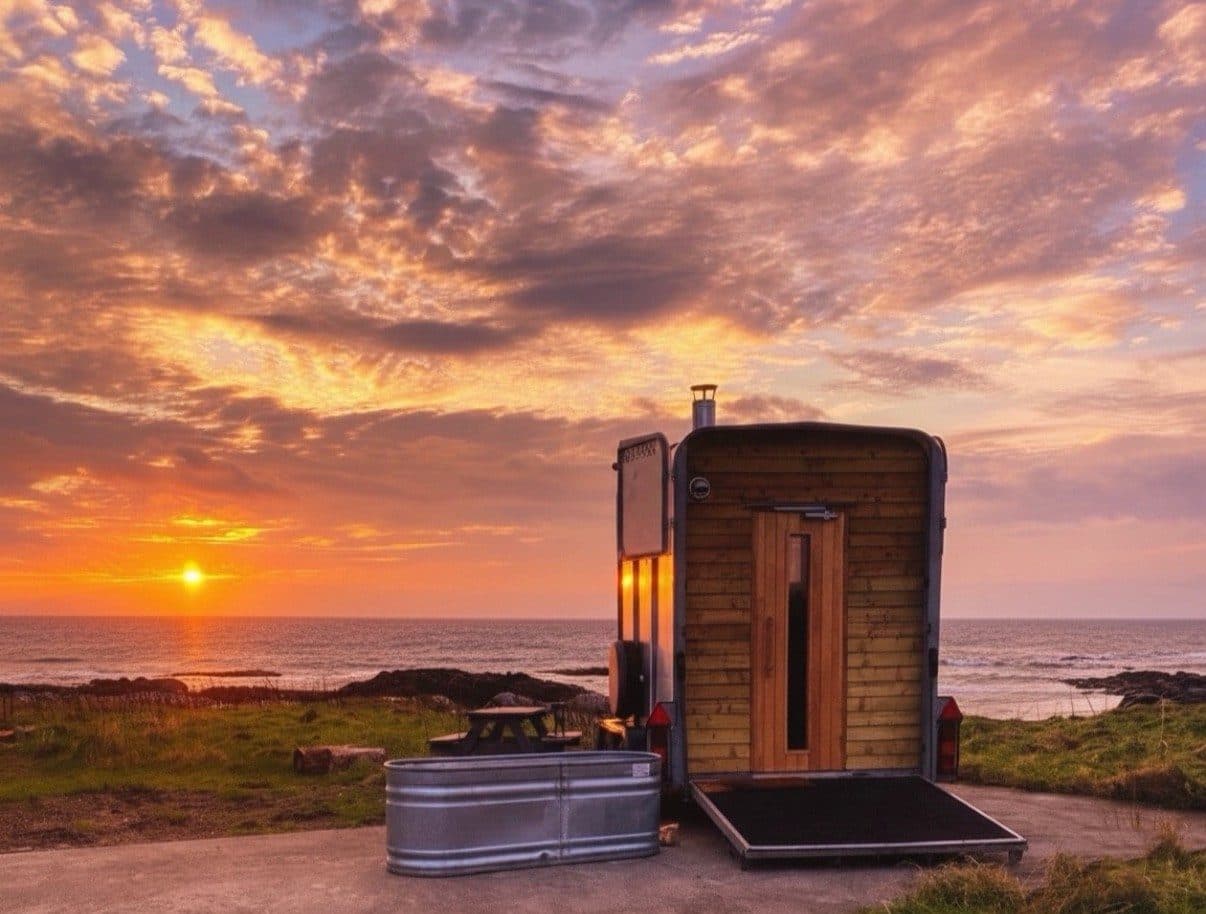
The UK mobile sauna market has grown from almost nothing in 2018 to well over 100 operators. Wood-fired saunas now run on beaches, lakesides, farms and at festivals across England, Scotland and Wales, with horsebox conversions, barrel trailers and purpose-built cabins all in regular commercial use.
The economics work. A mid-range horsebox conversion costing £15,000–£35,000 can break even within 12–18 months. But a mobile sauna business is, at its core, a logistics-and-compliance operation with a wellness product attached. You are moving a heated, fire-producing, customer-occupied unit on public roads, then operating it repeatedly on land you do not own. That creates a specific set of problems: towing legality, trailer compliance, site access, water hygiene, fire safety, greywater disposal and insurance gaps that only surface when something goes wrong.
This guide covers everything specific to mobile operations. It does not repeat general business setup advice (company formation, VAT, data protection) — that is covered in our general sauna business guide. Everything here is UK-specific, with real company names, real pricing from current operators, and flags on anything uncertain.
Trailer and unit options
The first decision — what type of mobile sauna to build or buy — determines your towing requirements, capacity, aesthetic appeal and total investment. Five formats dominate the UK market. For how these prices sit against domestic kits and installed cabins, see our breakdown of what a sauna costs in the UK.
Barrel saunas on trailers
The most recognisable format. A 3.5m barrel seats roughly six people, weighs 850–1,200 kg on a single-axle trailer, and offers efficient heat circulation from the curved walls. They photograph well and customers understand them immediately. The downsides: limited headroom at the edges, barrel boards can shift during transport on rough roads, and there is little flexibility in the interior layout. Prices from UK suppliers start around £16,000 (Nuovo Luxury) and rise to £25,000+ from makers like Barrel Sauna UK in Wales.
Cube and cabin saunas
The most common format for high-throughput commercial operations. Purpose-built rectangular cabins on galvanised trailers offer full headroom, proper two-tier bench layouts, panoramic windows and often an integrated changing area. Sauna Craft’s LARIX model seats 8–10 people with a 3.4m hot room, Narvi wood stove and 400W solar system for fully off-grid operation. Heartwood Saunas in Wales builds 5- and 8-person mobile cabins using FSC-certified Welsh timber and HUUM 17kW stoves. These units weigh 1,500–2,500 kg and almost always require a twin-axle braked trailer. Prices range from roughly £25,000 to £65,000 depending on specification.
Horsebox conversions
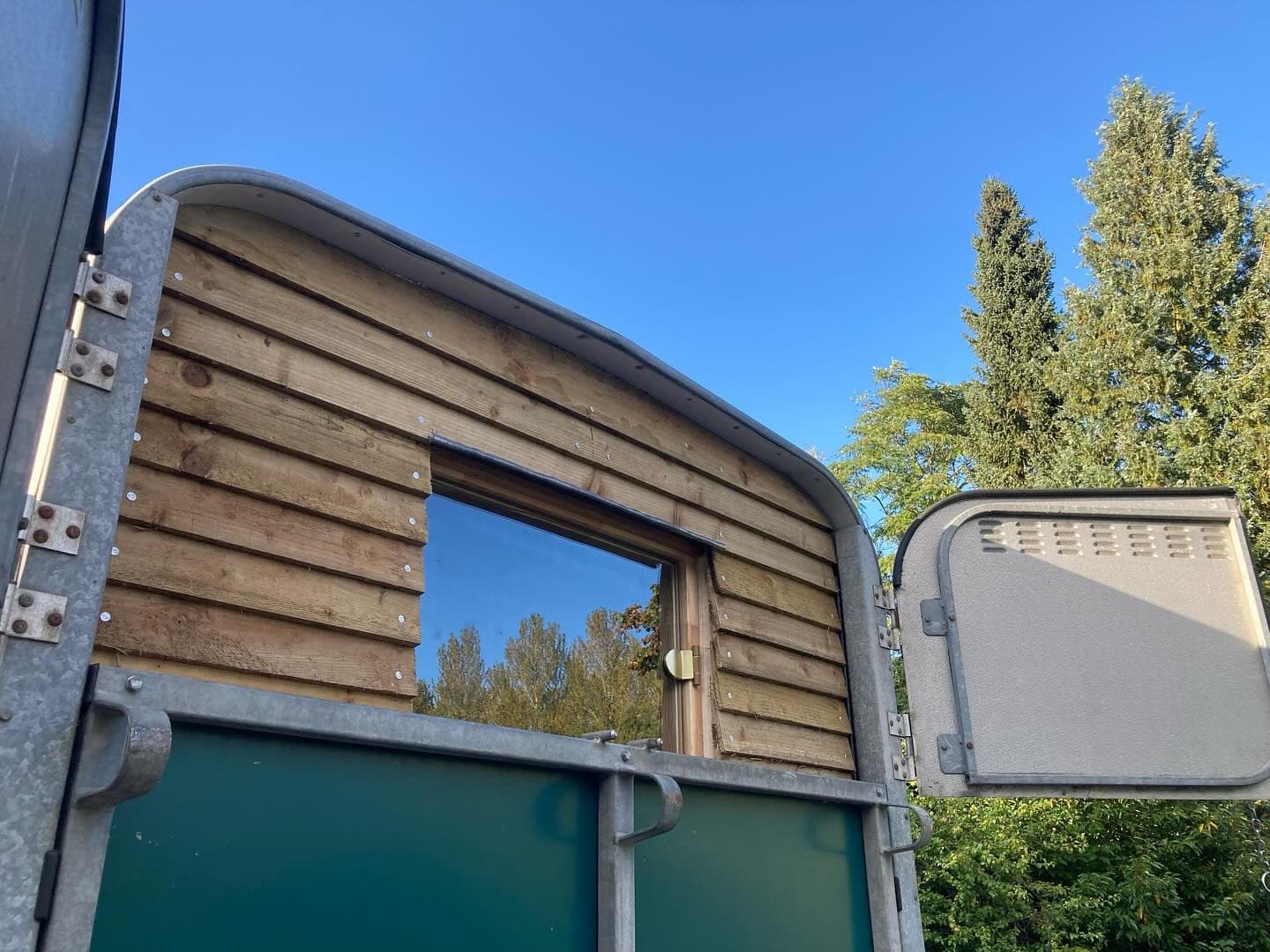
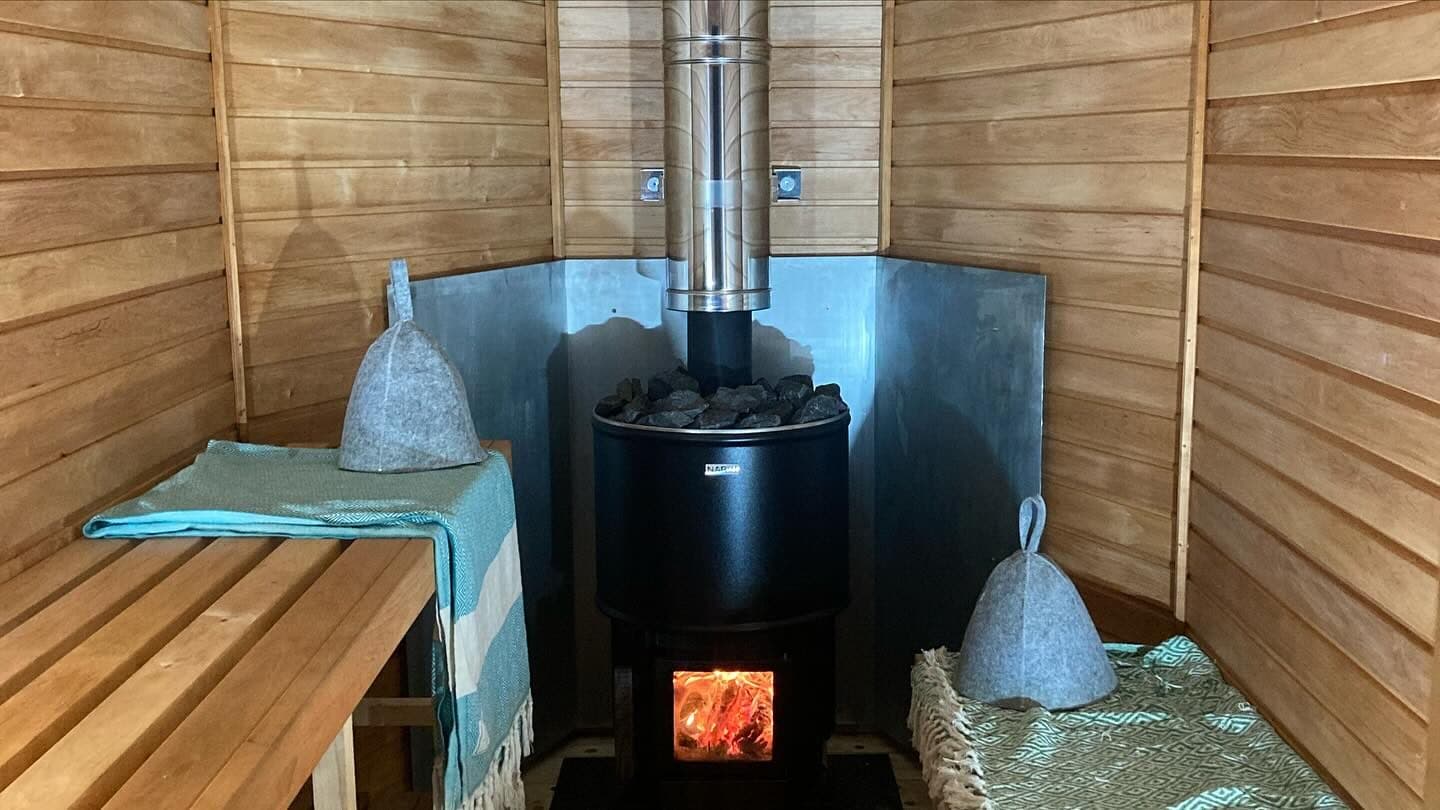
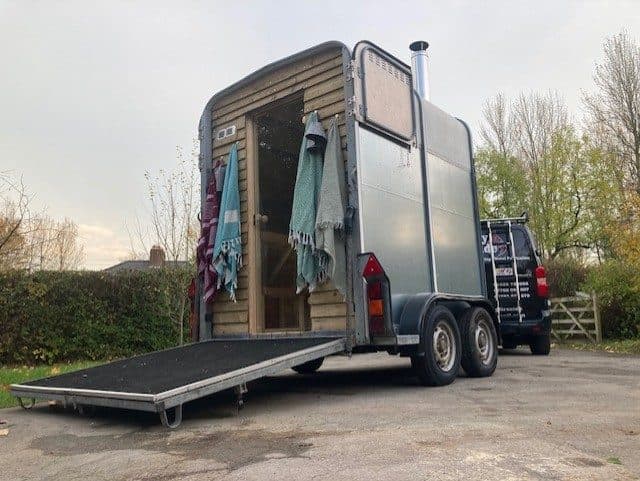
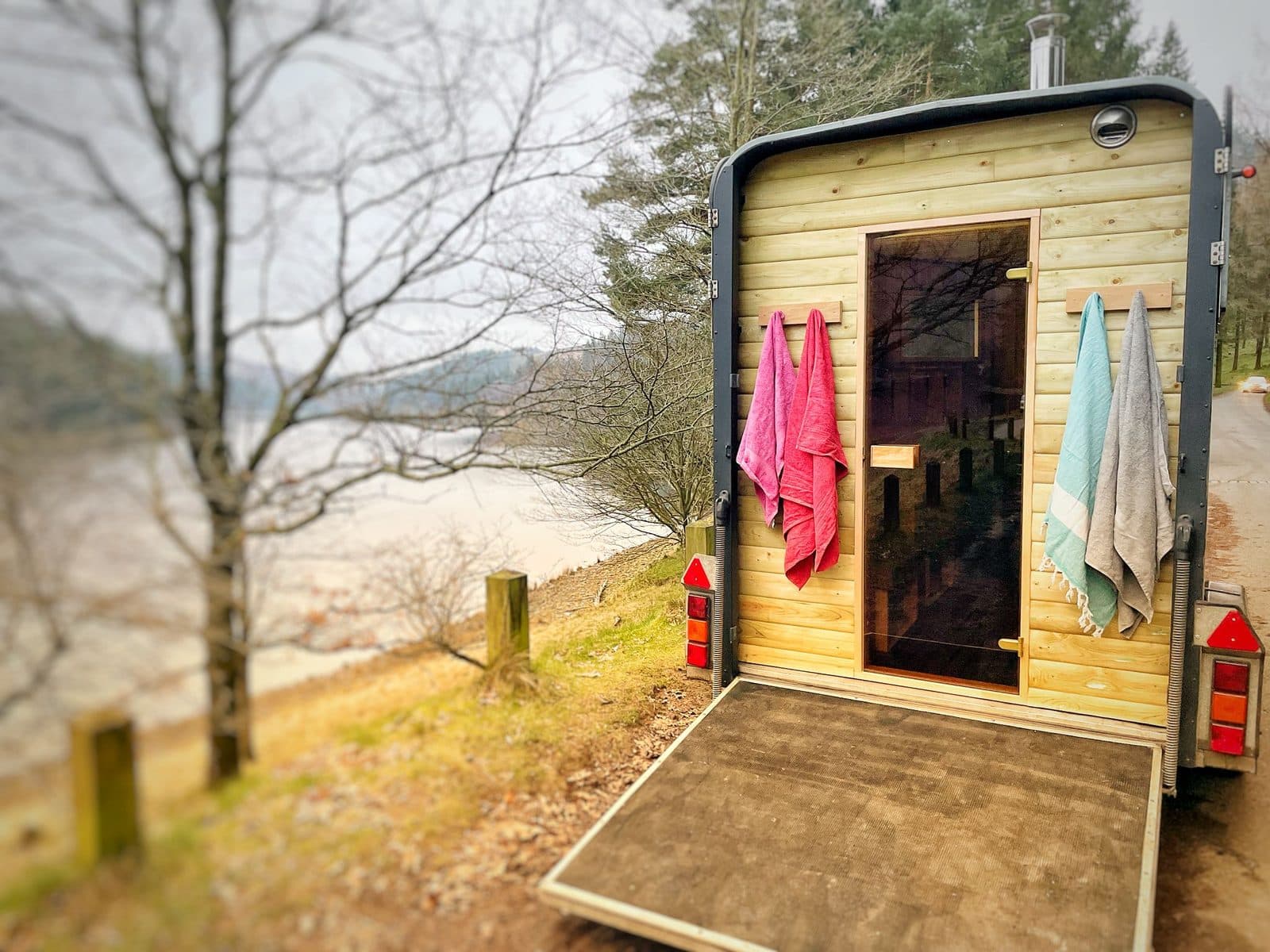
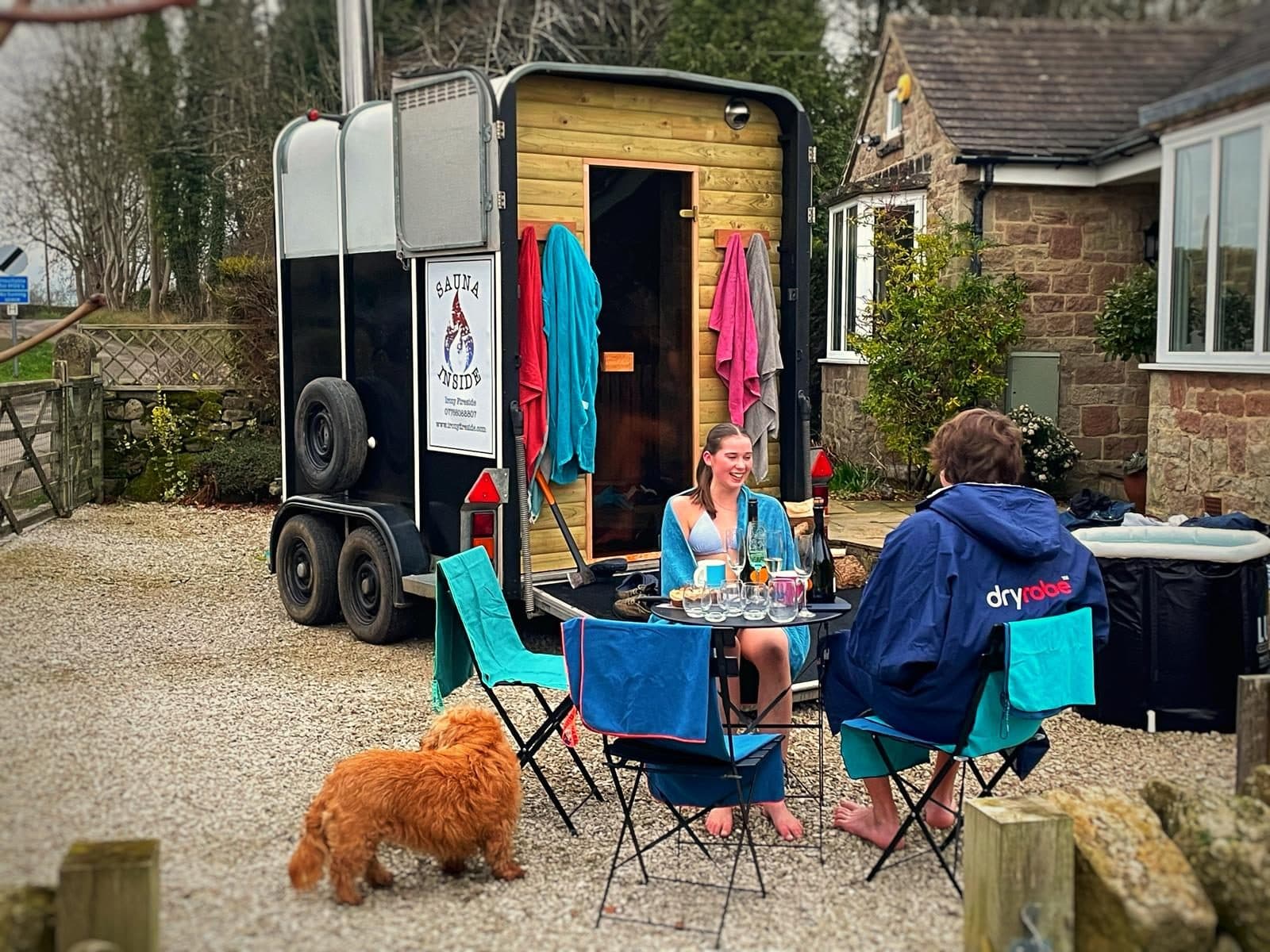
The workhorse of the UK mobile sauna scene. Operators like Sauna Box HQ (Norfolk), Shoreline Sauna (Dorset) and Löyly Sauna (Norfolk) convert Ifor Williams 505 and 510 horseboxes into wood-fired saunas. The chassis is already road-legal, the suspension is proven, and second-hand donor boxes cost £1,500–£5,000. A professional conversion runs £15,000–£40,000 (Sauna Box HQ charges £29,000–£33,000 plus VAT; Shoreline’s guide price is £15,000). A confident DIYer can complete a conversion for £5,000–£15,000 in materials. Capacity is typically 4–8 people. The aluminium and composite panels of a horsebox are resistant to salt spray corrosion, making them well suited to coastal operations.
Container conversions
Extreme durability and high capacity — Skotlanti Saunas in Glasgow builds a 12-person container sauna for £49,000 including VAT. But containers are not easily towable. Moving one requires a flatbed lorry and crane, making them better suited to semi-permanent sites rather than true mobile operations.
Sauna tents
The lowest-cost entry point. PortaSauna (Portsmouth) sells portable sauna tents seating 8–10 people and has built a network of over 30 operators through its PortaSauna Beyond programme. Several successful UK businesses — including Wild Sauna Club (Leicestershire) and H3O Beach Sauna (North East) — started with tent-based setups before investing in trailers. A tent lets you test sites, build a customer base and prove the model before committing to a £20,000+ trailer build.
UK manufacturers
The UK now has a healthy ecosystem of mobile sauna builders. At the premium end, Heartwood Saunas (Powys, Wales) prices from £54,000–£62,000 + VAT. Sauna Craft (Southwest) builds the LARIX from £38,000 + VAT. Dorset Saunas offers a 10-person festival-spec build at £46,000 + VAT with IVA-approved trailer. In the mid range, Sauna Box HQ and Löyly Sauna (both Norfolk) and Shoreline Sauna (Dorset) specialise in horsebox conversions. Timber Team UK sits at the entry level from £10,000 including VAT for a small barrel on a trailer. Lead times are typically 8–16 weeks for a bespoke commercial build.
Importing from Europe
Importing directly from Baltic states remains cheaper on unit cost. Lithuanian and Estonian manufacturers like TimberIN and Baltresto deliver barrel saunas to the UK from roughly €3,800–€8,000 for the sauna body, plus shipping. After 20% UK import VAT and customs clearance, a €6,000 Baltic barrel lands in the UK for approximately £6,700 — compared to £12,000–£18,000 for a similar UK-supplied unit. Customs duty on prefabricated wooden structures (HS Code 9406) is typically 0% under the UK Global Tariff. The trade-off is remote after-sales support, potential assembly requirements for flat-pack deliveries, and the need to navigate IVA (Individual Vehicle Approval) for the trailer if it was not built to UK standards.
Trailer specifications
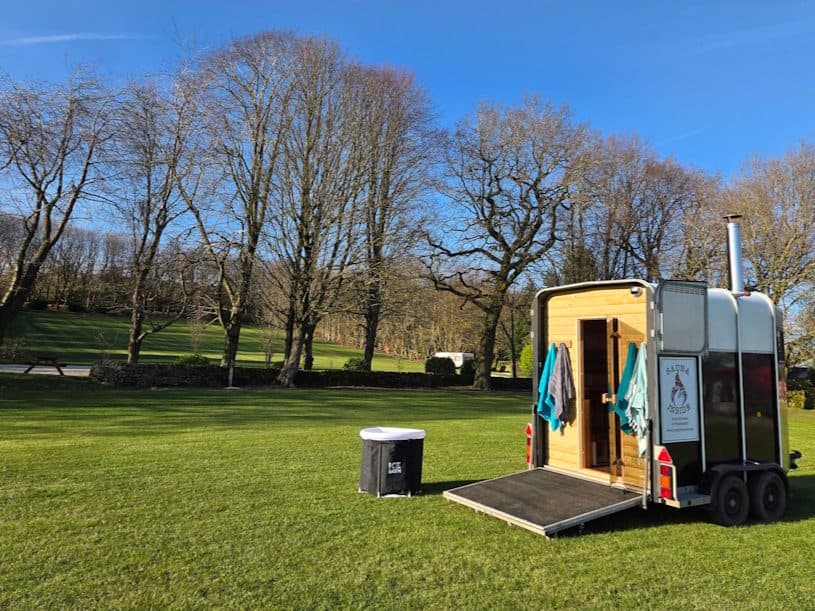
Almost all mobile saunas exceed 750 kg and therefore require a braked trailer under UK law. Common chassis choices include Ifor Williams (dominant for horsebox conversions), Brian James for heavier custom builds, and fully bespoke galvanised chassis from premium builders. Typical laden weights: 850–1,200 kg for a small barrel on a single axle, 1,200–1,800 kg for a horsebox conversion, and 1,800–2,500 kg for a large cube on twin axles. These weights drive every downstream decision about towing vehicle, licence requirements and insurance.
Towing and transport
UK towing law changed significantly in December 2021 when the government abolished the separate B+E driving test. Understanding what your licence actually permits — and what your vehicle can actually handle — is essential before you buy a trailer.
Licence categories
Under current rules, all Category B licence holders can tow trailers up to 3,500 kg MAM (Maximum Authorised Mass) without any additional test. This means the vast majority of mobile sauna operators need nothing beyond a standard car licence.
For drivers who passed their test after 1 January 1997, the automatic B+E entitlement allows a trailer up to 3,500 kg MAM with a combined vehicle-plus-trailer weight not exceeding 7,000 kg. Drivers who passed before 1997 can tow combinations up to 8,250 kg under their grandfathered C1+E entitlement.
A critical point: it is the plated Maximum Authorised Mass (the weight on the manufacturer’s plate) that counts for licence purposes, not the actual laden weight at the time. Even if your actual combined weight is under the limit, if the MAM ratings of vehicle and trailer exceed your licence category, you are technically in breach.
Tow vehicle and the 85% rule
The widely cited 85% guideline (developed by the National Caravan Council) recommends that the trailer’s fully laden weight should not exceed 85% of the tow vehicle’s kerbweight for inexperienced towers, or 100% for experienced towers. This is not law, but exceeding it can complicate insurance claims and makes towing more demanding.
For mobile saunas weighing over 1,500 kg, a mid-size or large 4x4 is the practical minimum. Common choices among UK operators include the Land Rover Defender, Ford Ranger, Toyota Hilux and Volkswagen Amarok, all offering towing capacities around 3,500 kg. Nose weight — the downward force the trailer coupling exerts on the tow ball — should sit between 5–7% of the laden trailer weight, typically 75–105 kg for a mobile sauna.
Speed limits and road rules
When towing, UK speed limits drop to 60 mph on motorways and dual carriageways and 50 mph on single carriageways. You cannot use the outside lane of a three-lane motorway. Fuel consumption increases by 20–50% when towing a box-shaped mobile sauna — factor this into operating costs and delivery pricing.
Trailer registration
For domestic UK use only, there is no compulsory DVLA registration requirement for trailers. The trailer simply displays the towing vehicle’s number plate. However, if you plan to tow your sauna abroad — to European festivals, for instance — all trailers over 750 kg must be registered with DVLA before leaving the UK. Registration costs £26 and the certificate lasts ten years.
Light trailers under 3,500 kg gross do not require an MOT in Great Britain, but must be maintained in roadworthy condition at all times. DVSA roadside checks have found that four in ten small trailers stopped had serious safety issues — annual professional inspections are strongly recommended and may be required by insurers.
Mandatory equipment
To remain road-legal, trailers must have EC type-approved tow bars (mandatory for vehicles registered after August 1998), functional lighting boards, and breakaway cables on braked trailers. Maximum trailer width is 2.55m. Maximum trailer length is 7m body length (excluding drawbar) when towed by a vehicle up to 3,500 kg MAM — easy to accidentally breach if you design a long cabin plus A-frame plus steps.
Pitching and site access
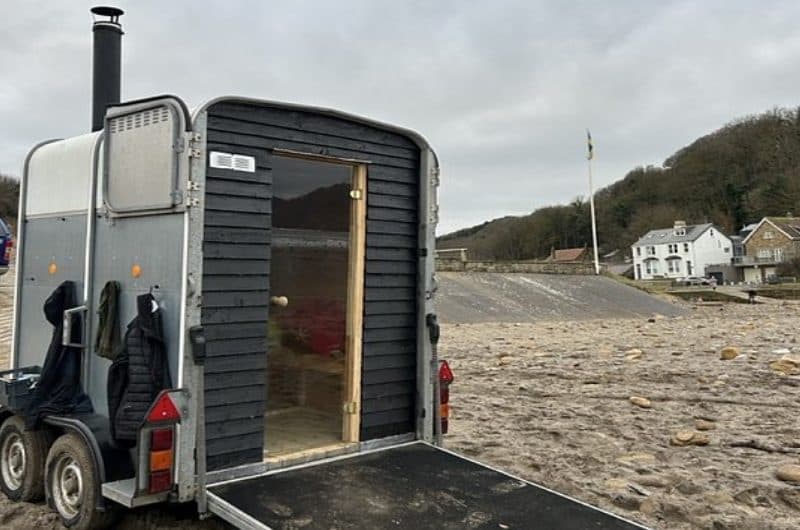
Where you park the sauna determines whether the business works. Coastal and waterside locations dominate the UK mobile sauna scene because the hot-to-cold cycle — sauna then sea dip — is the core selling proposition. Cornwall alone has at least eight mobile sauna operators on its beaches.
How operators find pitches
The most successful UK operators secure pitches through four main routes.
Council concession programmes are used for public land — beaches, promenades and parks. Adur & Worthing Councils run one of the most structured schemes, with applications opening in January for an April start. Their leisure concession fees from April 2026 are £1,440 per season (summer or winter), with single-use permits at £65 per day. Cornwall Council has released eight separate tenders for mobile sauna pitches on its beaches. Fife Council grants concessions on five-year terms.
Private landowner agreements — with farms, campsites, holiday parks and estates — typically take the form of a licence to occupy (not a lease, which would create security of tenure complications). Arrangements include flat monthly pitch fees, revenue share models (often 10–15% of takings), or free pitches where the sauna adds value to the host venue.
Event and festival partnerships provide high-revenue but concentrated income. Some operators have worked festival VIP areas and large music events, while others supply saunas for weddings, corporate wellness days and sporting events.
Partnership with complementary businesses — surf schools, outdoor swimming venues, yoga studios, campsites — is increasingly common and can provide an anchor pitch without the formality of a council concession.
The 28-day rule
Part 4, Class B of the General Permitted Development Order (GPDO) 2015 allows temporary use of land for any purpose for up to 28 days per calendar year without planning permission. This is the mechanism most mobile sauna pop-ups rely on. But the nuances catch operators out.
First, the 28 days applies per planning unit — a single definable land holding — not per field or parcel. Moving a sauna around different fields on the same farm does not reset the clock if those fields form one planning unit.
Second, setup and teardown time counts. Case law has established that the entire period the land is excluded from its normal use counts toward the 28 days, not just the trading hours.
The practical implication is stark: operating every weekend at the same site would consume 28 days in roughly seven weeks, after which you are in breach of planning control. Weekly use through a season absolutely requires either temporary planning permission or a council concession that includes planning consent. Beach Box Spa in Brighton followed exactly this pathway — starting under permitted development rights, then obtaining temporary planning permission, then negotiating a longer council licence.
Year-on-year use of the same site, even within the 28-day limit, may also trigger enforcement if a planning authority argues the activity has become the established use of the land. The enforcement time limit for breaches is now ten years following the 2023 Levelling-up and Regeneration Act.
Planning rules differ across England, Scotland, Wales and Northern Ireland. Scotland uses the Civic Government (Scotland) Act 1982 for street trading, meaning a licence may be required even where planning permission is not. Do not assume the England GPDO position applies UK-wide.
Site requirements
A mobile sauna trailer needs a minimum 3m-wide access route (3.5m preferred), level ground within 2–3 degrees, and sufficient space for a turning circle of approximately 12–15m diameter for a vehicle-and-trailer combination. Hardstanding is ideal. Grass works in summer on well-drained ground but becomes problematic in winter; HDPE ground protection mats provide a reusable solution for soft ground at roughly £50–£100 per panel. Maintain at least 3 metres clearance from vegetation, fences and structures for fire safety.
A pre-deployment visit with the tow vehicle is strongly recommended. Operators who skip this step regularly discover that delivery vans, emergency vehicles or guests cannot move safely around the installed trailer.
Water, waste, and utilities
Operating off-grid means managing water, waste, fire and power without permanent infrastructure. How well you handle this determines which sites are viable and how smoothly sessions run.
Water supply
A typical mobile sauna day — two to three sessions with a cold plunge — requires approximately 500–1,200 litres of water. The dominant solution is a 1,000-litre IBC (Intermediate Bulk Container). Reconditioned IBCs cost £40–£80 for non-potable use; new food-grade IBCs for body-contact water run £265–£355. A full IBC weighs approximately one tonne, so vehicle payload limits must be considered when transporting water to site.
The biggest water demand is the cold plunge. Portable inflatable plunge pools hold 250–650 litres per tub. Many coastal operators sidestep the issue entirely by using the sea.
Where mains water is available (campsites, event venues), a standard hose connection simplifies everything. For remote sites, mobile water bowsers are available from roughly £1,500 for a 1,000-litre road-towable unit.
Greywater disposal
This is an area where regulations are clear in principle but awkward in practice for mobile operations. Under the Environmental Permitting Regulations 2016, any discharge of greywater to a watercourse or to ground requires either an Environment Agency permit or must fall within an exempt activity. There is no specific exemption for temporary mobile commercial operations.
The safest legal position is to collect all greywater in a tank and dispose of it via the public foul sewer (with water company consent) or through a licensed waste carrier. Tanker removal typically costs £100–£200 per collection. In practice, the volumes from a mobile sauna are small (100–300 litres per session of mild soapy water), and many operators discharge to ground on private land with landowner consent. This is technically non-compliant but widely practised. Operators should seek written guidance from the Environment Agency for their specific circumstances.
Fire safety
Wood-fired mobile saunas require a documented fire risk assessment covering ignition sources, fuel storage, clearance distances and emergency procedures. Key requirements include:
- A chimney spark arrestor — standard ¾-inch metal mesh cap, cleaned after every few sessions to prevent creosote buildup
- At least one Class A fire extinguisher positioned outside the sauna entrance (6-litre water or 2kg+ ABC dry powder), plus a fire blanket near the stove
- Chimney clearance of at least 600mm above the roof
- Fresh air ventilation with a low inlet near the floor and a high outlet near the ceiling
- A carbon monoxide detector meeting BS EN 50291:2010 standards
In urban areas, check whether the site falls within a Smoke Control Area. Burning wood is restricted in these zones unless the appliance is DEFRA-exempt, and no wood-fired sauna stove is on the exempt list in any UK nation — so a wood-fired unit has no compliant route inside one. Worth checking pitch by pitch, since it can rule out an otherwise good urban site.
Power
Wood-fired mobile saunas need remarkably little electrical power — typically 30–100 watts total for LED lighting, a small water pump, phone charging and a speaker. A 100Ah 12V leisure battery (£80–£150 for AGM, £250–£500 for lithium) provides more than enough for a full day. A 100–200W solar panel keeps the battery topped up between sessions, even in UK conditions. Total cost for a basic solar-and-battery system: roughly £150–£300.
Generators are rarely needed and best avoided — the noise undermines the experience, and some council concessions explicitly prohibit them in noise-sensitive areas.
Operations and logistics
How many sessions you can run, how many people you can put through them, and what that costs in time and maintenance — these are the numbers that determine whether the business works day to day.
Session capacity
A typical mobile sauna seats 6–8 people per session, with sessions running 55–60 minutes for communal bookings and 1–2.5 hours for private hire. With 15-minute turnarounds for cleaning and restocking the stove, an operator can realistically run 5–6 communal sessions per day, putting 30–36 people through the sauna.
Total on-site time for a day of five sessions — including setup, stove firing, trading and teardown — runs approximately 7–8 hours. The stove needs 30–60 minutes to reach operating temperature before the first session (longer for larger units with heavy stone loads), and teardown takes 30–45 minutes plus cooling time.
Seasonal patterns
The seasonal pattern is counterintuitive: autumn and winter (October to March) are peak months for communal sessions. The appeal of heat therapy is strongest in cold, dark weather, and the regular community of cold-water swimmers drives repeat bookings through winter. Summer shifts toward private hire — hen parties, weddings, corporate events and festival deployments.
Year-round operators bridge both seasons. Coastal locations tend to see lower midday demand in hot summer weather but remain busy for early morning and evening sessions.
Solo operation and staffing
Most small UK mobile sauna operators run solo or as a couple. During sessions, the operator stokes the stove (adding logs every 20–30 minutes), greets guests, delivers safety briefings, manages cold plunge logistics, handles payments and cleans between sessions.
A second person becomes necessary for events with 20+ attendees, multi-day festival deployments, or when running multiple sessions per day where fatigue becomes a factor. Wild Scottish Sauna in Fife has scaled to five saunas with 18 part-time sauna hosts, each working one day per week as supplementary income. If you employ anyone — even part-time — employers’ liability insurance becomes a statutory requirement.
Maintenance
The UK’s wet climate makes maintenance non-negotiable.
- Exterior timber: treat with protective oil at least twice a year. Thermowood resists decay better than untreated spruce but still needs treatment
- Interior: ventilate the sauna with the door open after every use to prevent mould. Rinse and brush benches daily
- Stove: clear ash after each use. Full chimney sweep annually (£60–£100), more often with heavy commercial use
- Sauna stones: replace every 1–2 years under heavy use
- Trailer: check tyres, wheel bearings, brakes, lights and breakaway cable before every tow. Professional service annually. In coastal environments, salt air accelerates corrosion significantly
Typical annual maintenance costs run £500–£1,500 across chimney sweeping, timber treatment, stone replacement, stove gaskets and trailer servicing.
Storage
Between deployments, operators typically store the trailer on hardstanding at home, a farmyard or a light industrial yard. Costs run £30–£150 per month depending on whether you use open ground or a covered barn. Covered storage is strongly recommended to reduce weather damage. Insurers may require minimum security standards (hitch locks, wheel clamps) and disclosure of the storage postcode.
Revenue and unit economics
Pricing
Research across dozens of UK operators reveals consistent pricing bands.
Communal sessions typically run £12–£18 per person for 55–60 minutes. Fire, Salt & Sea in Worthing charges £15. Steam Punk Sauna in Folkestone charges £12. Community Sauna Baths in London charges £9.50–£16.50 depending on peak versus off-peak timing.
Private hire pricing varies by model. On-site private hire (customer visits your pitch) runs £50–£130 for a 1–2 hour exclusive session. Delivered private hire (you bring the sauna to the customer) typically charges £250–£300 per day, £450–£500 per weekend and £800 per week, with delivery charges of 75p–£1.00 per mile.
Corporate and event bookings command £500–£1,500 per day depending on group size, duration and add-ons. Festival revenue can reach £2,000–£5,000 per weekend from high-throughput communal sessions.
Revenue projections for a single unit
Three realistic scenarios based on published UK pricing:
- Conservative (part-time drop-off): 1–2 private hires per week. £300–£600 weekly gross, £15,000–£20,000 annual gross
- Medium (communal plus occasional private): 3–4 trading days, 4–5 sessions per day. £1,200–£1,800 weekly gross, £35,000–£50,000 annual gross
- Optimistic (full-time communal plus events and corporate): 5+ days, festivals, corporate work. £1,500–£2,500 weekly gross, £60,000–£80,000 annual gross
The communal model generates higher per-session revenue than drop-off hire — six people at £15 equals £90 per session with near-zero marginal cost per additional guest — but requires the operator to be present throughout. The drop-off model is more passive but caps revenue at one booking per weekend unless you own multiple units.
Cost structure
Monthly operating costs for a medium-scenario single unit break down roughly as follows: firewood £80, transport fuel £150, insurance £100, pitch fees £250, maintenance £80, storage £75, marketing £100, tow vehicle costs £200, consumables £75 and booking platform fees £50 — totalling approximately £1,160 per month.
With average communal session revenue of £90 and variable costs of roughly £8 per session, each session contributes £82 toward fixed costs. That means 14 sessions per month (roughly 3.5 per week) covers monthly overheads.
Break-even and payback
At a typical mid-range initial investment of £20,000–£30,000 (sauna unit, tow vehicle contribution, cold plunge, accessories, branding and first-year insurance), the payback period runs 12–24 months for an operator generating £3,000–£5,000 net monthly income.
Gift vouchers are a significant additional revenue line for many operators. The 15–20%-of-annual-revenue figure repeated around the trade is a rule of thumb rather than a measured one — we can find no UK survey behind it — but the seasonal concentration around Christmas, birthdays and Mother’s Day is consistent across the operators we have spoken to.
When a second unit makes sense
Add a second unit when your first is consistently booked four or more days per week and you are turning away business — typically in year two. A second sauna (roughly £12,000–£18,000 for the unit alone, using your existing vehicle and infrastructure) adds revenue with proportionally lower incremental costs since insurance, marketing and vehicle costs do not double.
The constraint is staffing: two attended communal units require an employee at the second location. A hybrid model — one operator-attended communal pitch plus one self-service drop-off unit — is manageable solo. Beach Box Spa now runs three saunas across two locations; Wild Scottish Sauna operates five saunas with 18 part-time hosts.
Insurance
General business insurance does not cover the specific risks of wood-fired mobile operations. The combination of fire risk, transit exposure, public access and water systems creates a specific risk profile that requires specialist cover. Our guide to sauna business insurance goes through each policy type and what UK insurers actually ask for.
Essential cover
A mobile sauna operator needs, at minimum:
- Public liability insurance — £5 million is the practical minimum. Most councils, venues and events require it. Aberdeenshire Council mandates £5m for its mobile sauna street trading licence
- Employers’ liability — legally required if you employ anyone (statutory minimum £5 million, with fines of up to £2,500 per day for non-compliance)
- Product liability — covers claims from products used or sold during sessions. Often bundled with public liability
- Trailer and equipment insurance — standard vehicle insurance only covers third-party liability for an attached trailer, not damage, theft or fire to the trailer itself
- Goods in transit — covers damage to the sauna during transport, a distinct risk not covered by standard public liability
Event-specific cover may also be required by festivals and venues, commonly including cancellation protection.
UK brokers who cover mobile saunas
The specialist market is small but growing. Insurelink (Lowestoft, Norfolk) operates the dedicated saunainsurance.co.uk website and is the most prominent UK specialist — recommended by the British Sauna Society, they cover the sauna, towing vehicle, cold water therapy equipment and wild swimming activities. JMG Sandbach (Manchester) offers comprehensive mobile sauna packages including public liability, employers’ liability, goods in transit, business interruption and product liability.
The British Sauna Society lists five brokers on its insurance directory: Insurelink, Park Insurance (Bristol, 30+ years in specialist leisure insurance), Blythin and Brown, Balens (specialist in health and wellbeing professionals) and Beech Tree Insurance.
Premiums
Exact premiums require bespoke quotes, but indicative ranges from market data suggest: public liability (£5m) at £200–£500 per year, a combined business package at £500–£1,500 per year, and trailer insurance at £150–£400 per year depending on value. Wood-burning stoves attract higher premiums than electric due to fire risk. Cold water therapy and wild swimming activities must be explicitly declared.
Exclusions that catch operators out
Several insurance gaps only surface at claims time:
- Operating outside policy terms — trading at unlisted locations, exceeding stated capacity, or offering services not disclosed to the insurer (breathwork, guided cold exposure) can void cover entirely
- Security requirements — failing to meet specified trailer security measures (hitch locks, wheel clamps) can result in theft claims being rejected
- Alcohol-related incidents — remain a risk area even where operators prohibit drinking. Multiple UK operators explicitly reserve the right to refuse intoxicated guests without refund
- Health screening — claims where the operator failed to administer a health screening questionnaire may be challenged
Customer health waivers are worth having but carry a crucial legal limitation: under the Unfair Contract Terms Act 1977, a business cannot exclude or restrict liability for death or personal injury caused by negligence. No waiver overrides this.
Marketing and customer acquisition
Instagram and word of mouth
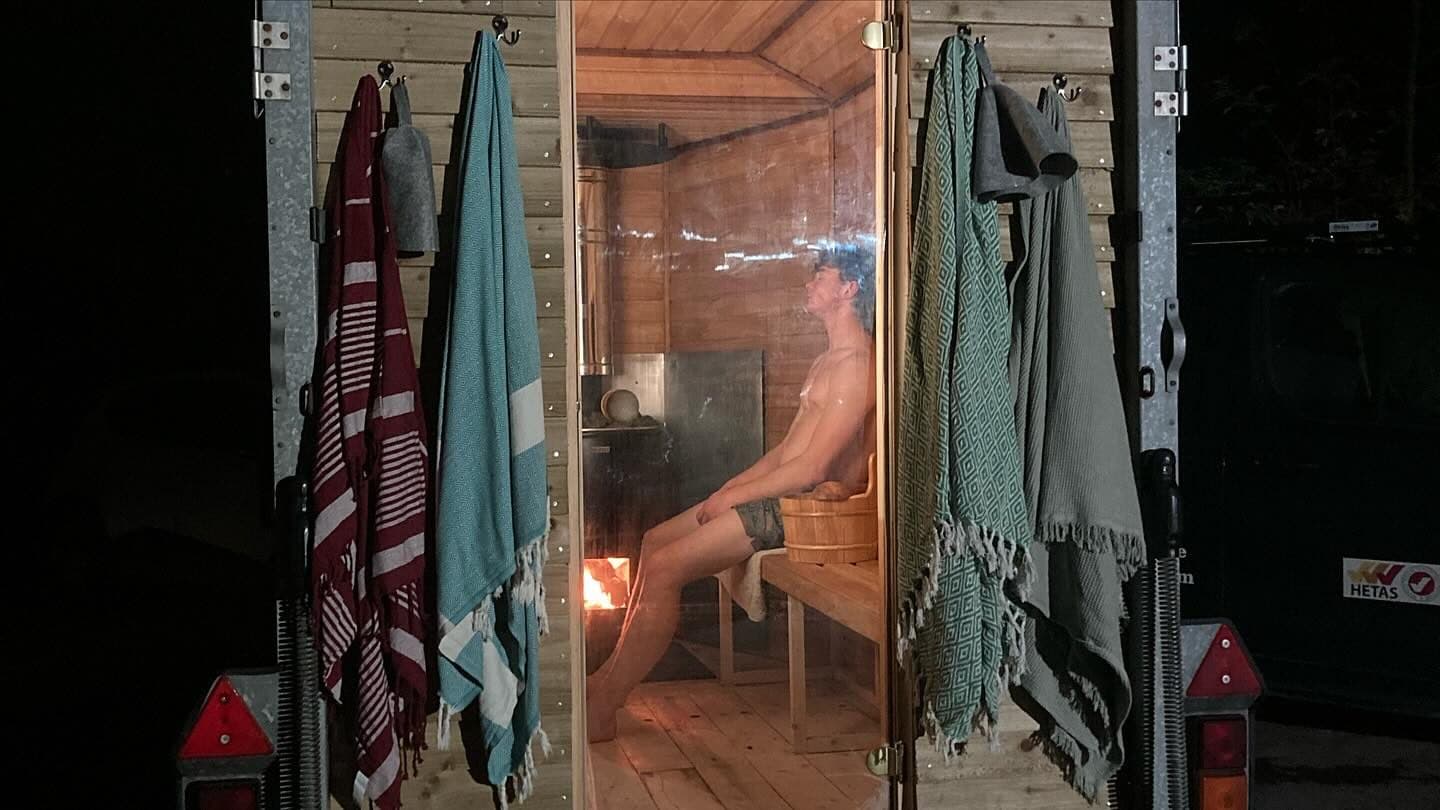
Instagram is the dominant acquisition channel. The visual nature of sauna — steam rising against a coastal backdrop, the glow of a stove in a horsebox, groups of smiling people wrapped in towels — generates social content without much effort. Community Sauna Baths has 45,000 Instagram followers; Beach Box Spa has over 22,000. Content that performs best includes setup timelapse videos, atmospheric steam shots and seasonal location photography.
But Instagram fills the funnel; word of mouth converts it. Operators consistently report that repeat bookings and personal recommendations from cold-water swimming communities, wellness groups and local networks drive the majority of revenue.
The pop-up as marketing
Showing up at a visible beach or event generates brand awareness, social content and email list sign-ups simultaneously. The pop-up itself is the marketing. This is why many operators treat festivals and one-off events as marketing spend rather than core revenue — the real value is in the customers who discover the brand and become regulars at the anchor pitch.
Corporate and events
The corporate and wellness event market represents the highest per-booking revenue opportunity. Corporate buyers want team-building and staff wellness days, typically structured as private exclusive hire for 2–4 hours with add-ons (breathwork, massage, catering). Premium corporate packages run £2,000–£4,000 for a full day for groups of 14–20.
Wedding hire is another strong segment. Multi-day wedding packages from operators like Matchbox Sauna (Devon) run £1,100–£1,400 for exclusive weekend use.
Memberships and gift vouchers
To smooth seasonal revenue, some operators use membership models. Hálogi in Plymouth offers a “Love Our Locals” membership at £60 per month, providing £90 worth of sauna time. This creates predictable recurring revenue and builds community loyalty through winter.
Gift vouchers are offered by virtually every UK sauna operator and serve three functions: pre-paid revenue, a customer acquisition tool (recipients become new customers) and a seasonal revenue booster concentrated around Christmas, birthdays and Mother’s Day.
Booking systems
Bookwhen is widely used by UK sauna operators for scheduling communal sessions with integrated payment. Square handles payment processing for several operators. Acuity Scheduling is another common choice. The most common cancellation policy allows full refunds with 48–72 hours’ notice, with weather-related cancellations offering rescheduling or full refunds — an important trust signal given the UK’s unpredictable weather.

Mistakes and risks
The British Sauna Society’s January 2026 guidance for new operators is blunt: “Most early mistakes happen because people try to solve everything at once. Sauna businesses tend to fail or stall not because the idea is bad, but because people commit too early to the wrong site, the wrong level of regulation, an overbuilt or overcapitalised sauna, or fixed costs they can’t reverse.”
Moving too often
Travel time destroys margins. Delivery charges of 75p–£1.00 per mile offset fuel costs but do not compensate for the driver’s time and vehicle wear. A single drop-off unit generating £500 per weekend for 50 weeks produces just £25,000 before fuel, firewood, insurance and depreciation — modest side income, not a livelihood. The most profitable operators secure semi-permanent pitches and treat mobility as a marketing and event tool, not the core business model.
Under-specifying the trailer or tow vehicle
A barrel sauna that exceeds 750 kg without brakes is illegal on UK roads. A tow vehicle that technically has the towing capacity but lacks the kerbweight ratio for stable handling creates dangerous conditions, especially in crosswinds with a box-shaped trailer. This is one of the most common early regrets among mobile operators.
Ignoring planning implications
Operating every Saturday at the same beach burns through your 28-day permitted development allowance in seven weeks. After that, you need planning permission or a council concession. The enforcement risk became more serious with the ten-year enforcement period under the 2023 Levelling-up and Regeneration Act. “It’s mobile so no planning applies” is not a safe assumption.
Water hygiene gaps
Legionella risk in stored water systems is an often-overlooked liability. HSE guidance identifies Legionella as a foreseeable risk in systems where water is stored or circulated between 20°C and 45°C. Standard public liability insurance may not automatically cover Legionella-related claims. Some councils now require up-to-date Legionella testing certificates as a condition of concession licences.
Insurance gaps
These typically surface only when a claim is made. Operating at locations not listed on the policy, exceeding stated capacity, offering wellness services not disclosed to the insurer, or failing to meet trailer security requirements can all result in claim rejection. Festival and event cancellation risk is real — operators who build their model around event income face concentrated exposure if a major booking falls through.
Over-investing before proving demand
The BSS’s primary caution. Many successful operators started with a tent-based sauna — the lowest-cost entry point for testing sites and gauging demand — proved the model, built a customer base, and only then invested in a bespoke trailer build. A £500 tent and a good pitch will tell you more than a £40,000 trailer and no customers.
Next steps
The operators who succeed tend to share certain characteristics. They start lean — often with a tent or basic horsebox conversion — and test demand at a specific location before committing to a premium build. They secure a semi-permanent pitch rather than roaming constantly, because fixed-location communal sessions generate far higher margins than the drop-off rental model. And they invest in community, building a loyal base of repeat customers through word of mouth and inclusive programming, because retention drives profitability in this business more than acquisition.
For someone entering the market in 2025–2026, a realistic startup budget of £20,000–£30,000 (including a mid-range unit, tow vehicle contribution and first-year costs), a confirmed pitch with legal backing, and a clear plan to run 14+ sessions per month positions the business to break even within the first year. The BSS’s honest assessment is worth remembering: “For most operators, the financial return is lower and the workload higher than initially expected, particularly in the early stages. Many still choose to continue because the work itself is meaningful and deeply valued.”
For general business setup advice — company formation, VAT, data protection and more — see our guide to starting a sauna business in the UK. For planning permission specifics, see our planning permission guide. If you are choosing a builder for your unit, our guide to choosing a sauna builder covers what to look for.
Frequently asked questions
- A realistic all-in startup budget is £20,000–£30,000, covering a mid-range sauna unit (horsebox conversion or barrel on trailer), tow vehicle contribution, cold plunge, accessories, branding and first-year insurance. Entry-level barrel trailers start around £10,000; premium off-grid cabin builds run £40,000–£65,000 plus VAT. You can test the model for as little as a few hundred pounds with a sauna tent before committing to a trailer.
- In most cases, no. Since December 2021, all Category B (standard car) licence holders can tow trailers up to 3,500 kg MAM without an additional test. This covers the vast majority of mobile sauna trailers. You do need a suitable tow vehicle with sufficient towing capacity and kerbweight — typically a mid-size or large 4x4 for trailers over 1,500 kg.
- Revenue varies significantly by operating model. A conservative part-time drop-off operation can gross £15,000–£20,000 per year from a single unit. A medium-intensity communal model trading 3–4 days per week can gross £35,000–£50,000. Full-time operators combining communal sessions, events and corporate work can reach £60,000–£80,000 gross. Monthly operating costs for a single unit are roughly £1,160.
- The 28-day temporary use allowance (GPDO Class B) permits use of land for up to 28 days per calendar year without planning permission. But setup and teardown time counts toward the total, and the limit applies per planning unit — not per field. Operating every weekend at the same site would use all 28 days in roughly seven weeks. For regular trading at a single location, you need either temporary planning permission or a council concession.
- At minimum: public liability (£5 million is the practical standard), trailer and equipment cover (not included in standard vehicle insurance), and goods in transit cover for damage during towing. If you employ anyone, employers’ liability is a statutory requirement (minimum £5 million). Specialist brokers including Insurelink and JMG Sandbach offer tailored mobile sauna policies. Wood-fired stoves attract higher premiums than electric.
- Counter-intuitively, autumn and winter (October to March) are peak months for communal sessions — the appeal of heat therapy is strongest in cold weather, and the cold-water swimming community drives repeat bookings through winter. Summer shifts toward private hire, weddings, corporate events and festival deployments. Year-round operation is realistic at coastal and lakeside locations.
How much does it cost to start a mobile sauna business in the UK?
Do I need a special licence to tow a mobile sauna?
How much can a mobile sauna earn?
Can I operate a mobile sauna under the 28-day rule?
What insurance do I need for a mobile sauna?
Is a mobile sauna business seasonal?
Mobile operators already doing this
The closest thing to a competitor set. Worth looking at how they pitch, price and describe their sessions before you write your own.
 Holding image
Uckfield, South East
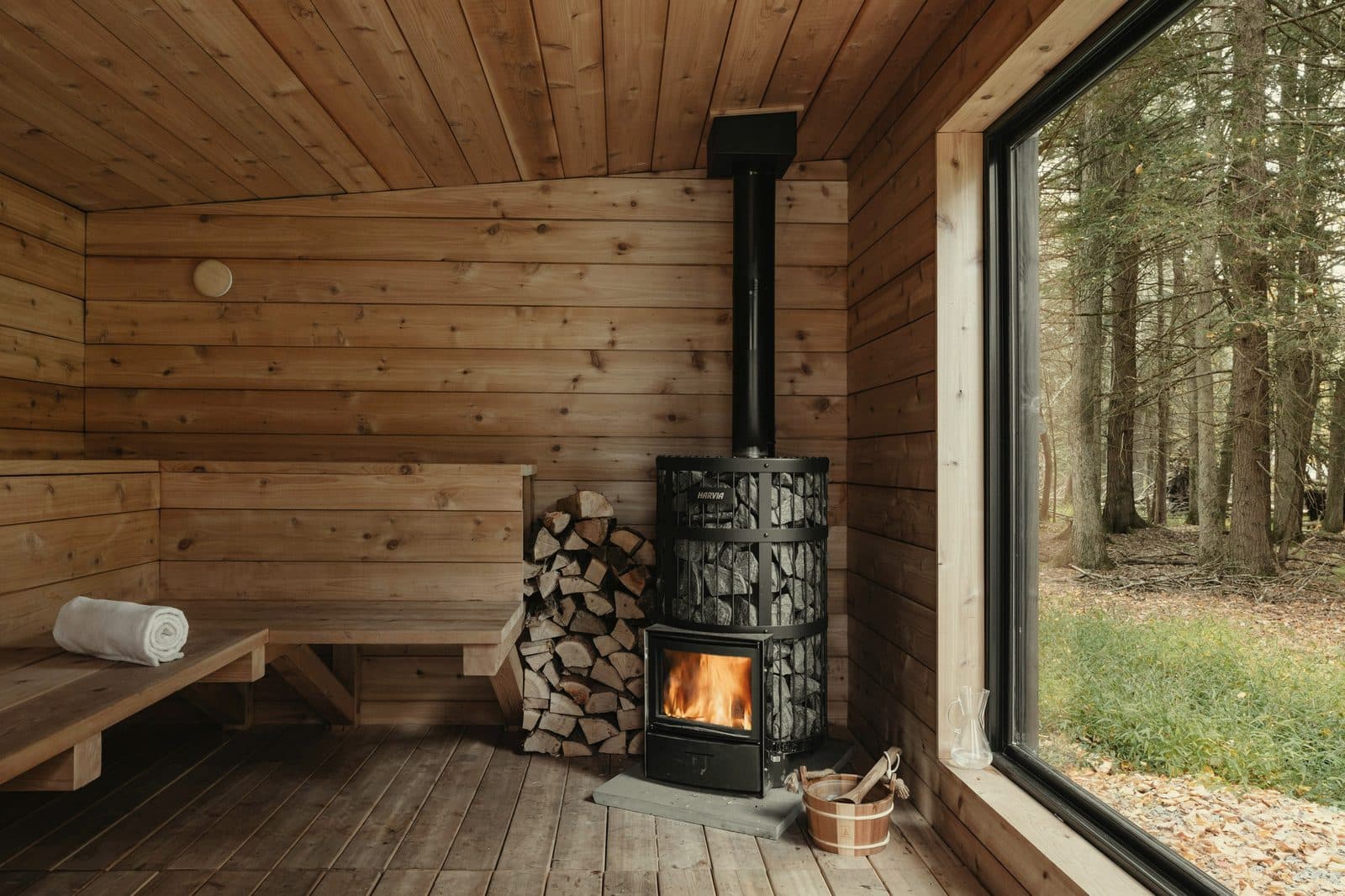
Wild Spa Wowo is a wood-fired sauna garden and retreat space set in a forest glade within Wowo Campsite at Wapsbourne…
 Holding image
Limavady, Northern Ireland
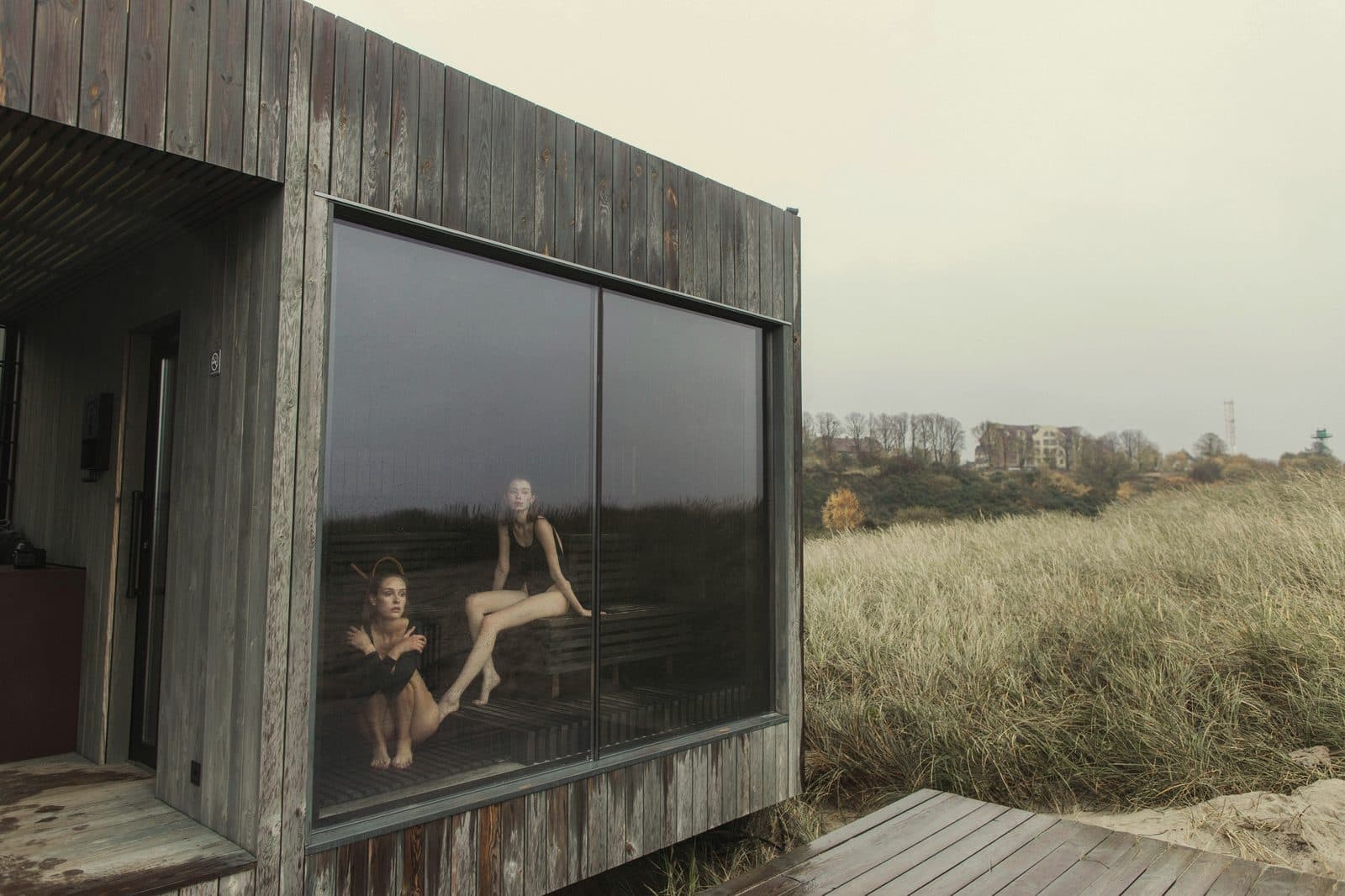
HotBox Benone is a wood-fired mobile sauna operating at Benone Strand on Northern Ireland's Causeway Coast, running at…
Holding imageStornoway, Scotland
Saltbox Sauna operates three mobile wood-fired saunas along the coastline of Lewis and Harris in the Outer Hebrides,…
Holding imageLyme Regis, South West
Shoreline Sauna is a hand-crafted, wood-fired mobile sauna sited on the Sandy Beach in Lyme Regis, directly opposite…
Holding imageHebden Bridge, Yorkshire & Humber
Iglu Sauna is a wood-fired outdoor sauna and cold plunge pool operation with two sites in West Yorkshire: a fixed…
Holding imageHove, South East
Saunadelic is a wood-fired sauna sited next to the Watersports Centre at Hove Lagoon, on the West Sussex coast. The…
Related guides
How to Start a Wood-Fired Sauna Business in the UK
A practical guide to starting a commercial wood-fired sauna business in the UK — covering business models, legal setup, planning, regulations, insurance, costs, operations, and common mistakes.
Building & planningPlanning Permission for a Wood-Fired Sauna in the UK
Permitted development rules, building regulations, flue requirements, and what you actually need to do before installing a wood-fired sauna in your garden.
Building & planningHow to Choose the Right Sauna Builder
What to ask, what to look for, and common mistakes to avoid when commissioning a sauna build in the UK.
Browse the directory
The monthly digest
New saunas and new guides, once a month. No spam, unsubscribe any time. Your address is used only for the digest — privacy notice.