Wood-Fired Saunas and Smoke Control Areas
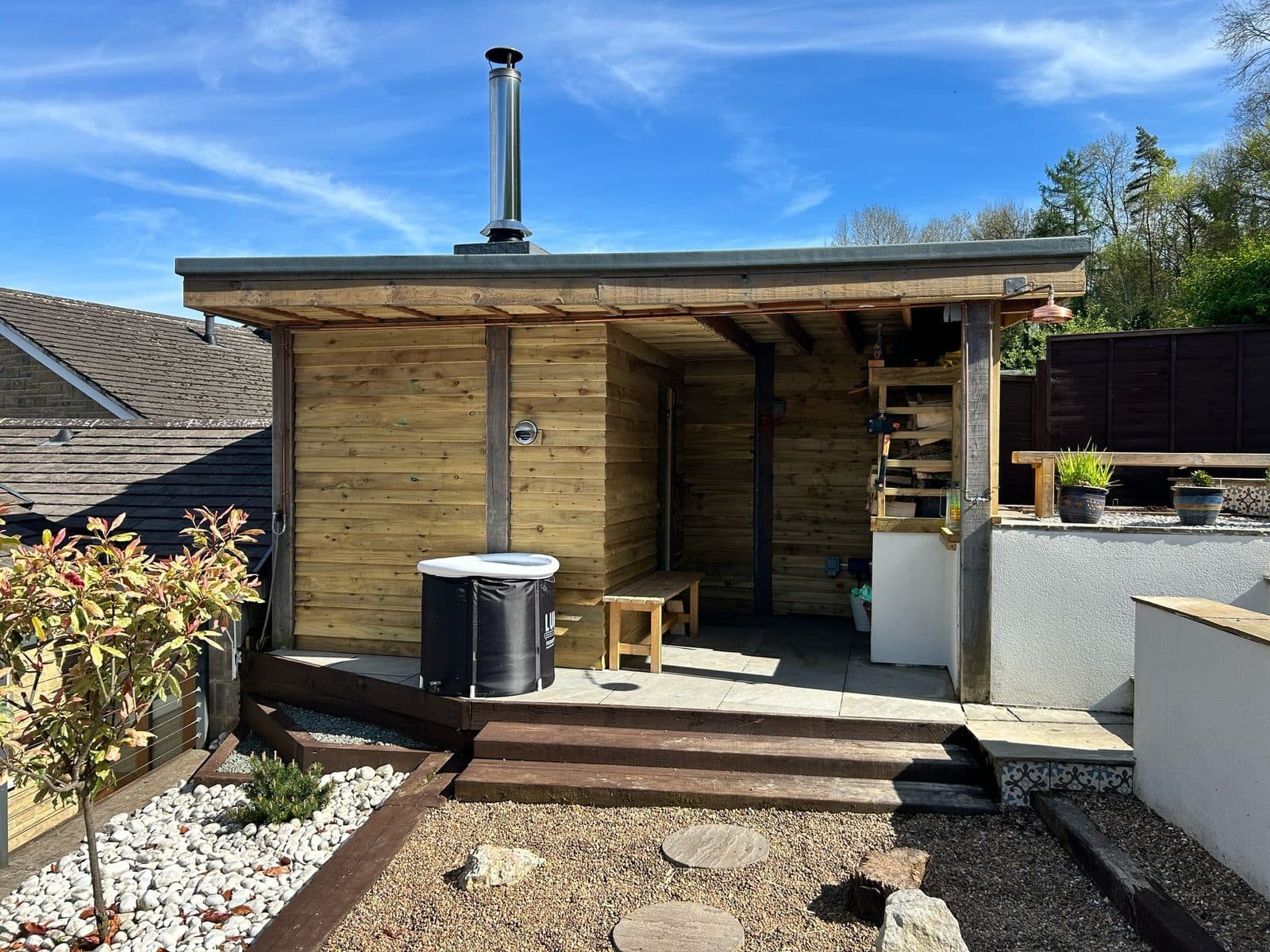
This guide explains how UK smoke control law applies to wood-fired saunas, for owners and operators, with a focus on what is settled, what is not, and what actually gets enforced. Every legal point below was checked against the legislation itself rather than against other guides. Where the law is genuinely unclear, the guide says so instead of guessing.
Three things are worth knowing before the detail.
First: the section of the Clean Air Act that almost every article on this subject quotes no longer applies in England or Wales. Section 20 was repealed for both nations on 31 July 2025. England has been running on a different regime since May 2022. If a page cites section 20 at you as an English reader, it is out of date.
Second: there is no Defra-exempt wood-fired sauna stove. Not "most are not exempt" — none are. We searched the complete approved-appliance lists for England, Wales, Scotland and Northern Ireland in August 2026: 3,384, 3,368, 3,374 and 3,336 appliances respectively. The word "sauna" does not appear once in any of them, and neither does Harvia, Narvi, Kastor, Huum, Tulikivi, Helo, Sawo, Saunum or Kuuma.
Third, and least discussed: smoke control areas are probably not your main legal risk anyway. Statutory nuisance law applies everywhere in the UK, in or out of a smoke control area, and since May 2022 it reaches further in England than it used to. That is the regime a complaining neighbour will actually trigger.
This is a guide, not legal advice. If a council has written to you, take proper advice.
The short answer
A smoke control area is a defined area where smoke from a chimney is restricted. Local authorities declare them; most were declared decades ago, and coverage is far from national. What happens if smoke comes out of your chimney inside one now depends entirely on which UK nation you are in — the four regimes diverged between 2022 and 2025 and are no longer the same law.
| Where | What applies now | Type | Penalty |
|---|---|---|---|
| England | Clean Air Act 1993 s.19A and Schedule 1A, since 1 May 2022 | Civil penalty | £175–£300 per occasion |
| Wales | Same Schedule 1A regime, since 31 July 2025 | Civil penalty | £175–£300 per occasion |
| Scotland | Clean Air Act 1993 s.20, unchanged | Criminal offence | Fine up to level 3 (£1,000) |
| Northern Ireland | Clean Air (NI) Order 1981, art.17 | Criminal offence | Fine up to level 3 (£1,000) |
The practical differences matter more than the penalty figures. In Scotland and Northern Ireland it remains a defence to prove the smoke was not caused by burning anything other than an authorised fuel. In England and Wales that defence was not carried into the new regime — more on what that does and does not mean below.
For a garden sauna, the question that decides everything is whether your cabin counts as a "building" and its flue as "a chimney of a building". That question has a clear practical answer and an unclear legal one, and it is worth understanding both.
The law changed, and most pages have not noticed
Until 2022, the whole UK ran on section 20 of the Clean Air Act 1993: emitting smoke from the chimney of a building in a smoke control area was a criminal offence committed by the occupier, with a defence if only authorised fuel had been burnt.
The Environment Act 2021 replaced that in England with a civil penalty scheme in a new Schedule 1A, in force from 1 May 2022. Section 20 was narrowed to Wales alone. Then the Environment (Air Quality and Soundscapes) (Wales) Act 2024 moved Wales onto the same Schedule 1A scheme and repealed sections 20 to 23 outright for both England and Wales, with effect from 31 July 2025.
So section 20 is now Scotland-only law. It is still quoted as current UK-wide law across a great deal of published material, including by sources that ought to know better. If you are reading advice that turns on section 20 and you live in England or Wales, that advice predates the change.
Under Schedule 1A the council must be satisfied, on the balance of probabilities, that smoke was emitted from a "relevant chimney" on a particular occasion. It issues a notice of intent; you have 28 days to object; it decides within 56 days; a final notice follows, payable within 28 days. Appeals go to the First-tier Tribunal within 28 days, and the penalty is suspended while the appeal runs. The council sets the amount within the £175–£300 band, can issue a fresh notice for each separate incident, and keeps the money.
Is your sauna a “building”?
Everything turns on this word, and the Act does not define it.
We checked both interpretation sections. Section 64 defines seventeen terms — including "chimney", "caravan", "fireplace", "premises" and "vessel" — and section 29 defines seven more. "Building" is in neither, and no definition is imported from any other Act. The word appears 141 times in the Clean Air Act 1993 and is never defined.
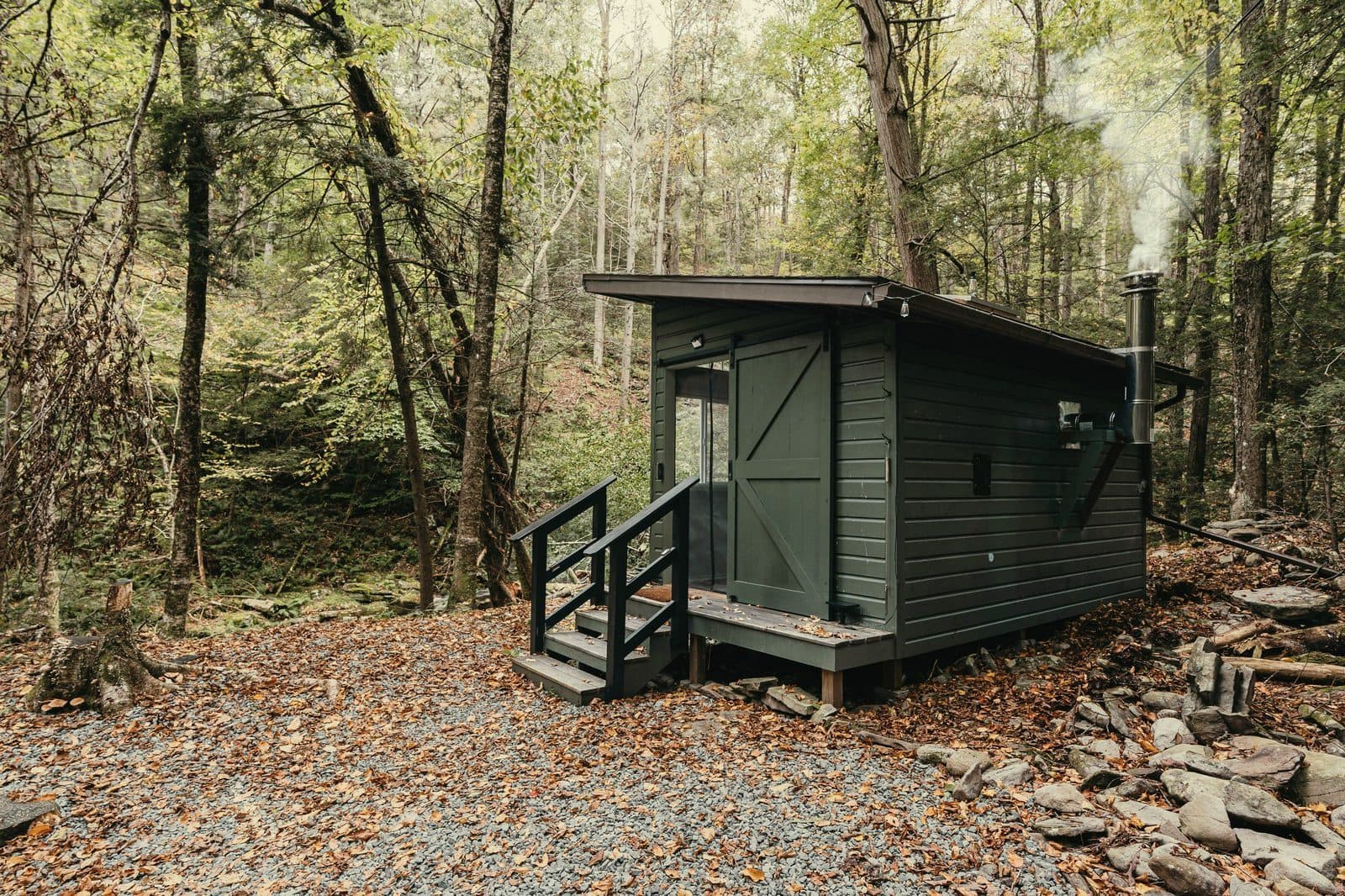
Defra's statutory guidance for English councils fills the gap. It says: "A building means any structure with a roof and walls. This includes wooden structures such as sheds and summerhouses." It also carves out open-air burning: "Smoke from outdoor burning is not covered by smoke control area rules. This includes barbecues, chimineas and pizza ovens which are outside and not in a building."
Read those two sentences together and a garden sauna lands on the regulated side of the line. It is a wooden structure with a roof and walls, and the stove is inside it rather than out in the open. A chiminea on the patio is outside the rules; a stove in a summerhouse is not, and a sauna cabin is a summerhouse with hotter benches.
Two qualifications keep this honest. Defra's formula is guidance, not a statutory definition — English councils must "have regard to" it under section 28A, which is not the same as being bound by it, and it cannot enlarge what the Act says. And we found no reported authority on the point: a search of the National Archives case law service returned nothing deciding whether a garden outbuilding is a "building" here. That is not the same as "no court has ever ruled". The service does not cover magistrates' courts at all and starts in 2001, and these were summary offences — so the forum where the point would most likely have been decided is largely outside the searchable record.
The practical position: on every official formulation available, a fixed garden sauna cabin is a building and its flue is a chimney of a building. Anyone telling you confidently that it definitely is not is going beyond the evidence. So is anyone telling you a court has settled it.
Wall flues count too
The GOV.UK consumer page frames the rule this way: "If your appliance uses a chimney on the roof of a building (for example, a summerhouse), you can only burn authorised fuel unless it's an exempt appliance." Most sauna stoves flue out through a wall, not a roof, and a reader could take false comfort from that sentence.
The statute is wider. Section 64(1) defines a chimney as including "structures and openings of any kind from or through which smoke, grit, dust or fumes may be emitted, and, in particular, includes flues", and expressly extends "chimney of a building" to a chimney "structurally separate from the building". There is no roof requirement anywhere in it. The GOV.UK page is not wrong so much as narrower than the law it summarises — and Defra's own statutory guidance uses the statutory frame ("outside and not in a building"), not the roof frame.
Barrel saunas and mobile saunas: genuinely unsettled
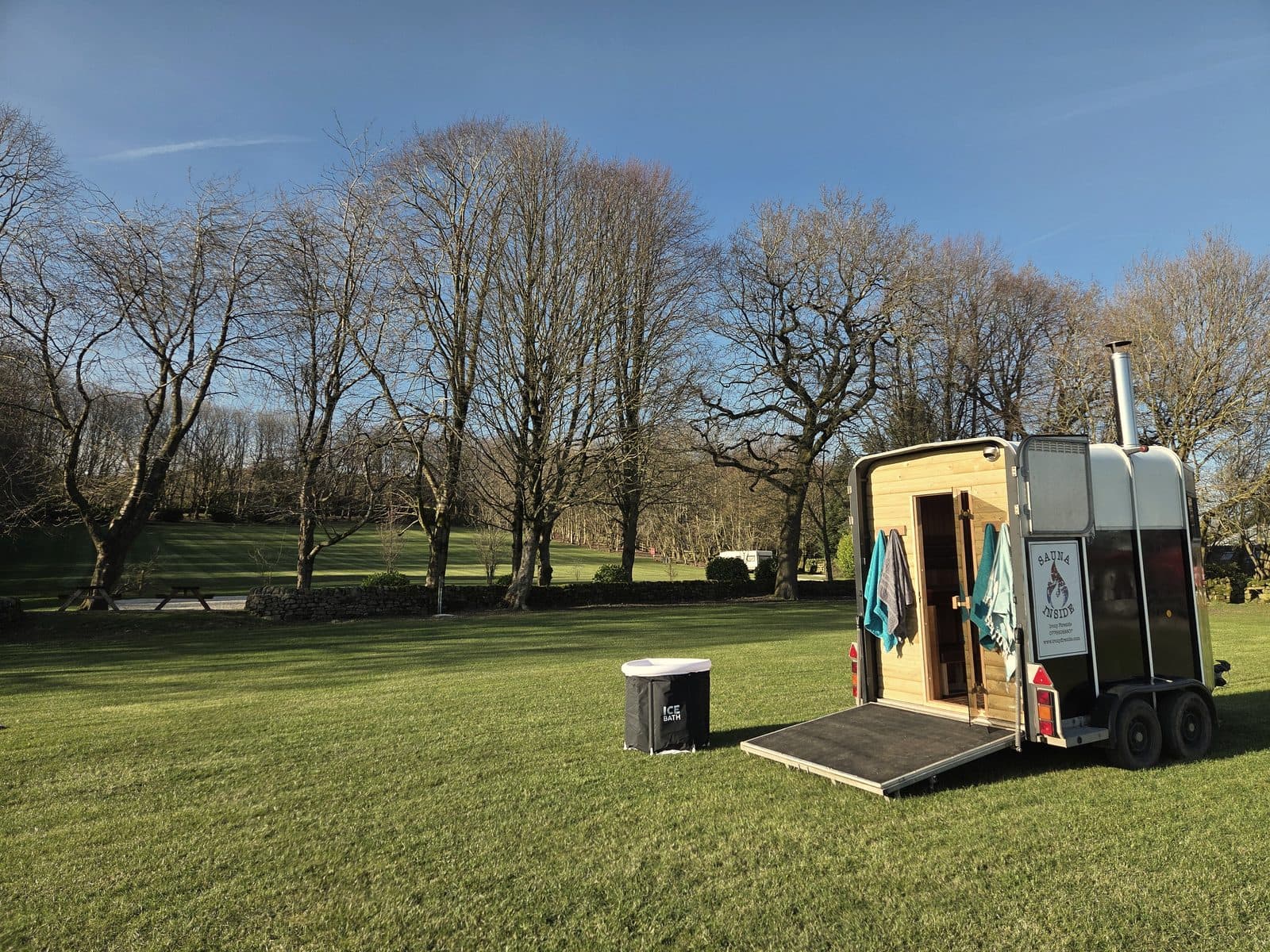
A barrel sauna sitting on cradles, and a sauna bolted to a road trailer, are harder cases than a cabin on a base. Nobody has decided them.
Barrel saunas. A barrel has a curved roof, curved walls, a door and a flue, so on Defra's "roof and walls" test it qualifies, and nothing in Schedule 1A requires foundations or permanence. Against that, "building" in many legal contexts carries some sense of attachment to the land, and a barrel movable by a telehandler is arguably a chattel. No source resolves it. Neither Defra, the Welsh Government, the Scottish guidance nor any council page we found mentions barrel saunas or any comparable demountable structure.
Trailer-mounted saunas. Here the textual argument runs the other way, and it is a good one. When Parliament wanted the English regime to reach moored vessels, it had to insert a deeming provision — section 44(2A)–(2C) — saying that references to a building are to be read, with modifications, as references to such a vessel, and only where the smoke control order so provides. That machinery would be unnecessary if a movable, roofed, walled, flued structure were already a building. Parliament appears to have legislated on the premise that it is not.
A trailer sauna also struggles to fall into the alternative limb, which catches a chimney serving "the furnace of any fixed boiler or industrial plant" — plant "attached to a building or for the time being fixed to or installed on any land". A sauna bolted to a trailer is fixed to the trailer.
None of this has been tested. The better textual reading is that a trailer sauna sits outside the smoke control regime, but it is a reading, not a ruling — and statutory nuisance law reaches it regardless.
No sauna stove is Defra-exempt, and here is why
In a smoke control area you may burn an unauthorised fuel — which includes wood — only in an appliance on the approved list, often called a Defra-exempt appliance. So the obvious question is whether any wood-fired sauna stove is on that list.
None is. We downloaded the complete lists for all four nations in August 2026 and searched them:
- England — 3,384 appliances
- Wales — 3,368
- Scotland — 3,374
- Northern Ireland — 3,336
The word "sauna" appears zero times in any of them. So does every major sauna stove manufacturer we tested: Harvia, Narvi, Kastor, Huum, Tulikivi, Helo, Sawo, Saunum and Kuuma. The scheme's appliance categories run to thirteen types — stove, boiler, roomheater, inset appliance, pizza oven, pellet stove, air heater, incinerator, oven, cooker with boiler, generic exemption, wet roomheater, gasifier. There is no sauna category. Notably, there are 103 exempt pizza ovens, so the absence is not because sauna stoves tend to live outdoors.
Wood is not on the authorised fuel lists either, in any of the four nations. Those lists run to around 290 entries each and consist of manufactured smokeless fuels plus the generic entry for inherently smokeless fuels — anthracite, semi-anthracite, electricity, gas and low volatile steam coals. The manufactured "fire logs" on the list are not natural firewood.
The reason, which is more interesting than the fact
Sauna stoves are certified in Europe against BS EN 15821, the product standard for multi-firing sauna stoves fired by natural wood logs. Defra's own exemption application guidance lists that standard in its table of acceptable test methods — and marks its compliance with Clean Air Act requirements as "No", with the explanation: "Does not include particulate emission tests."
So the standard the industry already tests against cannot support a Defra exemption on its own, because it does not measure the thing the Clean Air Act cares about. That is a gap in the testing regime, not a judgment that sauna stoves are dirty. The same table marks BS EN 15821 as an accepted measurement method for manual appliances — it is usable, just not sufficient.
Closing the gap would mean a manufacturer commissioning separate particulate testing at an accredited laboratory and applying for exemption. The application fee is £1,610 excluding VAT for the first appliance in a new range and £470 for each additional one, with testing costs on top and paid separately. Only manufacturers, importers and distributors can apply — an owner cannot exempt their own stove. No sauna stove manufacturer has done it.
One trap worth naming
American sources say sauna stoves are "exempt" from the US Environmental Protection Agency's wood heater rules. That is true and completely irrelevant here: the American exemption means sauna stoves are out of scope of that rule, while a UK "exempt appliance" means one that has been tested and permitted. Same word, opposite mechanisms. Similarly, a stove advertised as "CE certified" or "VDE certified" has real certifications — but neither is a Defra exemption.
What the rules actually mean in practice
In Scotland and Northern Ireland the position is straightforward: burning an authorised fuel is a statutory defence, and since wood is not an authorised fuel and no sauna stove is exempt, a wood-fired sauna in a smoke control area there has no defence available if smoke is emitted from a chimney of a building.
England and Wales are different, and widely misreported in both directions.
Schedule 1A contains no fuel defence and no appliance defence. The grounds on which you can object to a notice of intent are a closed list of four: that no smoke was emitted on the occasion specified; that the chimney was not one a smoke control order applied to; that you were not the person liable; or "that there are other compelling reasons why the financial penalty should not be imposed."
It would be easy to read that as meaning fuel and appliance have become irrelevant. They have not. The fourth ground is an open catch-all, and it is exactly where an argument about a clean-burning appliance or a proper fuel would be made. Defra's guidance to councils goes further: "You should not need to take enforcement action if individuals are using authorised fuel or a Defra approved appliance correctly."
The honest summary: there is no longer a dedicated statutory defence in England and Wales, but what you burn and what you burn it in still matter — to whether a council acts at all, and to the fourth ground if it does. What has gone is the guarantee.
The one tribunal decision on the new English regime, Zhang v Newcastle City Council in November 2025, is worth knowing about. It confirms how low the trigger is: "all that is required is the emission of smoke. There is no requirement that the smoke be dark or black in order for a financial penalty to be imposed." It also held the occupier responsible even though she said workers had caused the emission in her absence. Wood inherently smokes while it gets going, which is the practical problem. That said, a First-tier Tribunal decision is persuasive, not binding precedent — and in that same case the tribunal reasoned from evidence about what fuel had been burnt, which is the point above in action.
Statutory nuisance: the risk that actually bites
Smoke control areas cover a minority of the country. Statutory nuisance covers all of it.
Under section 79(1)(b) of the Environmental Protection Act 1990, smoke emitted from premises so as to be prejudicial to health or a nuisance is a statutory nuisance, and a council has a duty to investigate a complaint from someone living in its area. If it is satisfied a nuisance exists, it must serve an abatement notice. Breach of that notice is a criminal offence, carrying an unlimited fine in England and Wales, and the council can also carry out abatement work itself and recover the cost from you. There is a separate route by which a neighbour can go directly to a magistrates' court, bypassing the council, after giving 21 days' notice for a smoke complaint.
Two features make this the sharper regime for saunas.
It reaches further in England than it used to. There was an exemption for smoke from the chimney of a private dwelling inside a smoke control area. The Environment Act 2021 inserted the words "in Wales" into it from 1 May 2022, so in England that exemption is gone — Defra's own guidance change log records the removal. It survives in Wales, Scotland and Northern Ireland. One qualification: a separate exclusion for dark smoke from a building's chimney was left untouched, so the removal is not unlimited.
The best-practicable-means defence depends on having a chimney. If you breach an abatement notice, it is a defence to show you used the best practicable means to prevent the nuisance — but for smoke, only where the smoke came from a chimney. A flued sauna has that defence available. An open fire pit does not.
What counts as a nuisance is assessed by environmental health officers on the amount of smoke, how often and for how long it happens, and how unreasonable the activity is. Councils typically ask complainants to keep a log for a couple of weeks before acting. One council states the consequence plainly: even if you follow all the good-practice advice, if your appliance is causing a statutory nuisance you may have to stop using it.
Commercial and mobile operators
Nothing in the smoke control rules distinguishes a domestic sauna from a commercial one. Schedule 1A refers to "a chimney of a building" without qualification, and the liable person is the occupier. A public sauna in a cabin is caught on the same footing as a garden one, at the same £175–£300 per incident.
The larger commercial exposure is somewhere most operators never look. Section 2 of the Clean Air Act prohibits dark smoke from industrial or trade premises, and it applies everywhere — inside or outside a smoke control area. Three features make it serious: the fine is unlimited in England and Wales, since the £20,000 cap was removed in 2015; the burden of proof is reversed, so where matter is burnt in circumstances likely to produce dark smoke, dark smoke is taken to have been emitted unless the occupier proves otherwise; and both the occupier and any person who causes or permits the emission commit the offence. A paid-entry sauna site is premises used for trade purposes.
A commercial sauna may also be caught by the alternative limb of the smoke control rules — a chimney serving "the furnace of any fixed boiler or industrial plant", where industrial plant includes plant "used for any industrial or trade purposes". A domestic garden stove is plainly not trade plant. A stove serving a paid-entry sauna arguably is, and that limb does not depend on the enclosure being a building. Whether a sauna stove is a "furnace" is itself undefined and untested.
Two practical notes. Environmental permitting starts at 1MW of rated thermal input; sauna stoves are rated in tens of kilowatts, so no permit is required. And regulation elsewhere may reach you by a different route entirely — Aberdeenshire Council, for example, licenses mobile saunas as street trading, with conditions on fire safety, staffing and operating temperature. None of those conditions mention smoke.
How to check your address
Start with the map, but do not finish there.
England. Defra publishes an interactive smoke control area map. It states plainly that the data is "indicative only and you should always contact your local authority to confirm". Its own notes go further: boundaries have in some cases been recreated from original orders going back to the 1960s, features may have changed since, and adjoining orders are drawn as a single outline rather than separately.
Wales. There is a map on DataMapWales with the same indicative caveat. Coverage is very low — only four of the twenty-two Welsh authorities have any smoke control area at all: Flintshire, Newport, Swansea and Wrexham.
Scotland. The official guidance points to the council first, with the Improvement Service's Spatial Hub map as the alternative — the reverse emphasis to England.
Northern Ireland. There is no address-level map. The DAERA site shows only which district councils have declared areas, so the council is the only route.
The definitive answer is the smoke control order itself, made by the council, together with any map or plan referred to in it. This matters more than it sounds, because an order can limit itself: it may restrict its operation to specified classes of building, or exempt specified buildings or classes of building on conditions. Whether a given order reaches garden outbuildings is a question about that order, and many are decades old. A map showing you inside an area does not tell you whether your cabin is within its scope.
Ask the council two things, not one: am I in a smoke control area, and does the order that covers me apply to a detached garden outbuilding?
Burning well, whatever the legal answer
Most sauna smoke complaints are about smoke, not about law. The following reduces both, and it is worth separating what is required from what is merely sensible.
Fuel
A legal rule, but on the seller. In England, wood sold for domestic burning in units under two cubic metres must have a moisture content of 20% or less, and carry the certification logo. Above two cubic metres, wet wood may still be sold legally — the only requirement is an accompanying warning notice telling you to dry it before burning. That threshold catches out a lot of buyers: bulk loads are not covered by the moisture rule.
"Ready to Burn" is the trading name of the certification scheme, not a legal term — the phrase appears nowhere in the regulations, which refer only to an unnamed logo and to certificates from an approved certification body. There is no equivalent sale restriction in Wales, Scotland or Northern Ireland that we could find.
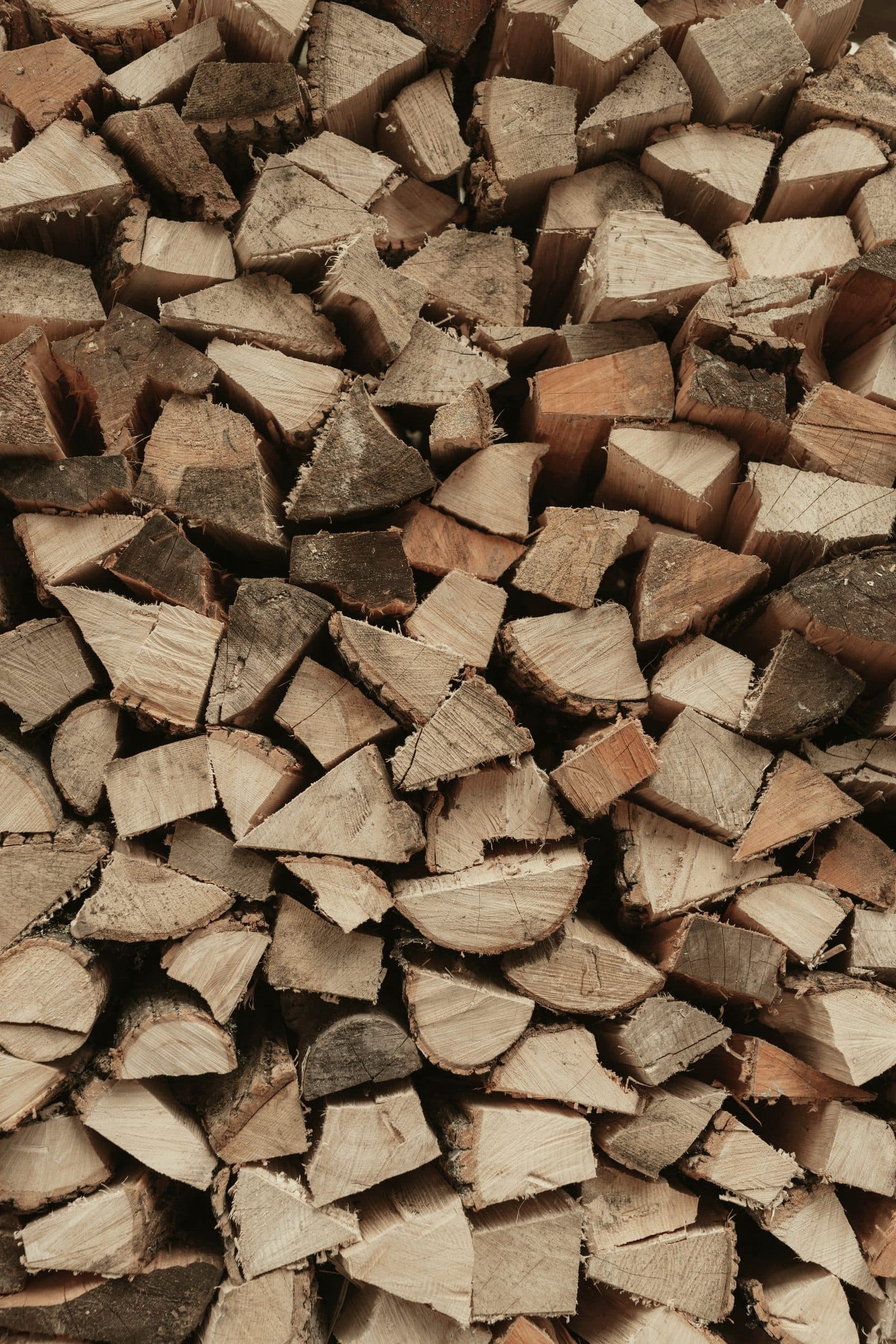
Recommendation. Defra's guidance is that firewood should be dried to 20% moisture or less, that natural seasoning takes two summers or more, that logs should be split to under 10cm to let moisture escape, and that stacks should sit on bearers in a sunny, airy spot with a cover over the top and open sides. Test with a moisture meter on a freshly split face. Never burn treated or painted wood, pallets or household waste.
Flue and siting
There is no published UK guidance on flue siting for the purpose of avoiding smoke nuisance to neighbours. This surprises people. The flue-outlet distances in Approved Document J — 600mm above the ridge, 1000mm above a nearby opening, and so on — exist to secure flue draught and prevent fire spread, not to protect the neighbours' washing. Anything presenting them as a neighbour-distance rule is misdescribing them.
Whether Part J applies to your sauna at all is a separate question, and often the answer is no. A detached building with no sleeping accommodation is outside the Building Regulations entirely if its floor area does not exceed 15m², or does not exceed 30m² and it is either at least a metre from the boundary of its curtilage or built substantially of non-combustible material. The 15m² limb carries no single-storey requirement; the 30m² limb does. Where that exemption applies, Approved Document J is advice rather than a requirement — though energy efficiency requirements can still apply separately to a heated garden room.
In practice: put the flue high enough for a clean draught, and site the cabin so the plume does not run straight at a neighbour's windows or across a boundary they use. That is a nuisance-risk decision, not a compliance one.
Operation
Get the stove installed by someone on a competent person scheme, have it serviced annually, and have the chimney swept at least once a year. Defra's clearest operational advice is to avoid slumbering a stove overnight — a smouldering fire smokes far more than a hot one. Beyond that, government guidance stops; the lighting techniques widely recommended by sweeps and stove trades are sensible, but they are trade advice rather than official guidance, and we have not dressed them up as the latter.
What nobody can tell you
An honest guide should be clear about its own limits. These questions came up repeatedly in the research and none of them has an answer in the law, in guidance, or in any decided case we could find.
- Whether a garden sauna cabin is legally a "building". Undefined in the Act, no reported authority. Defra's guidance says yes; guidance is not law.
- Whether a barrel sauna is. Competing readings, no source resolves it.
- Whether a trailer sauna is. The better textual argument says no, because Parliament had to deem moored vessels in. Untested.
- Whether a sauna flue is a "chimney" for the best-practicable-means defence in a statutory nuisance prosecution. The statutory definition is wide enough to suggest yes, but nothing decides it — and it is the difference between having a defence and not.
- Whether any smoke control order excludes garden outbuildings. Order by order, some from the 1960s. Only your council can answer for your address.
- Whether any council has ever penalised a sauna. No published dataset distinguishes appliance type.
There is also a live question this guide cannot resolve. Several well-known commercial wood-fired sauna operators run sites in central London, where virtually the whole area is a smoke control area. No public source explains how those operations sit with the Clean Air Act, and none of them claims a Defra exemption — because, as above, no such exemption exists for a sauna stove. It is not evidence that the rules do not apply. It may reflect the terms of particular smoke control orders, enforcement priorities, arrangements we are not aware of, or simply the enforcement gap described below. If you are planning a commercial site in a smoke control area, this is the question to put to the council in writing before you commit money.
What actually happens in practice
The gap between the rules and their enforcement is wide, and pretending otherwise would be dishonest in both directions.
Freedom of information research by the campaign group Mums for Lungs, reported in October 2025, recorded more than 15,000 complaints about domestic burning to English councils between September 2024 and August 2025, and 24 fines. That is roughly one fine for every 600 complaints. Two caveats on that figure: it is campaign-group research rather than official statistics, and around 60 of some 317 English councils returned no usable number — including several large cities — so it is a total across responding authorities, not a national one. The fines figure is the firmer half of it.
One council's response to that request is telling: asked about its enforcement guidance for domestic burning, it answered "none exists", and said complaints are handled under the statutory nuisance regime instead. That is the practical shape of things. The smoke control penalty is rarely used; the abatement notice is the tool councils actually reach for.
None of which makes the rules optional. It means the realistic risk to a sauna owner is not a council patrolling for chimney smoke. It is one neighbour, sufficiently annoyed, making a complaint that a council then has a legal duty to investigate.
Next steps
If you are planning a wood-fired sauna and want to get this right:
- Check the map, then ring the council. Ask whether you are in a smoke control area and whether the order covering you applies to a detached garden outbuilding. Get the answer in writing.
- Do not go looking for an exempt sauna stove. There isn't one. Any seller implying otherwise is either confused or describing a different certification.
- Site the flue with the neighbours in mind, not just the draught. This is where the real risk sits, and it is the cheapest thing to get right at the planning stage.
- Buy dry wood and keep it dry. Below two cubic metres it must be certified; above that, the responsibility is yours.
- If you are going commercial, take advice before you commit. The dark-smoke provisions for trade premises carry an unlimited fine and a reversed burden of proof, and they apply wherever you are.
Our planning permission guide covers the separate question of whether you need consent to put the cabin up in the first place, and the cost guide covers what the stove and flue will actually cost you.
Frequently asked questions
- Possibly, but not straightforwardly. In a smoke control area you may only burn unauthorised fuel — which includes wood — in an appliance on the Defra approved list, and no wood-fired sauna stove is on that list in any UK nation. In England and Wales the fuel and appliance defences were removed in 2022 and 2025 respectively, though both still matter to whether a council acts. The first step is to confirm with your council whether you are in a smoke control area and whether the order applies to a detached garden building.
- No. We searched the complete approved-appliance lists for England, Wales, Scotland and Northern Ireland in August 2026 — 3,384, 3,368, 3,374 and 3,336 appliances — and found no sauna stoves and no entries from Harvia, Narvi, Kastor, Huum, Tulikivi, Helo, Sawo, Saunum or Kuuma. The underlying reason is that BS EN 15821, the European product standard for sauna stoves, contains no particulate emission testing, so Defra records it as not meeting Clean Air Act requirements on its own.
- In England and Wales it is a civil penalty of between £175 and £300 per occasion, issued by the council, with a right to object and then to appeal to the First-tier Tribunal. A separate notice can be issued for each incident. In Scotland and Northern Ireland it remains a criminal offence with a fine of up to £1,000, and burning an authorised fuel is still a defence there.
- Unclear, and untested. The rules bite on smoke from the chimney of a building, and the Clean Air Act does not define building. A fixed cabin is a building on every official formulation available. A trailer-mounted sauna probably is not, because Parliament had to insert a special provision to bring moored vessels within the rules — which suggests movable structures were not already covered. A barrel sauna sits between the two. Statutory nuisance law applies to all of them regardless.
- Most likely the council will treat it as a potential statutory nuisance rather than a smoke control matter, since that regime applies everywhere and is the tool councils actually use. It has a legal duty to investigate. Officers assess the amount of smoke, how often and how long it occurs, and how unreasonable the activity is, often after asking the complainant to keep a log. If satisfied a nuisance exists, the council must serve an abatement notice; breaching one is a criminal offence carrying an unlimited fine in England and Wales.
- They are separate questions from smoke control. On building regulations, a detached building with no sleeping accommodation is outside them entirely if its floor area does not exceed 15 square metres, or if it is single storey, does not exceed 30 square metres, and is either at least a metre from the boundary of its curtilage or built substantially of non-combustible material. Energy efficiency requirements can still apply to a heated garden room. Planning permission is covered in our separate guide.
Can I use a wood-fired sauna in a smoke control area?
Is any wood-fired sauna stove Defra approved?
What is the fine for smoke from a sauna in a smoke control area?
Does smoke control law apply to a mobile or barrel sauna?
My neighbour has complained about sauna smoke. What happens?
Do I need planning permission or building regulations approval for a sauna?
Urban saunas — where this is most likely to apply
Smoke control areas were declared over towns and cities, so urban listings are the ones this guide bears on most directly. Being listed here says nothing about any operator's compliance.

London, London
Skuna Sauna Boat is a wood-fired floating sauna moored at West India Quay, Canary Wharf, operating two docked sauna…

London, London
The Finnish Sauna at Mile End operates two traditional Finnish saunas — Sauna Yksi (85°C, up to 9 people) and Sauna…

London, London
The Bath House – Banya London is a traditional Russian banya and spa housed in a Grade II-listed former bank building…

Liverpool, North West
Wyld Sauna is the UK's first public floating sauna, permanently moored at Princes Dock on the Liverpool Waterfront. The…

Manchester, North West
Kontrast is a community sauna and ice bath café housed in a railway arch next to Angel Meadows in central Manchester.…

Newquay, South West
Saunassa is a Nordic-inspired contrast therapy spa based in central Newquay, Cornwall, operating from The Feel Good…
Related guides
Planning Permission for a Wood-Fired Sauna in the UK
Permitted development rules, building regulations, flue requirements, and what you actually need to do before installing a wood-fired sauna in your garden.
Building & planningHow Much Does a Wood-Fired Sauna Cost in the UK?
Real 2026 prices for wood-fired saunas — kits, delivered barrels, stoves, self-builds and running costs — checked against live UK supplier pages, with no sauna to sell you.
Running a businessHow to Start a Wood-Fired Sauna Business in the UK
A practical guide to starting a commercial wood-fired sauna business in the UK — covering business models, legal setup, planning, regulations, insurance, costs, operations, and common mistakes.
Browse the directory
The monthly digest
New saunas and new guides, once a month. No spam, unsubscribe any time.