Wood-Fired Sauna Stoves Explained (UK)
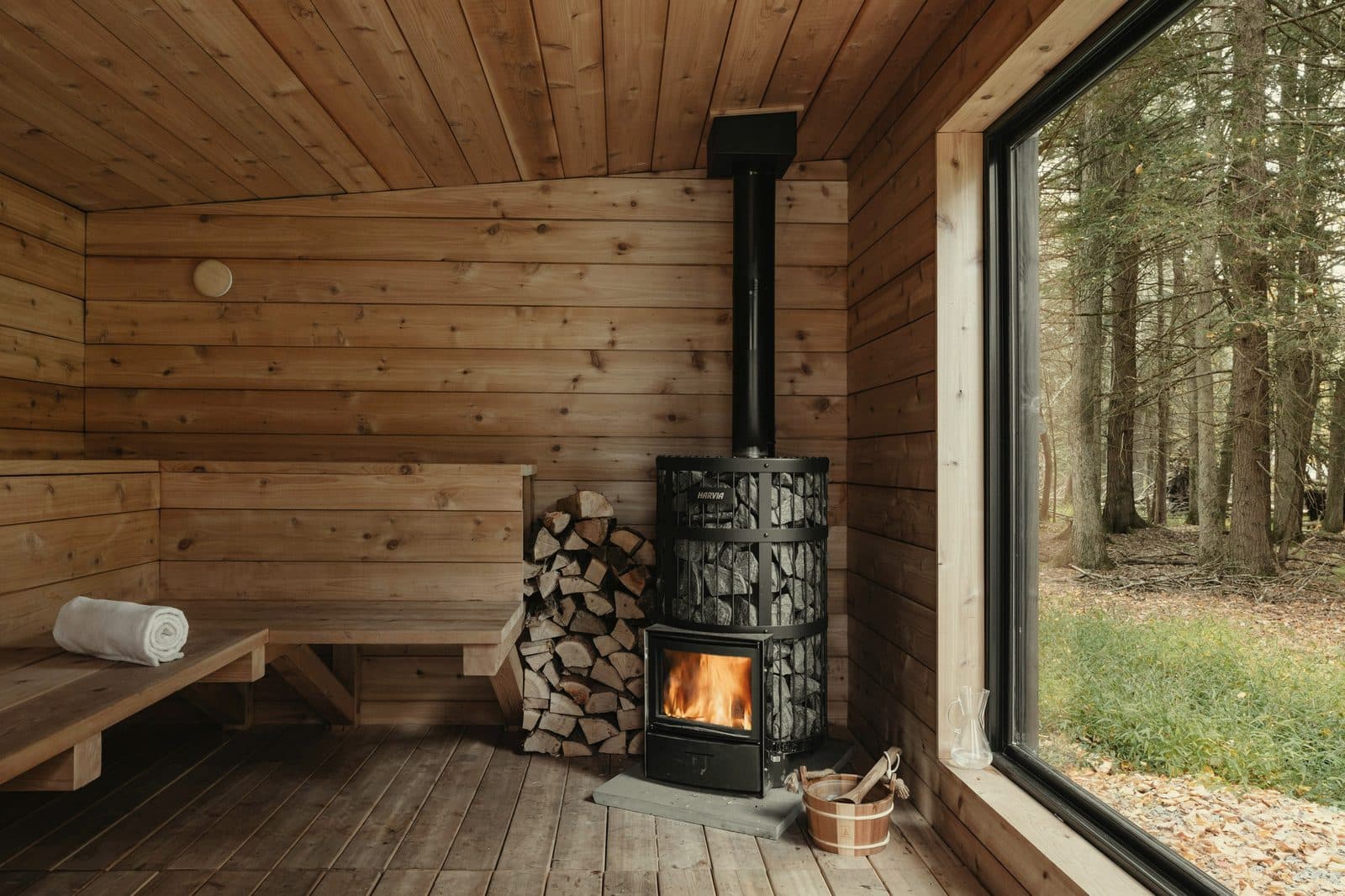
This guide explains how wood-fired sauna stoves work, how they are sized, what UK regulation actually requires, and how the brands sold here differ — for someone choosing a stove for a garden sauna or a small commercial site.
Almost every page that answers these questions is written by a company with a stove to sell. This one is not. The specifications below were read on each manufacturer's own website in August 2026, the regulatory position was checked against the legislation and the Approved Documents rather than anyone's summary of them, and where a figure could not be verified the guide says so instead of filling the gap.
Four things are worth knowing before the detail, because each one contradicts something widely repeated:
- The manufacturers disagree with each other about sizing, and none of them publishes a rule for a cold outdoor cabin in a British winter — the exact case most UK buyers have.
- "Ecodesign Ready" means nothing on a sauna stove. The regulation names sauna stoves and excludes them — though that does not leave them unregulated, and the standards position is the opposite of what you would expect.
- No wood-fired sauna stove is on the Defra exempt list, in any UK nation — so in a smoke control area there is no stove that solves the problem.
- Approved Document J probably does not apply to your sauna, and the reason matters more than the fact.
There are no prices anywhere in this guide. Stove pricing moves, and our cost guide already covers it properly. What is here instead is the stuff that does not change every season: how the things work, and what the rules say.
What a sauna stove actually is
A sauna stove and a domestic log burner look like cousins. They are not built to do the same job, and the difference is the whole point.
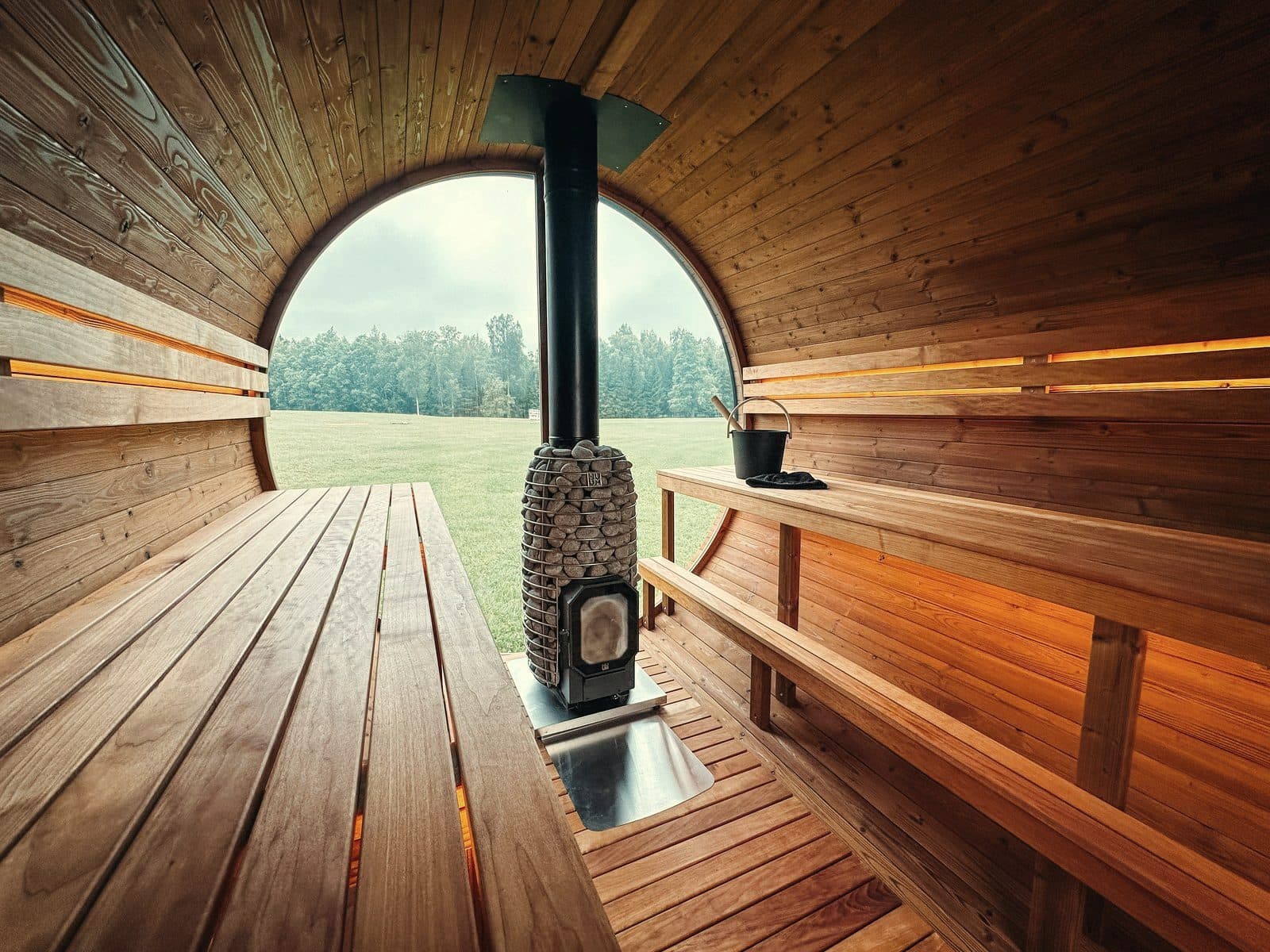
The European standard for these appliances defines the class by one characteristic: the heating stones are separated from and indirectly heated by the fire and the flue gases. The stones sit outside the fire path, in a chamber or cage around and above the firebox, and the fire heats them through the metal between.
That produces a stove built as three thin layers — fire chamber, air channel, outer casing. Air is drawn in beneath the base, warmed as it rises through the channels, and released between the stones at the top. The room heats by convection, and the stones hold the heat.
Thin metal is deliberate
This is the detail that catches people out, because it inverts a rule that holds everywhere else in the stove world. A sauna stove uses thinner metal than a room heater, and the argument is that it does so on purpose: heavy plate radiates heat sideways into the room, while thin metal raises resistance on that path and pushes heat into the stones instead. Heat production is treated as zero-sum — every watt radiating off the casing is a watt not stored in the stones.
Worth being straight about the sourcing here. That explanation comes from independent technical writing on sauna stove design rather than from any manufacturer, and no manufacturer publishes casing thicknesses that would let you check it directly. It is the best account we found of why these stoves are built as they are, and it is one account.
What it implies is testable, though: if it holds, "thicker is better" is right for the firebox and wrong for the outer casing, and a stove's published clearance to combustible material becomes informative — a stove needing a big clearance is throwing heat sideways rather than into the stones. The IKI Original asks for 100mm; some Harvia Legend models ask for 200–500mm. Those figures are manufacturer-published and you can check them yourself.
Löyly comes from the stones, never the steel
Water poured on the stones flashes to steam. If the stone bed is too shallow, water reaches hot metal underneath before it has turned to vapour, and the steam is harsh. The working minimum most often cited is around 35cm of stone depth — again from independent rather than manufacturer sources, so read it as a rule of thumb.
This is the functional difference from an electric heater rather than a matter of taste, and it is why stone capacity matters more than the headline output figure — covered below.
Sizing: the rule, and where it breaks
The rule you will be quoted is one kilowatt of output per cubic metre of sauna. It is a reasonable starting point and it has two serious problems.
Problem one: it is applied to a volume you have to calculate
The rule works on computational volume, not the size of the room. Uninsulated surfaces — glass, brick, tile, concrete, exposed log — leak heat, so each square metre of them is treated as extra volume. Every manufacturer agrees on the principle.
None of them agrees on the number.
| Source | Extra volume per m² of uninsulated surface |
|---|---|
| HUUM | 1.0 m³ |
| Harvia | 1.2 m³ |
| IKI | 1.2–1.5 m³ (stated as a rule of thumb) |
| Narvi | 1.5 m³ |
| UK trade guidance | 1.5 m³, or 0.75 m³ for double glazing |
On a sauna with three square metres of glazing, the most and least conservative rules differ by around 1.35 m³ of computational volume — enough to change which model you are told to buy. Only the UK trade figure distinguishes single from double glazing at all; Harvia's own manual does not.
There is no independent authority to settle this. The practical response is to run your numbers on the most conservative figure you find, and treat the answer as a range rather than a specification.
Problem two: nobody has written a rule for a British garden in January
This is the larger gap, and it is worth being blunt about. Every published sizing rule assumes an indoor sauna starting from room temperature. Harvia's own public sauna calculator takes four inputs — room dimensions, whether the build is log, whether there is a glass door, and the area of uninsulated wall. It has no input for outdoor siting and none for ambient temperature.
We could not find a single manufacturer publishing a winter or outdoor multiplier. UK trade advice on cold-weather siting exists but is entirely qualitative: thicker walls, well-sealed doors, smaller windows. Useful, but not a number.
So for the case most readers of this site actually have — a detached cabin in a UK garden, started from around 2°C on a January evening — the industry does not publish an answer. That is a gap in the guidance, not a gap in this guide, and it is the strongest argument for sizing up rather than down.
The same applies to ceiling height. Every rule works on volume, which absorbs height arithmetically and ignores that the löyly sits above the bench. Extra height above the stones is heated volume doing nothing for the person on the bench, and no source publishes a correction for it.
Problem three: the kilowatt figure is not comparable, and two brands do not publish one
The 1 kW/m³ rule came across from electric heaters, where output is the whole story. On wood stoves it survives less well:
- Harvia M3 — 16.5 kW, rated for 6–13 m³
- HUUM HIVE Wood 13 — 13 kW, rated for the same 6–13 m³
- HUUM HIVE Flow LS — 9.8 kW, rated for 8–18 m³, which is roughly half the rule of thumb
Same rooms, very different numbers, because stone mass and stove architecture are doing work the output figure does not capture. Narvi and IKI do not publish a kW figure at all — they size purely by room volume and stone capacity. Any Narvi or IKI wattage you meet online came from a retailer, not the manufacturer.
Model numbers need the same caution. They usually track maximum room volume, but not always: the Harvia 22 Vision is rated 9–18 m³, and the Legend 150 is rated 6–13 m³ rather than anything resembling 15.
Should you oversize?
UK trade advice is that a slightly oversized heater beats an underpowered one, on the grounds that a struggling stove gives poor heat-up, poor löyly and a shorter life.
Worth knowing before you act on that: Harvia's published warranty excludes damage resulting from a product that is "incorrectly dimensioned" for the application. Mis-sizing is an exclusion in either direction. And independent accounts hold that an oversized stove heats aggressively and is harder to moderate, with repeated over-firing warping and weakening steel over time.
The seller's advice and the manufacturer's warranty pull against each other here, and it is the buyer who sits in the gap. Size to the room, honestly calculated, and let the stone mass rather than the output do the buffering.
Stone mass: the number nobody publishes a target for
If one figure separates a good sauna from a disappointing one, it is stone capacity. It is also the figure buyers pay least attention to, because the output number is louder.
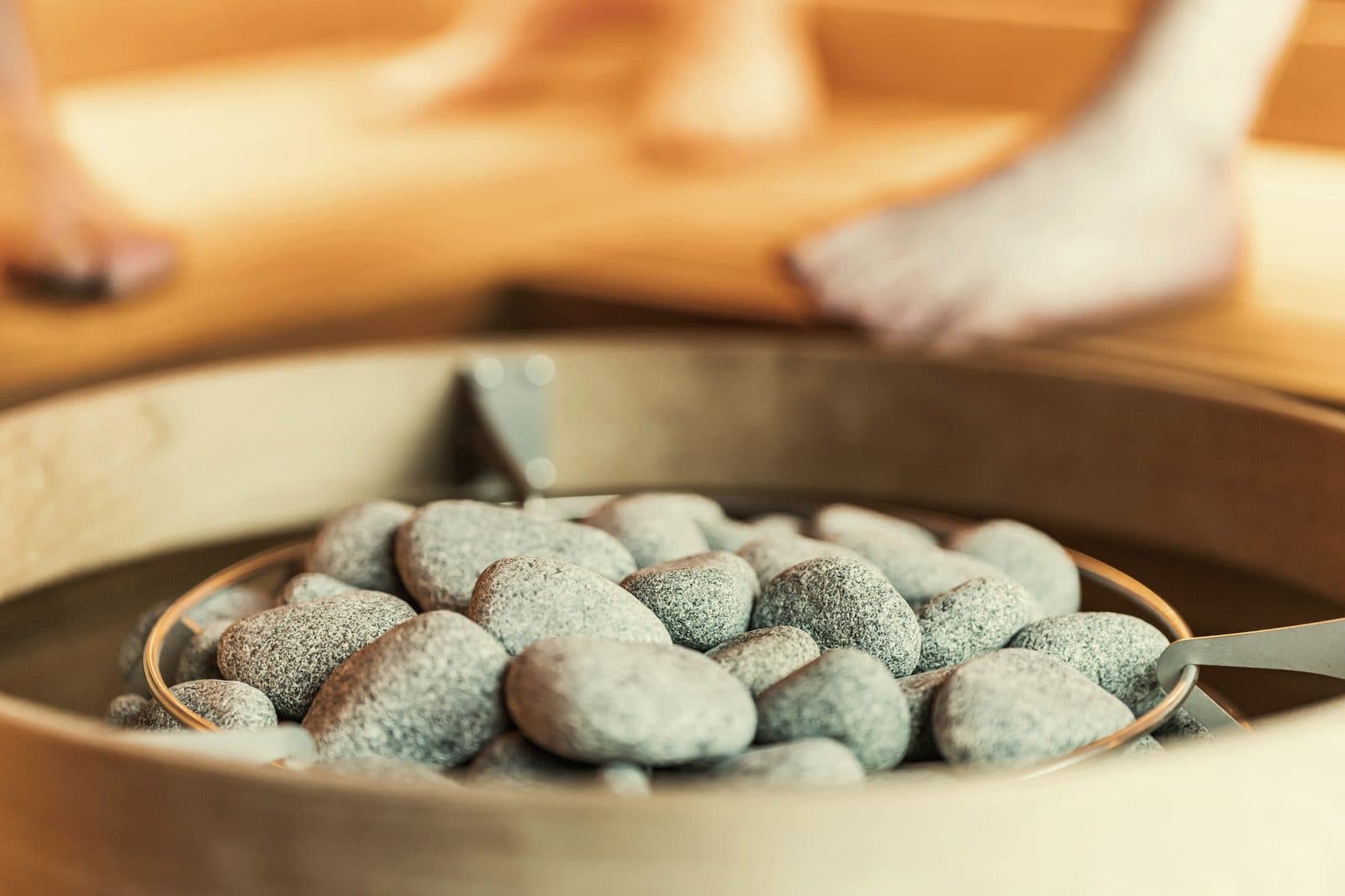
Stone mass acts as a heat store. It steadies the temperature as people come and go, and it is what makes löyly possible — soft steam rather than a hiss and a scald.
The spread is enormous
Across stoves rated for broadly similar rooms, published stone capacity varies by roughly an order of magnitude:
| Stove | Stone capacity | Rated room volume |
|---|---|---|
| Harvia M3 | 30 kg | 6–13 m³ |
| Harvia 22 Vision | 40 kg | 9–18 m³ |
| Narvi NC 16 / 20 / 24 | 50 / 60 / 80 kg | 8–16 / 10–20 / 10–24 m³ |
| HUUM HIVE Wood 13 / 17 | 90 / 130 kg | 6–13 / 8–16 m³ |
| Narvi Stony 20 | 210 kg | 8–20 m³ |
| IKI Original | 300 kg | 14–30 m³ |
| Löyly-IKI | 400 kg | 20–40 m³ |
The clearest illustration comes from inside a single catalogue. Harvia's Pro 20 is published at 24.1 kW with 40 kg of stone; the Legend 150 at 16 kW with 120 kg. The higher-output stove carries a third of the stone. Those two saunas would feel entirely different, and the output figure points the wrong way.
There is no published target, so here is the only benchmark we found
No manufacturer publishes a kilograms-per-cubic-metre target — not one, in any market we checked. The only numeric benchmark we could find is independent: around 4 kg per m³ is good, 6 kg per m³ better, against traditional Finnish smoke saunas running many times that.
That figure carries no authority behind it. It is one considered opinion, and we are quoting it because there is nothing better to quote, not because it is a standard.
Used as a rough sense-check, it is still revealing. A Harvia M3 at the top of its stated range works out around 2.3 kg/m³, below that suggested minimum. An IKI Original sits somewhere between 10 and 21 kg/m³. Both are "correctly sized" by the volume rule, and they would not feel remotely alike.
More stone does not have to mean a slower heat-up
This is the common objection and it is not automatically true. What governs heat-up is the contact area between fire and stone, not the mass alone. IKI publishes a one square metre contact area between furnace and stones, and states around an hour to heat — with 300 kg loaded.
HUUM sells an optional cage adding a further 35–40 kg to its HIVE Wood models, so stone mass is partly something you can add later rather than a fixed property of the purchase.
Which stones
The Finnish and Estonian manufacturers converge: peridotite, olivine, olivine diabase (Harvia); olivine diabase or vulcanite (Narvi); olivine or olivine diabase (IKI). Independent opinion agrees and adds gabbro.
Two cautions carry real consequences:
- Do not use stone you found. Harvia's manual is explicit that stones found in nature may contain harmful substances such as iron pyrite. Quarried virgin stone outperforms landscape or river rock, which can carry organic matter and contaminants.
- Using stones the manufacturer does not recommend voids the Harvia warranty — it is a named exclusion. Note that US and Finnish makers give opposed advice here: at least one American manufacturer recommends granite or quartz, which the Finnish makers do not, and independent technical opinion warns that high-quartz rock fractures. Following one maker's instruction can void another's cover.
Rough and irregular is better than round — more surface area for convection and steam, and round stones shift and settle. On size, HUUM and IKI specify 5–10cm; Harvia and Narvi specify 10–15cm for wood-fired heaters. Narvi's own split (5–10cm electric, 10–15cm wood) suggests this follows stove architecture rather than a disagreement about physics, but it reads as a contradiction if you are comparing two brands.
Replacement
Manufacturers say much the same thing in different words. Harvia: rearrange at least annually, more often in frequent use, removing anything that has disintegrated. IKI: unload and inspect annually, because old stones turn porous and erode fast. Narvi: replace annually at one or two sessions a week, or sooner if they crack — and knock two together as a field test, replacing them if they crack easily.
Stones that have gone porous pack down and choke the airflow, which is what degrades the heat. Commercial sites should expect to be at the frequent end.
Inside or through the wall
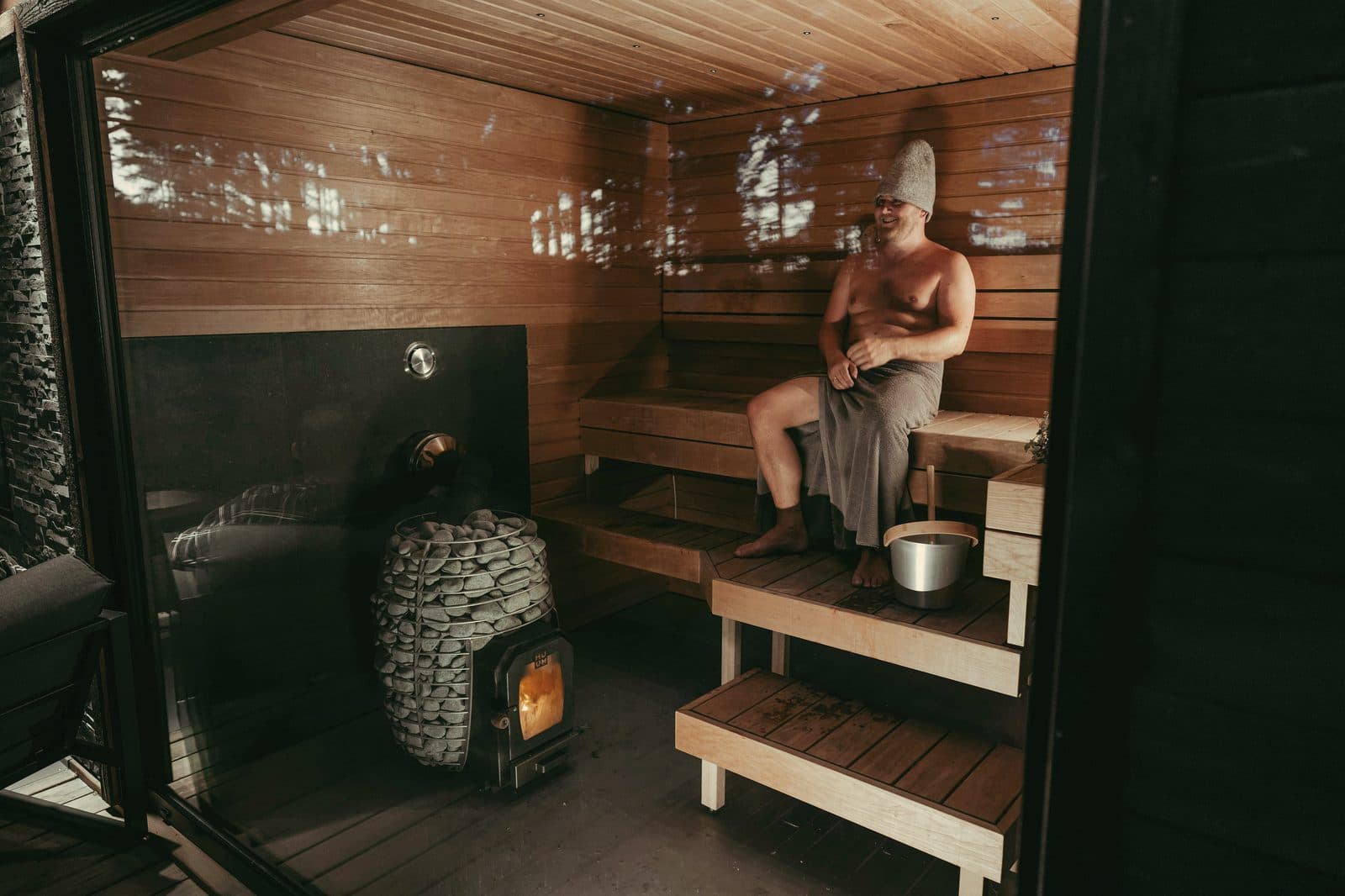
A through-wall stove — sometimes called an external feed, or badged "SL" or "LS" depending on the brand — is fed from the room next door or from outside, with the firebox extending through the wall. The stove body and stones stay in the hot room.
Mechanically it is the same stove with a longer firebox tunnel. HUUM's HIVE Wood 17 LS is 740mm deep against 590mm for the standard 17; the Flow LS is 706mm against 586mm, and its published safety distance rises correspondingly.
What you gain
- Nobody steps over a fire to get to the benches, and no one tends it in 90°C heat
- Wood, ash, bark and mess stay outside the hot room
- The fire can be fed mid-session without opening the sauna door — which is why operators running public sessions often prefer it
What you give up
The load-bearing trade-off is structural rather than thermal: the wall the stove passes through has to be entirely non-combustible — metal studs, cement board or masonry. That is a build decision, not an accessory, and it has to be made before the cabin goes up.
You also lose the heat that an internal firebox door radiates into the room, and you lose sight of the fire from the bench unless the model has a glass door.
It constrains what you can buy
Through-wall is often a separate model rather than an option. Narvi offers it as a distinct product on some stoves and not others — the Kaamos 20 has a through-wall variant where several siblings do not. Harvia's SL models are the through-wall line. HUUM is the outlier: every model has an LS twin.
So feed type narrows your shortlist first, and stone mass and volume range follow from what is left. Decide the feed before you fall for a stove.
One practical note for UK timber cabins: heat shielding is not optional. Proper shielding can cut the required clearance to a timber wall to roughly a third of the unshielded distance, which is often the difference between a stove fitting the room and not — and UK trade guidance treats a shield kit and insulated chimney as standard in a timber build rather than an upgrade. Use the clearances your own stove publishes rather than a general figure, and budget for both; our cost guide covers what they run to.
Materials, and how long a stove lasts
Nobody publishes an expected service life for a wood-fired sauna stove. Not one manufacturer, in any market we checked. So the honest answer has to be assembled from what they are prepared to commit to in writing.
The warranty is the only hard evidence
Harvia's published warranty terms — the version applying to products sold outside Finland, dated November 2023 — give wood-burning heaters two years in family use. The extra year offered for registering a product applies to electric heaters only.
In commercial or other non-consumer use, Harvia warrants a wood-burning heater for six months, against two years for an electric heater in the same class. That is the manufacturer pricing its own risk, and it says something plain: a wood stove under public-session load is a shorter-life item than the same manufacturer's electric equivalent.
Two clauses worth reading if you run sessions commercially: converting a domestic installation to non-consumer use voids the warranty mid-term, and warranty repairs do not extend the original period.
We are publishing Harvia's figures because Harvia publishes them. We could not obtain warranty durations for IKI or Narvi from the manufacturers directly — IKI's warranty page returns an error, and the durations circulating for both brands come from distributor pages. We are not going to repeat numbers we could not source, so treat any IKI or Narvi warranty figure you are quoted as something to confirm in writing before you buy.
"Stainless steel" covers a very wide range
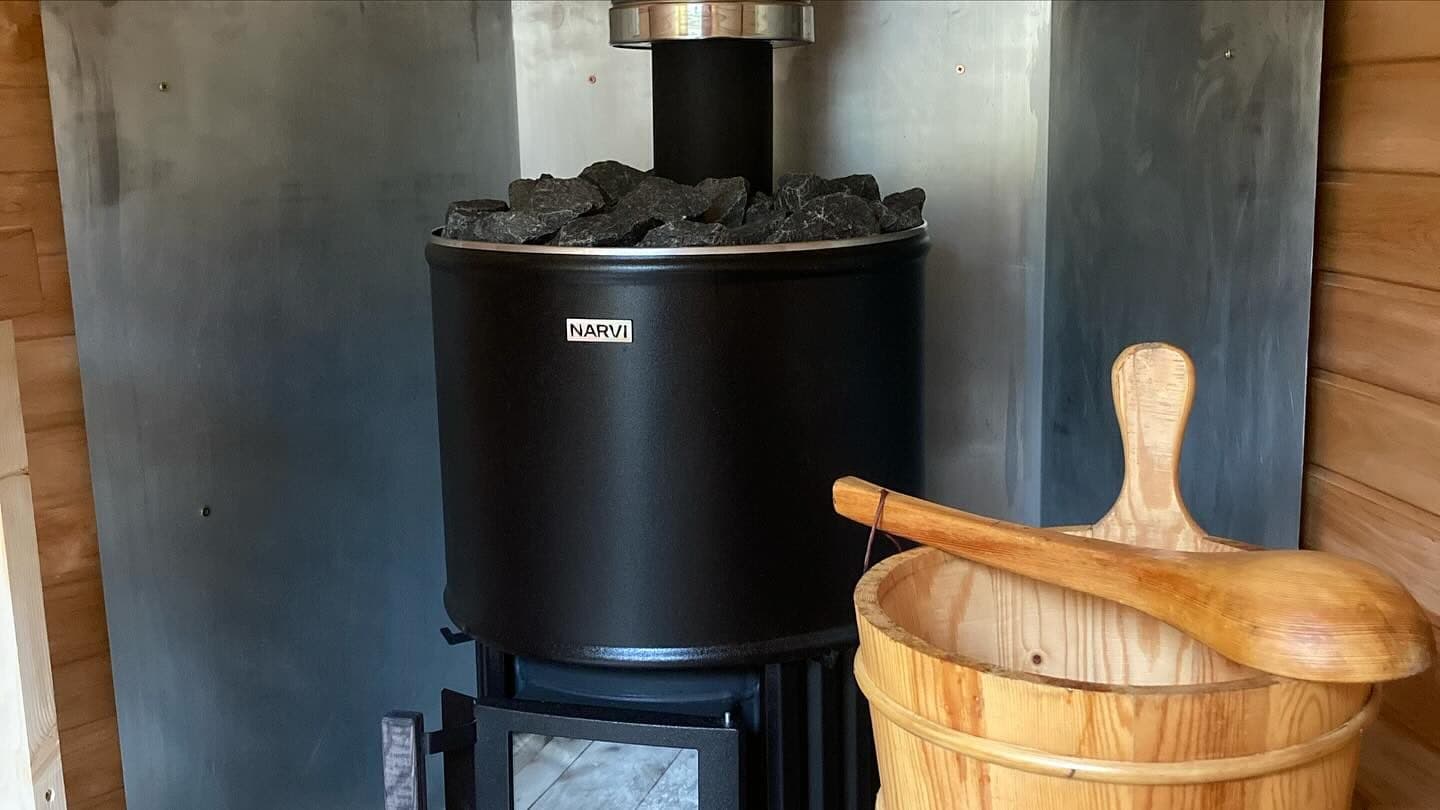
Published body materials: Harvia states "steel", with cast-iron doors on some models. Narvi offers painted black or stainless casings. HUUM and IKI use stainless throughout.
The word on its own tells you little. Grade matters more:
- 430 is ferritic with almost no nickel, and corrodes readily on exposure to moisture, salt or coastal air
- 304 (roughly 18% chromium, 8% nickel) resists corrosion and flue condensate far better
So does thickness, where it is published at all — and mostly it is not. Narvi publishes 10mm, though specified as the firebox roof rather than the whole body, so do not read it as a casing thickness. HUUM publishes a 5mm top and 3mm sides on the HIVE Flow, and a 5mm flame tamer on the HIVE Wood. Harvia and IKI publish no thickness figure on any product page we opened; any number you see quoted for them came from a retailer.
For scale: a portable sauna stove sold in the UK publishes 0.8mm 430-grade stainless. Comparing that to Narvi's 10mm on the strength of both saying "stainless" is meaningless.
How stoves actually die
Surface rust is not the failure mode. As one independent builder puts it, a heavy stove is untreated, will rust, and is thick enough to last many years anyway. Thin section is what kills a stove: burn-through and warping, accelerated by over-firing.
Narvi names three mechanisms — corrosion, stone degradation and blocked ventilation — driven by excess moisture, poor ventilation and the wrong fuel.
And the component most likely to need replacing first is not the stove — it is the flue. One experienced builder puts interior stovepipe replacement at around three to five years, checked twice a year. We found no manufacturer figure to set against that, so treat it as a working expectation rather than a specification, and budget for the flue as a consumable either way.
One gap worth naming: despite a large share of UK sauna operators being coastal, no sauna stove manufacturer publishes coastal siting guidance or a steel-grade recommendation for seafront installation. The corrosion evidence for 304 over 430 comes from chimney and general stainless sources rather than anyone in this trade. If you are siting a stove within reach of salt air, that is a question to put to the supplier in writing.
Glass doors, and the airwash question
Glass doors are standard rather than premium on mainstream sauna stoves. Harvia's M3 ships with one, the 22 Vision advertises a larger glass hatch than its predecessor, and Narvi's NC uses a cast-iron-framed glass door.
With an internal-feed stove, the door radiates into the hot room and you can see the fire from the bench — which is the real counterweight to the through-wall argument.
Airwash is a domestic-stove feature, and it does not carry across
If you have shopped for a log burner you will know airwash: heated secondary air drawn down the inside face of the glass to keep it clear. The domestic stove trade treats it as universal — it is difficult to find a current room heater without it.
No sauna stove manufacturer among Harvia, Narvi, HUUM and IKI advertises airwash on their own product pages. We checked for it specifically.
There is a structural reason rather than an oversight. On a sauna stove, the secondary air channel runs outside the fire chamber, between the casings, carrying heat to the stones. That is the opposite routing to a domestic airwash baffle, which needs the air to arrive at the top of the glass inside the firebox. The architecture that makes a sauna stove good at heating stones is the architecture that makes airwash hard.
Secondary burn does exist on sauna stoves, but as a named feature on specific products rather than a category norm — one American maker markets a brick-lined, baffled firebox on exactly that basis.
Practically: expect to clean the glass, and expect it to soot up faster if you burn damp wood or let the fire smoulder. No manufacturer publishes a cleaning procedure for sauna-stove glass. The transferable practice from domestic stoves is to clean it cold, use ash on damp paper as a mild abrasive, and prevent the problem by burning dry wood hot rather than slow.
What UK law actually asks of you
This is the section seller pages handle worst, and it contains the two findings most likely to save you money.
Approved Document J probably does not apply to your sauna
Approved Document J is the building regulations guidance for combustion appliances — flues, hearths, clearances, air supply. Nearly every stove page treats it as binding on a garden sauna. For most readers it is not, and Approved Document J says so itself: Schedule 2 to the Building Regulations exempts certain classes of building from all Building Regulations requirements, including those in Part J.
The relevant class covers a detached building with no sleeping accommodation that is either under 15m², or under 30m² and sited at least a metre from the boundary or built substantially of non-combustible material. The 15m² limb carries no single-storey requirement and no boundary condition — only that the building is detached and nobody sleeps in it.
Where that exemption applies, the requirements clawed back are the electrics and two water requirements — and only where the supply comes from a source shared with, or inside, a dwelling. Part J is not among them.
Read that electrical claw-back carefully, because it catches most people: a garden sauna wired from the house does engage Part P. The stove may be outside building control while the cable feeding the lights is not.
So for a typical garden sauna in England or Wales, the Approved Document is best practice rather than law, and the manufacturer's installation instructions become the operative document. Follow both anyway — they describe what a safe installation looks like, and "not legally required" is a poor thing to have in mind during a chimney fire.
Three situations flip it: the building exceeds the size or siting limits, someone sleeps in it, or it is in Scotland.
Scotland is genuinely different, and the stove is what does it
Scotland's exemptions for small ancillary buildings carve out any building containing a fixed combustion appliance installation — the smaller class also names a flue explicitly. Either way a stove is caught, so a wood-fired sauna in the garden of a house needs a building warrant in Scotland whatever its size. Putting a stove in it is precisely what removes the exemption an equivalent English sauna relies on.
One caveat on that, since "regardless of size" gets repeated too loosely: the carve-out applies to buildings ancillary to a house, which is what a domestic garden sauna is. A standalone recreational building not ancillary to anything sits under a different class with different conditions. If your sauna is not in the garden of a dwelling, check the specific class rather than assuming this rule.
Northern Ireland has its own Building Regulations and Technical Booklet L. We could not verify its exempt-building thresholds from a primary source, so we are not going to state them — check with your district council rather than relying on any figure, including ours.
Wales has diverged from England on the Approved Document itself: England is on the 2022 amendments, Wales on the 2024 set. The underlying regulations are shared; the guidance is not.
The figures worth having
Whether or not Part J binds you, these are the published requirements for a solid-fuel appliance in England:
- Flue diameter — 150mm minimum for a closed appliance up to 30kW burning wood. The 125mm figure that circulates applies only to smokeless or low-volatile fuels, and untreated wood is expressly neither
- Flue outlet — 600mm above the ridge where the flue is at or within 600mm of it; where an openable rooflight, dormer or other opening sits within 2.3 metres horizontally, at least 1 metre above the top of that opening. The 2.3 metre figure is the horizontal trigger, not a vertical clearance, and it is very widely misquoted
- Flue height — 4.5 metres "could be satisfactory" is guidance on achieving draught, not a statutory minimum. Most sauna flues are well short of it, and the alternative route is a calculation to BS EN 13384-1
- Clearance to combustibles — three times the flue diameter for an uninsulated connecting pipe, reducing to 1.5 times with proper shielding. For the stove body, use the manufacturer's published figure
- Hearth — 12mm non-combustible board is sufficient where the appliance is not in a recess and is tested to show it cannot take the hearth surface above 100°C; otherwise 125mm of solid non-combustible material
- Combustion air — a permanently open vent at 550mm² per kW. That is an open vent in the room, not a sealed duct to the appliance
Carbon monoxide alarm: fit one. Be clear about its status though — the Part J requirement is expressly limited to appliances in dwellings, and a detached garden sauna is not a dwelling. It is strongly advised rather than legally required, and it is the single most sensible thing you can put in that room.
Installation and notification
Where the work is notifiable, notifying building control is the legal requirement, and there are two routes. A registered competent person can self-certify and notify for you — HETAS is one named scheme in the legislation rather than the only one, and scheme registration is voluntary for installers rather than a legal requirement in itself. Otherwise you apply to building control before the work starts. If it has already been done unnotified, there is a retrospective regularisation route.
One claim to treat carefully: certificates are widely described as required to validate home insurance. That describes insurer practice, not law — no statute makes cover contingent on one, and we found no documented case of a sauna claim declined on those grounds. It is still the document a buyer's solicitor will ask for.
Smoke control areas: there is no stove that solves this
In a smoke control area you may only burn unauthorised fuel — which includes wood — in an appliance on the Defra exempt list.
No wood-fired sauna stove is on that list, in any UK nation. The register is organised by appliance category — stove, boiler, pellet stove, pizza oven, incinerator, roomheater, inset appliance, gasifier — and there is no sauna category and no sauna appliance on it.
Part of the picture is in the exemption scheme's own guidance, which lists the sauna-stove test standard as an accepted measurement method but marks it as not demonstrating compliance with Clean Air Act requirements, noting that it "does not include particulate emission tests".
That is worth reading precisely rather than as an explanation. Several other standards carry exactly the same marking — including the ordinary room-stove standard, under which thousands of appliances are exempt in England. So the marking does not bar exemption; it means the standard on its own is not sufficient, and a manufacturer would need to commission the additional particulate testing and apply. The honest position is that none has, not that none could.
So if you are inside a smoke control area, the answer is an electric heater, not a different stove. Anything sold to you as a "Defra approved sauna stove" deserves checking against the actual register. Penalties are up to £300 for the smoke and up to £1,000 for buying unauthorised fuel for a non-approved appliance — considerably less than the figures usually quoted, but the compliance problem does not go away for being cheap.
Our guide to smoke control areas covers how to check your address, and the genuinely unresolved question of whether a garden sauna counts as a "building" for these rules.
"Ecodesign Ready" means nothing on a sauna stove
You will see sauna stoves marketed as Ecodesign compliant or Ecodesign Ready, borrowing the language from the domestic stove market where those rules bite hard.
The ecodesign regulation for solid fuel local space heaters expressly excludes sauna stoves. Not by implication — Article 1 lists them among the products the regulation does not apply to, and Article 2 defines the excluded term as a solid fuel local space heater incorporated in, or declared to be used in, dry or wet saunas or similar environments. The exclusion is deliberate and appliance-specific, and it carries into current GB law unchanged. The companion energy-labelling regulation excludes sauna stoves too, so the position is doubled rather than accidental.
Two further things make the marketing claim weaker still. "Ecodesign Ready" was a voluntary industry mark run by the Stove Industry Alliance, which the SIA itself now describes as previously run — it has been replaced by a separate certification scheme. And in July 2026 the Advertising Standards Authority upheld complaints about emissions claims tied to this regulation, finding it was not clear that the claim was limited to emissions covered by it.
So on a sauna stove the label is not false so much as empty: a retired voluntary mark referencing a regulation that does not cover the product. Judge the stove on its published specifications instead.
But sauna stoves are not unregulated — and the standards position is counter-intuitive
It would be easy to read the above as "no rules apply". That is wrong, and the detail matters if you are checking what a stove is certified to.
Sauna stoves sit inside the assimilated Construction Products Regulation, and the standard designated for them in Great Britain is EN 15821. Here is the counter-intuitive part: BSI withdrew EN 15821 in June 2025 and published a successor that September — but the successor has not been designated in Great Britain, and EN 15821 remains on the current GB designated standards list.
So a withdrawn standard is still the legally operative one here. If you see a stove certified to EN 15821, that is not a stove trading on out-of-date paperwork — under GB rules it is the correct reference. Several parts of the successor family were designated with transition periods running to 2027; the sauna-stove part was not among them.
We are stating this carefully because it is the sort of thing that gets summarised into the opposite of the truth. Withdrawn by the standards body does not mean withdrawn in law.
The brands sold in the UK
Specifications below were read on each manufacturer's own website in August 2026. Where a manufacturer does not publish a figure, the table says so — that means the figure is not published, not that it is unknown to the trade.
We have no affiliate or commercial relationship with any manufacturer here, and inclusion is not a recommendation. Links go to the manufacturer rather than a UK reseller, so you can check the specifications at source.
| Brand | kW published | Stone capacity | Body | Feed |
|---|---|---|---|---|
| Harvia (Finland) | 15.9–40 kW | 30–260 kg | "Steel", cast-iron doors on some models. No thickness published | Both — "SL" models are through-wall |
| Narvi (Finland) | None published | 50–650 kg | Painted black or stainless. 10mm published, but as firebox roof rather than casing | Both, on selected models only |
| HUUM (Estonia) | 8.5–17 kW | 90–150 kg | Stainless. HIVE Flow publishes 5mm top, 3mm sides | Both — every model has an "LS" twin |
| IKI (Finland) | None published | 120–400 kg | Stainless throughout, stainless mesh front. No thickness published | Both — "SL" models are through-wall |
Two things that table does not show
There is no fifth brand, because no UK company manufactures sauna stoves. We went looking specifically — through the British Sauna Society's own equipment directory, through UK sauna builders, and through established British domestic stove manufacturers. The Society's directory lists stove suppliers from Finland and Estonia only. The British companies that come up are cabin builders and retailers fitting imported stoves, and no UK domestic stove maker offers a sauna model. Every wood-fired sauna stove we could verify on sale here is imported.
Four brands does not mean four independent supply routes. Narvi, IKI and HUUM each name the same UK dealer on their own websites. Three of the four reach British buyers through one business. That is not a criticism of the company — it is a small market and someone has to import — but a reader comparing three brands should know they are largely comparing products sold by the same people.
Harvia is the exception, reaching the UK through several independent retailers. It is also, awkwardly, the one brand whose UK availability we could not establish from its own website: its dealer locator did not render to us and its contact page names no UK sales area, where the other three list their UK dealer in plain text.
Ownership, and a correction worth making
Two brands under one parent is common here and rarely obvious on a retailer's shelf:
- Narvi owns Kota and Aito, acquired in 2010. A retailer showing all three side by side is showing one manufacturer
- Helo owns Kastor, which is often presented as an independent heritage Finnish brand
- Harvia Group owns Harvia, EOS, Almost Heaven Saunas, Kirami and ThermaSol. DROP, sometimes assumed to be Harvia's, is a HUUM product
One practical caution on Harvia specifically: several models familiar to UK buyers — the M3, Harvia 16, Pro 20 and Pro 36 among them — are marked discontinued on Harvia's own site while UK retailers still list them as current stock. That is a supply lag rather than a contradiction, but check the status on the manufacturer's site before committing to a model you will want spares for.
Kuuma, if you have been reading American sources
Kuuma stoves come up constantly in US sauna discussion and are not practically buyable here. The manufacturer publishes no UK or European dealer, ships internationally by ocean freight with payment by wire transfer, and we found no CE or UKCA conformity statement. Buying one means a personal import carrying freight, customs and brokerage, with no UK service or spares route. Read about them by all means; do not build a plan around one.
Fuel and firing
Sauna firing is not log-burner firing, and the difference surprises people who arrive from a domestic stove.
Sticks, not logs
A sauna stove wants a fast, hot fire rather than a long slow burn. The practical guidance from experienced builders is to think sticks rather than logs — finger-thick to arm-thick, softwood and scrap board to establish the fire, hardwood to sustain it. Loading a sauna stove with large logs and damping it down, which is exactly right for a domestic burner, is exactly wrong here.
Check the log length before you order fuel. It is a stove-specific constraint that catches people: HUUM's HIVE Flow LS takes 300mm firewood, and some American stoves take up to 510mm. Standard UK "stove length" logs do not automatically fit.
How much wood
Honestly: no measured figure exists. Every volumetric number in circulation — litres per hour, cords per year — traces back to seller blogs repeating each other, and we are not going to add another.
What can be said, from independent first-hand accounts: a short sauna takes about one armload of wood, with reloading for longer sessions as people come and go. One documented firing at around 4°C ambient took a small cabin from roughly freezing to 77°C in 45 to 60 minutes on one armful plus kindling — with about two more logs banked for winter conditions.
For what that costs across a season, see the cost guide, which handles fuel pricing properly.
Moisture, and the law on buying wood
Around 20% moisture is both the performance threshold and, in England, the legal one for retail wood sales. Wet wood is the most common cause of a sauna that will not get hot, and over-dried wood burns too fast to be useful either.
The legal position is narrower than most people assume, and it is worth understanding because it changes what you should buy:
- The restriction applies to wood supplied in units under 2 cubic metres for domestic combustion in England, which must be certified and below 20% moisture
- Bulk loads of 2 m³ and above are outside it. If you buy wood by the load — which most regular sauna users end up doing — the moisture guarantee does not come with it, and seasoning becomes your responsibility
- The duty sits on the supplier, not on you as the person burning it
A moisture meter is a small purchase that settles the question for the life of the sauna.
Reading the fire
Two field indicators worth knowing. Visible smoke should stop roughly five to ten minutes after lighting, once the fire reaches gasification — if it is still smoking, the fire is too cool and you are laying down creosote. And the stovepipe inside the sauna runs far hotter than a domestic flue, but should never glow red; close the door air control, the damper, or both.
A wood-fired sauna that takes three hours to heat has a fault, not a characteristic. The four causes worth checking are chimney draw (leaky joints, too many bends), combustion air, insulation, and wet wood.
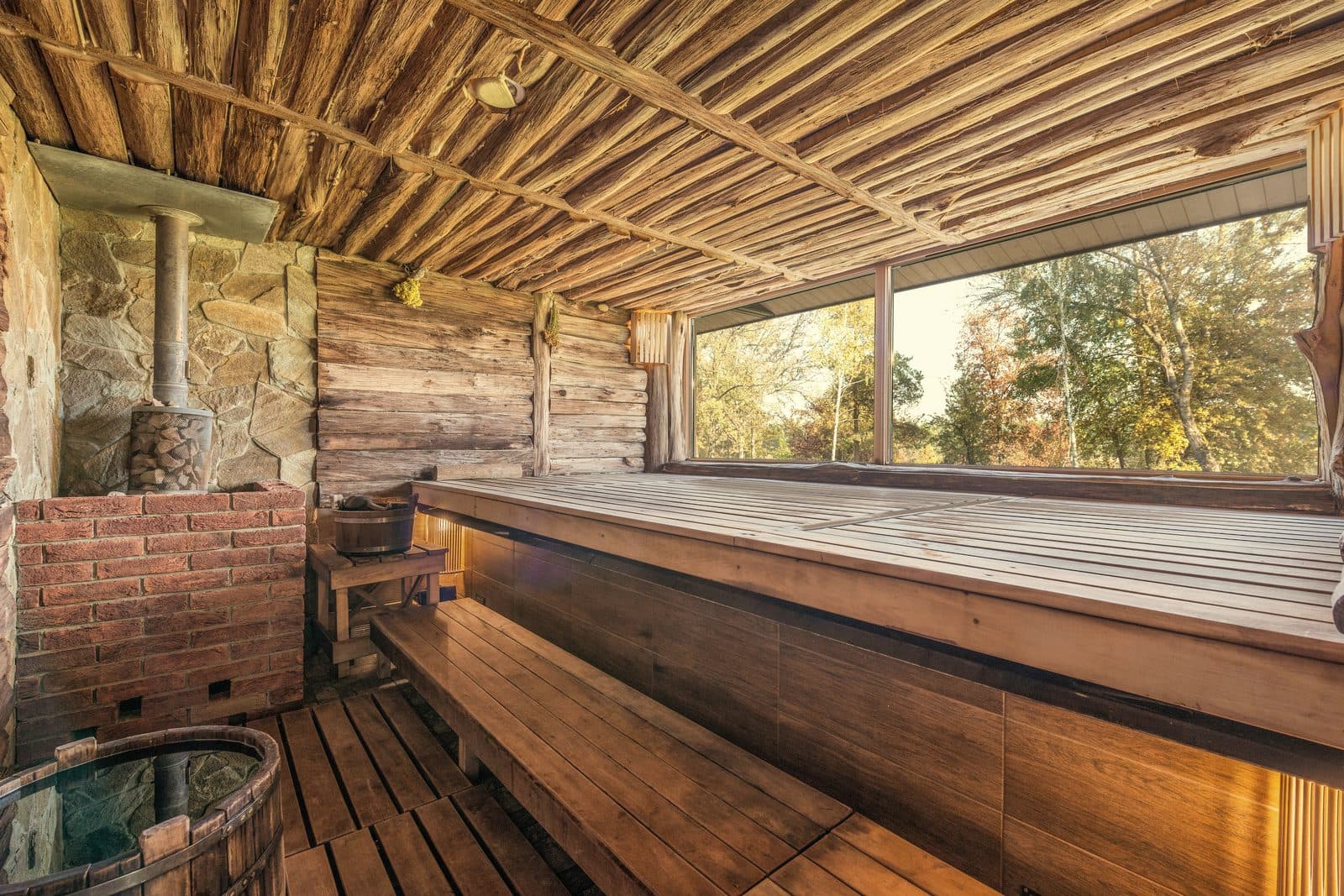
Maintenance and what shortens a stove's life
None of this is difficult. Skipping it is what turns a long-lived stove into a short-lived one.
Routine
- Ash — empty the pan every three or four uses and clean the firebox monthly. Leave a little ash in the pan; it insulates and protects the pan base. Empty cold, into a metal container with a lid, kept away from buildings until fully out
- Sweeping — HETAS recommends at least twice a year when burning wood, against once a year for smokeless fuels. There is no legal monopoly on who does it, but an approved sweep carries an identity card worth asking to see. An independent view holds that annual sweeping suffices for a sauna fired hot on dry wood, on the argument that short hot burns lay down less creosote than domestic slumbering. No sauna-specific authority settles it, so twice yearly is the safer reference
- Stones — inspect annually, replace by condition rather than percentage, using the knock test above
- Door rope and gasket — check with the monthly firebox clean. A failed seal admits uncontrolled air and makes the fire harder to manage
- Stovepipe — check twice a year and expect to replace the interior section at around three to five years
Rust, damp and the off-season
Narvi's published advice is direct: maintain proper sauna ventilation, avoid salt-based cleaning products, and make sure the sauna dries completely between uses. A sauna that never fully dries corrodes its own stove.
Over winter or a long unused stretch, dry the room out thoroughly and consider a moisture absorber inside the firebox. If your stove has a water tank, drain it before a freeze — expansion cracks tanks and valves, and that is a repair rather than an adjustment.
The mistakes that cost you a stove
- Over-firing. The single most avoidable one. Repeated over-firing warps and weakens steel, and the red-glowing stovepipe is the warning
- Wet or treated wood. Slow heat-up, creosote, corrosion. Never burn painted, treated or laminated timber
- Poor ventilation. Starves the fire and, per Narvi, is one of the three named drivers of premature heater failure. It is a stove-life issue, not just a comfort one
- Wrong stones, or found stones. Voids the Harvia warranty outright, and pyrite-bearing rock has no place in a hot box you sit in
- Packing the stones tight. Larger at the bottom, smaller on top, air circulating between them. Wedged stones choke the convection the stove depends on
Next steps
If you are choosing a stove, the order that saves the most rework is:
- Check your address against the smoke control map first. Inside one, no wood-fired stove is compliant and the decision is made for you — before you have spent anything
- Decide internal or through-wall feed next, because it dictates whether the wall has to be non-combustible, and that has to be settled before the cabin is built
- Calculate your volume honestly, adding for every uninsulated surface on the most conservative figure you find, and remember no rule accounts for a cold British garden
- Then shortlist on stone capacity, not output. Check the kg-per-cubic-metre against the 4 kg/m³ floor
- Confirm the warranty in writing — particularly if you will run sessions commercially, where cover can be a fraction of the domestic term
Our cost guide covers what all of this comes to, the planning guide covers permission and building control, and the wood-fired versus electric comparison is the place to start if you have not settled that question yet.
Best of all, sit in a few. Stone mass and löyly quality are things you feel in ten minutes and cannot read off a specification sheet — our directory lists wood-fired saunas across the UK.
Frequently asked questions
- Start with one kilowatt per cubic metre of sauna, then add extra volume for every square metre of uninsulated surface such as glass, brick or exposed log. Manufacturers disagree on how much to add — HUUM says 1.0 m³, Harvia 1.2, Narvi 1.5, and UK trade guidance 1.5 for single glazing or 0.75 for double — so run the calculation on the most conservative figure and treat the result as a range. One important gap: every published rule assumes an indoor sauna starting from room temperature. Nobody publishes a correction for a cold outdoor cabin in a British winter, which is an argument for sizing up rather than down.
- There is no manufacturer-published target. The only benchmark we found is independent: around 4 kg per cubic metre of sauna is good and 6 kg is better. Published capacities vary enormously between stoves rated for similar rooms — from 30 kg up to 400 kg — so two stoves both correctly sized by volume can differ several-fold in stone mass, and therefore in how steady the heat is and how good the löyly. Check the kilograms against your room volume rather than reading the output figure.
- Not in practice. Burning wood there requires an appliance on the Defra exempt list, and we checked all four national registers in August 2026 — no wood-fired sauna stove appears on any of them. The sauna-stove test standard does not include particulate emission tests, so a manufacturer would have to commission additional testing and apply for an exemption, and none appears to have done so. Anything marketed as a Defra approved sauna stove is worth checking against the register itself. Inside a smoke control area, an electric heater is the compliant route.
- Often not in England and Wales. Schedule 2 of the Building Regulations exempts a detached building with no sleeping accommodation that is under 15m², or under 30m² and either a metre from the boundary or substantially non-combustible — and that exemption covers all Building Regulations requirements, Part J included. Approved Document J says so itself. The electrics are the main thing that follows you in. It changes if the building is larger, if someone sleeps in it, or if you are in Scotland, where any building containing a flue needs a building warrant regardless of size.
- Nothing useful. The ecodesign regulation for solid fuel local space heaters expressly excludes sauna stoves, naming them in its scope article, and the companion energy-labelling regulation excludes them too. Ecodesign Ready was also a voluntary industry mark that the Stove Industry Alliance no longer runs. The claim borrows credibility from the domestic stove market, where the rules do apply, but on a sauna stove it points at a regulation that does not cover the product. That does not mean sauna stoves are unregulated — they fall under construction products rules, where EN 15821 remains the designated standard in Great Britain.
- No manufacturer publishes an expected service life, so the warranty is the only firm evidence. Harvia gives wood-burning heaters two years in family use and six months in commercial use, against two years for an electric heater in the same class — the manufacturer's own pricing of the risk. We could not obtain warranty durations for IKI or Narvi from the manufacturers directly, so confirm those in writing before buying. In practice the flue goes first: interior stovepipe typically needs replacing at around three to five years.
- They suit different setups. Through-wall keeps wood, ash and fire-tending out of the hot room and lets you feed the fire mid-session without opening the sauna door, which is why operators running public sessions often choose it. The cost is structural: the wall the firebox passes through must be entirely non-combustible, so it has to be decided before the cabin is built. Internal feed captures all the heat in the room and lets you see the fire. Feed type also narrows your model choice, since through-wall is often a separate product rather than an option.
- We could not find one. Searching the British Sauna Society's own equipment directory, UK sauna builders and established British domestic stove manufacturers turned up no UK sauna stove maker — the Society lists suppliers from Finland and Estonia only, and the British companies that come up build cabins or retail imported stoves. Every wood-fired sauna stove we could verify on sale in the UK is imported. Three of the four main brands also reach British buyers through the same single distributor.
What size wood-fired sauna stove do I need?
How much stone does a sauna stove need?
Can I use a wood-fired sauna stove in a smoke control area?
Does a garden sauna stove need building regulations approval?
What does Ecodesign Ready mean on a sauna stove?
How long does a wood-fired sauna stove last?
Is an internal or through-wall sauna stove better?
Are wood-fired sauna stoves made in the UK?
Related guides
Wood-Fired vs Electric Sauna: What’s the Difference?
Practical comparison of wood-fired and electric saunas covering heat, running costs, installation, UK regulations, and which suits different settings.
Building & planningHow Much Does a Wood-Fired Sauna Cost in the UK?
Real 2026 prices for wood-fired saunas — kits, delivered barrels, stoves, self-builds and running costs — checked against live UK supplier pages, with no sauna to sell you.
Building & planningWood-Fired Saunas and Smoke Control Areas
No wood-fired sauna stove is on the Defra exempt list — none, in any UK nation. What smoke control law actually says in 2026, where it reaches a garden sauna, and where nobody yet knows.
Browse the directory
The monthly digest
New saunas and new guides, once a month. No spam, unsubscribe any time. Your address is used only for the digest — privacy notice.