Buying a Wood-Fired Sauna: UK Buyer's Guide
This guide explains what to check before paying for a wood-fired sauna in the UK — what a quote actually covers, how to tell a maker from a middleman, and which consumer rights apply to the kind of purchase most sauna buyers are making. It is written for someone about to spend real money, not for someone browsing.
Almost every page that ranks for this question is written by a company with a sauna to sell. This one is not. We run a directory of 68 UK sauna builders and 279 researched places to try one, we take no commission from any of them, and the observations below about the UK market come from our own directory rather than from anybody's marketing.
Four things are worth knowing before the detail, because each one changes what you should do next:
- A "wood-fired sauna" price does not reliably include the stove. Some suppliers build it in, others sell it separately. The first question on any quote is what the number actually covers.
- Most UK sauna buying is made-to-order, and made-to-order is the one category the 14-day cancellation right excludes. Of the 68 builders we list, 53 do custom work and only 12 sell a kit. This is the single most misunderstood thing about buying a sauna here.
- Lead times run from about a week to six months, and they track the route you choose rather than the price you pay. If you want heat this winter, this is the number to ask about first.
- The regulatory obligations sit with you, not the supplier. A seller telling you no permission is needed is not a defence if they are wrong.
There are no prices in this guide. Sauna pricing moves, and our cost guide already covers it against live supplier pages. What is here instead is the part that does not change: what to look at, what to ask, and where you stand if it goes wrong.
What you are actually choosing between
Three decisions sit underneath every sauna purchase, and people often make the third before the first. Taken in order they are: what shape of building, by what route, and from whom.
The shapes
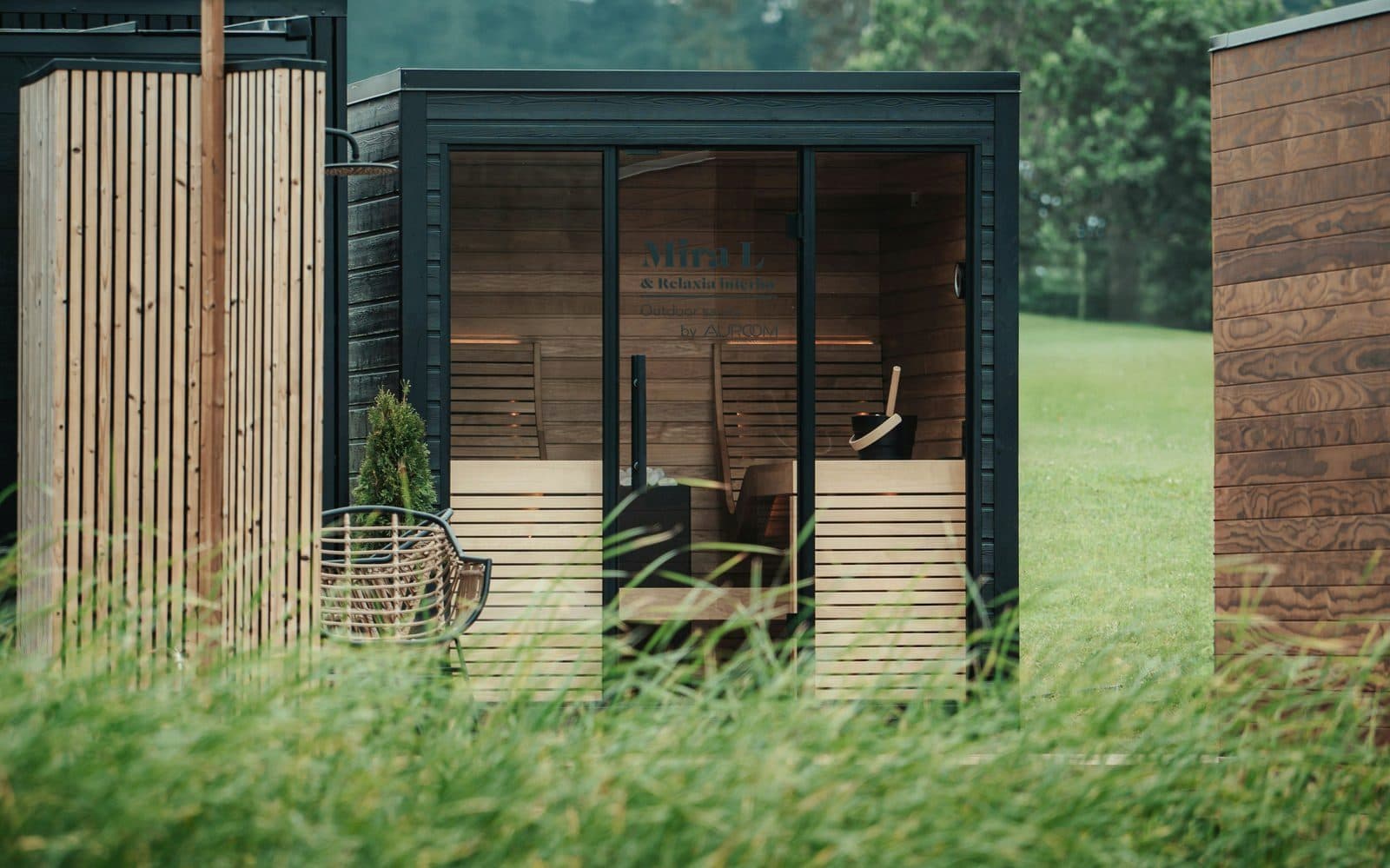
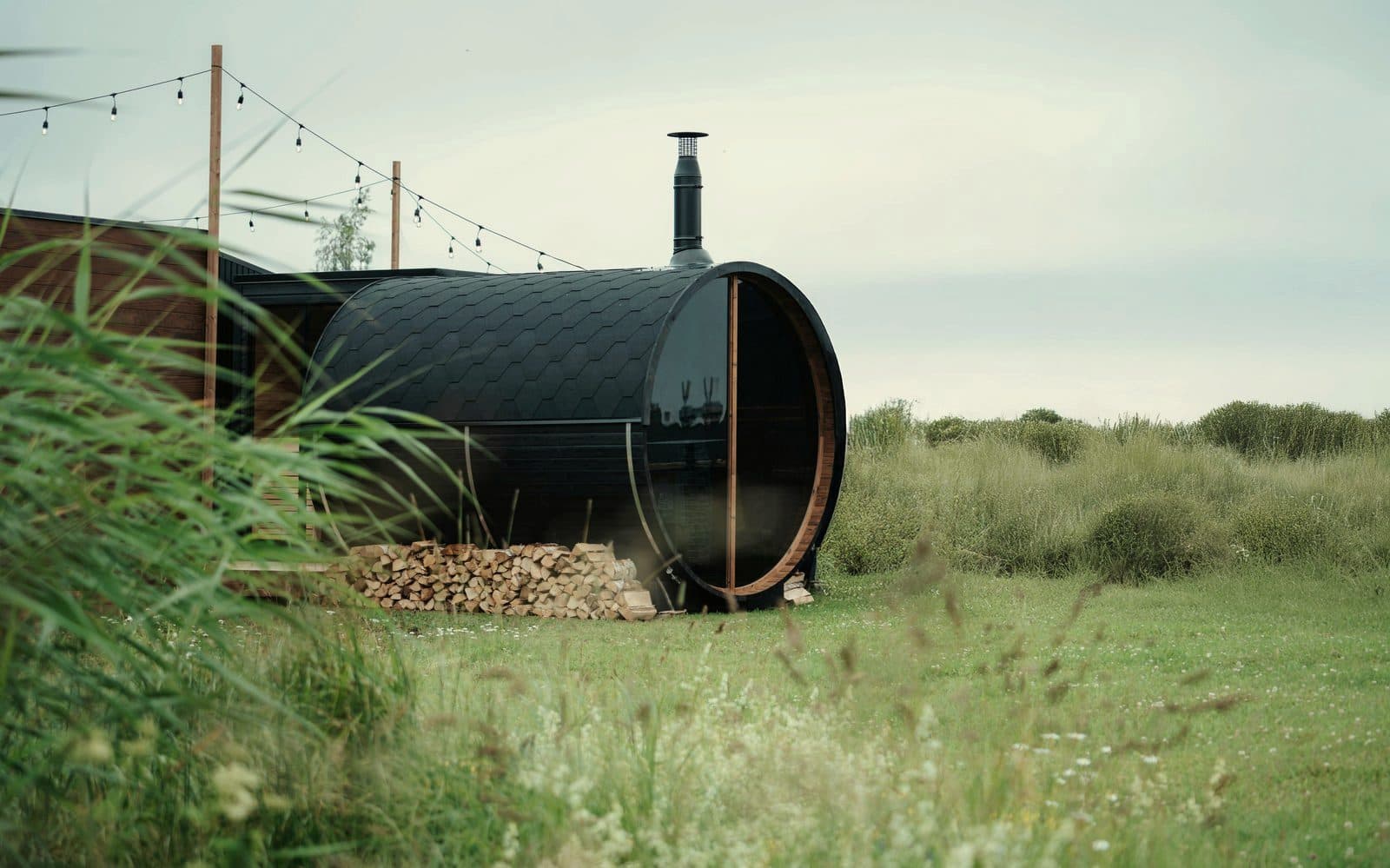
Across the builders we list, cabins are the mainstream and barrels are the entry point, not the other way round. Of 68 builders, 47 build cabins, 31 build mobile saunas, 22 build barrels and 7 build pods. Most do more than one of those, so the figures overlap.
- Barrel. Usually the cheapest way into a wood-fired sauna. The shape is often described as efficient to heat, on the argument that a curved ceiling leaves less dead air above the benches — that is a reasonable account rather than a measured one, and we have not seen it tested. The trade-offs are more concrete: bench layout is fixed by the curve, headroom at the edges is poor, and a barrel reads as a barrel in a garden. Staves can shrink and gap in dry spells and swell back in wet ones, which is normal behaviour rather than a fault, but it surprises people.
- Cabin. A rectangular timber building. More usable internal space for the same footprint, easier to insulate properly, easier to fit a bench you can lie down on, and much easier to make look deliberate next to a house. Heavier, and usually more expensive for the same capacity.
- Pod. A curved or faceted cabin. Mostly a design choice; the practical characteristics sit between the two above.
- Mobile — horsebox, trailer or container. A different purchase with a different set of questions: towing weight, road legality, and where it will be sited when it is not moving. Our mobile sauna business guide covers the operating side; the buying side is largely the same as a cabin plus a vehicle.
The routes
This is the decision that determines your lead time, your legal position and who is responsible when something is wrong.
- Stock or kit, bought off a website. You buy an existing product, it is delivered, you or a fitter assemble it. Fastest, cheapest, and the only route that reliably carries the 14-day cancellation right described below. Narrower than the search results suggest — only 12 of our 68 builders sell a kit at all.
- Made to order from a standard range. A published model, built for you, sometimes with choices of timber, glazing or layout. The commonest route in the UK. Whether it counts as "made to your specification" for cancellation purposes depends on how much you specified, and it is a genuinely grey area.
- Bespoke design and build. Drawn for your site. Longest lead time, highest cost, most control, and no cancellation right once it is under way.
- Self-build. A different project entirely, covered by our build guide. Worth saying plainly: the saving over a delivered sauna is narrower than materials prices suggest, and it costs you your weekends.
If you have never sat in a wood-fired sauna for a full session, do that before choosing any of the above. An hour in one tells you more about the size you need than any drawing, and it is the cheapest research available.
Sizing — and the number suppliers do not print
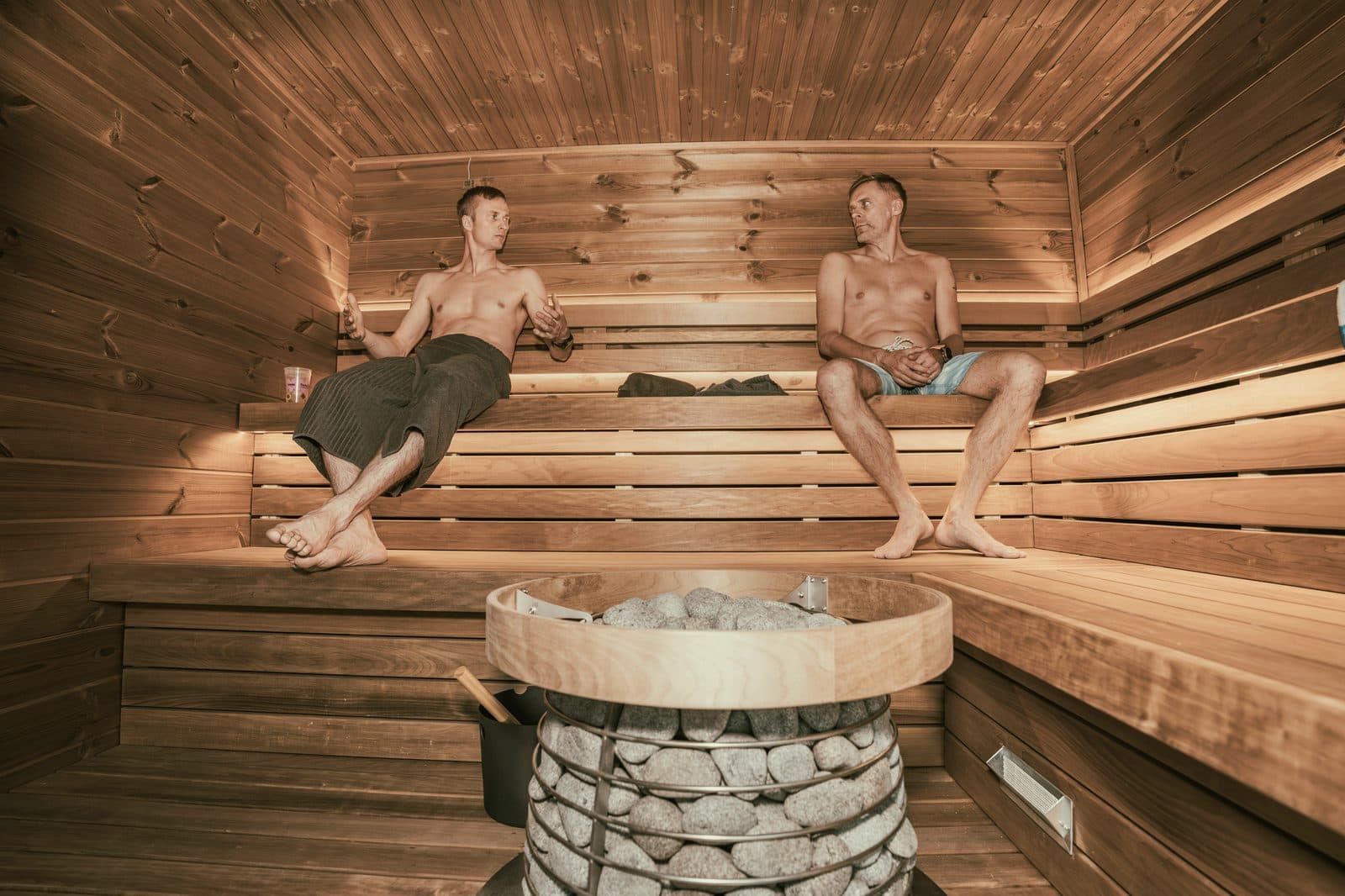
Capacity is the figure every supplier publishes and the one most likely to disappoint. A sauna sold as four-person seats four adults upright, shoulder to shoulder, for the length of a session. That is a different thing from four people using it comfortably.
Two measurements matter more than the headline number:
- Bench length. Whether anyone can lie down. A bench has to be at least as long as the person on it, so most adults need around 1.8 metres of clear run, and two metres to do it without curling up. Very few small saunas have either. If lying down matters to you — and for many people it is the whole point — measure the bench, not the room.
- Bench height and the gap above it. Heat stratifies sharply in a sauna. The upper bench is where the heat is, so the distance from the top bench to the ceiling determines what the session actually feels like. A low ceiling with a high bench can be unusable; a high ceiling with a low bench is a cold sauna with a hot roof.
Then the door, which people forget until it is installed. Check which way it swings, whether it clears the lower bench, and — for any sauna at all — that it opens outwards without a latch that can jam. That last point is a safety matter rather than a comfort one.
Stove sizing is a separate question with its own arithmetic, and it interacts with insulation, glass area and the fact that a British garden in February is a good deal colder than the conditions most manufacturers size for. Our stoves guide covers it properly, including where the standard sizing rule misleads. The buying-side point is narrow: if the sauna and the stove come from different suppliers, nobody has taken responsibility for matching them. Ask, in writing, who has.
What the price covers — the exclusion list
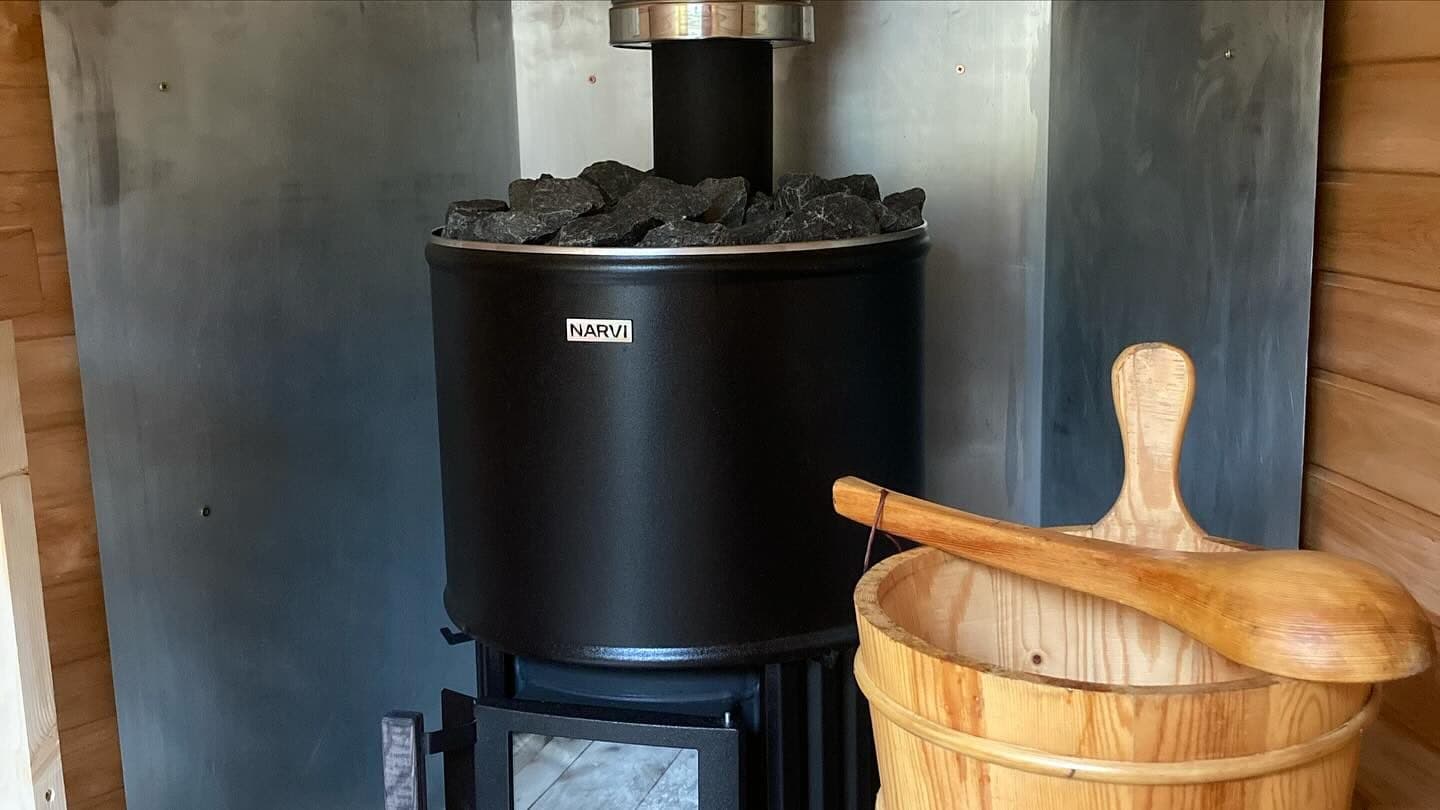
This is the most useful section on the page. Our cost guide found, checking live UK supplier pages, that a wood-fired sauna advertised at a given price may or may not include the stove — some suppliers build it in, others sell it as an extra running to a substantial fraction of the sauna's own cost. That single variance is enough to make two quotes uncomparable.
The stove is the largest exclusion, not the only one. Test every quote against this list and ask for each line to be written in or written out:
- The stove. Included, or extra? If extra, which model, what output, and who sized it?
- The flue kit. Frequently separate from the stove even when the stove is included. It is not a small item.
- Roof or wall flashing and the penetration. Who makes the hole, who weatherproofs it, and who warrants it if it leaks.
- The base. Almost never included. A sauna needs a level, load-bearing, free-draining base, and preparing one can be a job in itself.
- Delivery. To the kerb, to the garden, or to the spot? These are three different prices.
- Offload. Whether a crane or HIAB is needed, and whether the quoted delivery includes one.
- Assembly or installation. And if included, how many hours are allowed before extras start.
- Electrics. Even a wood-fired sauna usually wants a light, and lighting in a wet, hot room is not a DIY job.
- Benches, backrests, duckboards, heat shield, door furniture, stones. Stones in particular are sometimes sold separately, and a stove without stones does not work.
- VAT. Check whether the headline figure includes it. Business and consumer suppliers present this differently.
One question does most of the work here: "What is the total figure I will have paid when this sauna is standing on my base, connected, and ready to light?" A supplier who answers it directly is telling you something useful about how they operate. A supplier who cannot is telling you something too.
Judging build quality from a listing
You will usually be looking at photographs and a specification rather than the actual building. Some things can be judged that way; some cannot, and it is worth being clear about which is which.
Timber
Among the 68 builders we list, the timber most often named is thermally modified softwood — thermowood — cited by 36 of them, then spruce (27), cedar (19), pine (12) and larch (10). Fourteen name no timber at all, which is itself worth noticing on a specification.
What that tells you is what the UK trade has settled on, not what is objectively best. We are not in a position to rank them: the comparative sources available are timber merchants and cladding sellers writing about their own products, which is fine for their specifications and not evidence for a verdict. What can be said plainly is narrower and still useful — resinous softwoods such as standard pine, larch and Douglas fir can weep resin at sauna temperatures, which is why interiors are typically clad in thermally modified timber, spruce, cedar or another low-resin species rather than whatever the frame is made of. If a specification does not distinguish the interior lining from the exterior cladding, ask.
What a photograph will not show you
- The vapour barrier. This is the one that ends saunas. A sauna generates enormous quantities of moisture; without a properly sealed barrier behind the internal lining, that moisture drives into the structure and the building rots from the inside while looking fine from the outside. Ask what the barrier is, how the joints are sealed, and how it is detailed around the stove and the flue.
- Insulation depth. Determines running cost and whether the sauna is usable in winter.
- What the frame is made of, and how it is treated.
- Fixings. Exposed metal in a sauna gets hot enough to burn skin. Internal fixings should be concealed or countersunk and set below the surface.
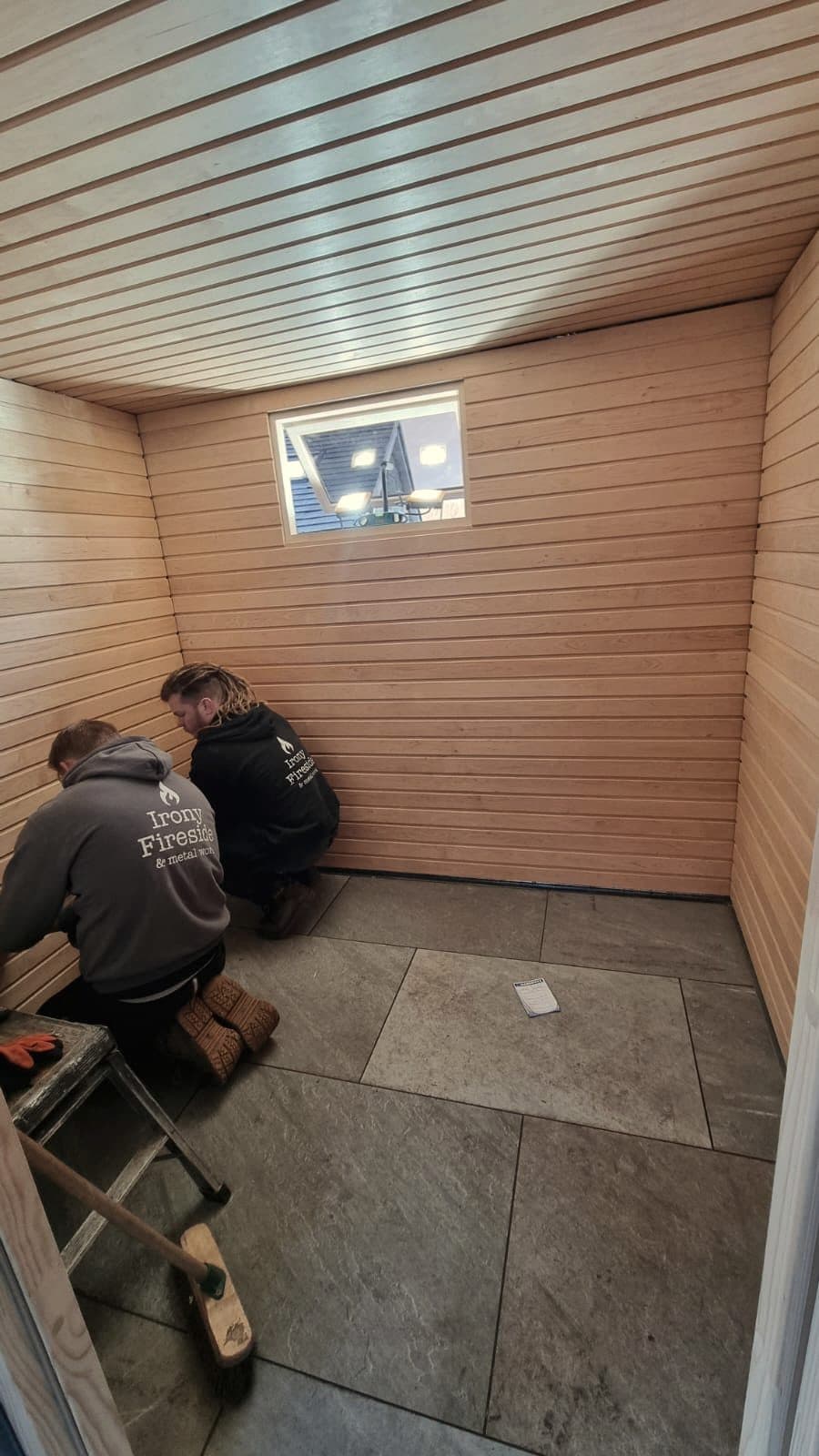
What a photograph will show, if you look for it: how the cladding meets at corners, whether boards run true, how the door is hung, whether the glass is sealed into a frame or simply bedded, and how tidy the flue penetration is. Workmanship is fairly visible at the joints.
Ask for photographs of a completed build that is not the one on the home page — ideally one a few years old. A supplier confident in their work can usually produce one.
Judging the supplier
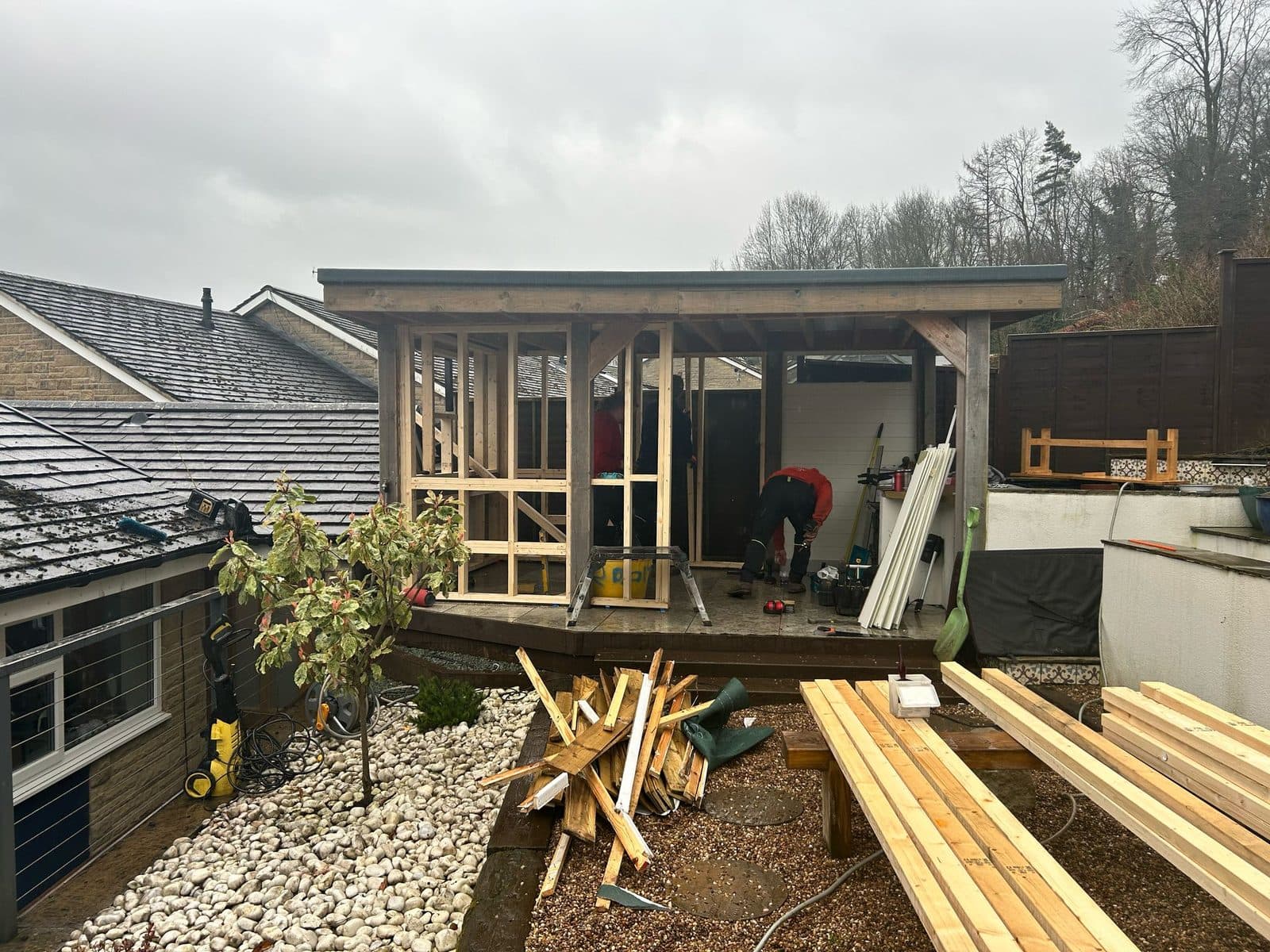
The market has makers, importers and resellers in it, and all three present much the same way online. Distinguishing them matters because it determines your lead time, who holds the warranty, and who is standing there when something needs fixing in year three.
Telling them apart
None of these is damning on its own. Together they usually settle it.
- Is there a workshop, and can you visit it? The most direct test available, and the one most worth using.
- Do the photographs show their own work in progress, or only finished products in studio settings? Manufacturer photography and catalogue photography look different.
- Does the model range match a European manufacturer's range? Reverse image search on a product photograph answers this quickly.
- Lead time. A stated one to two weeks generally means stock. Three to six months generally means it is being built. Both are legitimate; they are just not the same purchase.
- Where do warranty claims go — to them, or to a manufacturer abroad?
Checks worth doing before a deposit
- Companies House. Free, and takes two minutes. Look at how long the company has traded, whether accounts are filed and current, and whether the directors have a string of dissolved companies behind them at the same address. A young company is not a problem in a growing trade; a pattern of short-lived companies is.
- Check the trading name against the legal entity on the contract. They are often different, and the entity on the contract is the one you would have a claim against.
- Read the reviews for specifics. Reviews describing bench heights, delivery days and named staff are worth more than a wall of five-star sentences. Look for how the company answers a bad review; that is usually more informative than the review.
- Ask for two customers you can speak to whose saunas have been in use for at least a year.
Our builder directory lists 68 UK sauna builders with what we have been able to verify about each. We take no commission and inclusion is not endorsement — it is a starting point for the checks above, not a substitute for them. Our guide to choosing a builder goes further into the selection itself.
Deposits, contracts and where you actually stand
No seller's buying guide covers this properly, and it is the part most likely to matter. Everything below is from the legislation itself rather than from anyone's summary of it.
One limit applies to all of it. These are consumer rights. If you are buying a sauna for a business — an operator putting one on a commercial site — you are not a consumer and none of the protections below apply to you. Your position is whatever your contract says, which is a good reason to read it.
What the goods have to be
Under the Consumer Rights Act 2015, every contract to supply goods is treated as including terms that the goods are of satisfactory quality (section 9), fit for any particular purpose you made known before buying (section 10), and as described (section 11). Satisfactory quality is what a reasonable person would consider satisfactory given the description, the price and the other circumstances, and the Act expressly includes durability in that. Information a trader gives you about the main characteristics becomes a term of the contract, which is what makes a written specification worth having.
The limit, stated in the same section: the quality term does not cover defects specifically drawn to your attention before you bought, or which your own examination ought to have revealed. Inspecting a sauna and then complaining about something you could have seen is a weak position.
If it is wrong when it arrives
- 30 days to reject it outright. The short-term right to reject runs to the end of 30 days beginning the day after ownership passes, delivery happens and the trader completes any installation they agreed to do (section 22). For a sauna that is installed rather than dropped off, the clock therefore starts at the end of the installation, not at delivery. If you ask for a repair, the clock pauses while you wait.
- Then repair or replacement (section 23), which the trader must do within a reasonable time and without significant inconvenience to you, bearing all costs including labour and materials. You have to give them a reasonable opportunity to do it before escalating.
- Then a price reduction or a final rejection (section 24) — one or the other, not both. On a final rejection the refund can be reduced to reflect your use of the goods, except that no deduction can be made if you reject within the first six months. That six-month window is a genuinely strong position and it is not widely known.
The 14-day cancellation right, and why it probably does not apply to you
The Consumer Contracts Regulations 2013 give a 14-day right to cancel, ending 14 days after the goods come into your physical possession. Two limits matter enormously for saunas.
First, it only applies to distance and off-premises contracts — buying online, by phone, or somewhere that is not the trader's business premises. If you go to a showroom or a workshop and order there, the right does not exist at all. That is an on-premises contract and it is outside the scope of the regulations entirely.
Second, and more important here, the right does not apply to — quoting the regulation exactly — "the supply of goods that are made to the consumer's specifications or are clearly personalised".
Put that against the shape of the UK market. Of the 68 builders we list, 53 do custom work and 12 sell a kit. Most sauna buying in this country is made to order, which is precisely the category the cancellation right excludes. A stock barrel ordered from a website is cancellable. A cabin built to your dimensions is not, and you should assume you are committed from the moment you pay.
The grey area is the middle: a standard model with some choices made. Where the line falls has not been settled for saunas specifically, and anyone telling you confidently which side you are on is guessing. The practical response is not to rely on the right at all — treat the deposit as committed money and do the checks before you pay it, not after.
Protecting the money
Section 75 of the Consumer Credit Act 1974 makes the card issuer jointly and severally liable with the supplier for misrepresentation or breach of contract, so you can claim against the card company if the supplier fails. It applies where the item's cash price is more than £100 and not more than £30,000. Both ends of that range matter for saunas: a bespoke build can exceed the upper limit, and section 75 would not reach it.
Paying the deposit by credit card is the single cheapest piece of protection available, and it works even if only part of the price goes on the card. Debit card chargeback is a scheme rule rather than a statutory right — weaker, time-limited, and not a substitute.
Before you pay anything, get in writing
- The full specification, including timber, insulation, vapour barrier, glazing and stove model.
- The total price with the exclusion list in the previous section resolved line by line.
- The lead time, and what happens if it is missed.
- What the deposit secures and whether any part of it is refundable.
- The legal entity you are contracting with.
- The warranty terms, in full rather than as a headline duration.
Delivery, access and siting
The commonest expensive surprise in this trade is not a bad sauna. It is a good sauna that cannot get to where it is going.
A delivered cabin arrives as a large, heavy, rigid object on a lorry. Before ordering, measure honestly:
- Access width along the entire route, at its narrowest point — usually a side gate, an alley or the gap between a house and a boundary. Measure the gap, not the gate.
- Overhead clearance, including branches, cables and a porch roof.
- Turning space for a long item, which is a different constraint from width.
- Ground conditions — whether a lorry or a crane can stand where it needs to stand, and what the ground will do in the wet.
- Whether a crane or HIAB is needed, whether the road can be closed if it is, and who pays for both.
Then establish, in writing, who carries the risk in transit and at what point it passes to you. If the sauna is damaged on the lorry, the answer to that question is the whole conversation.
The base
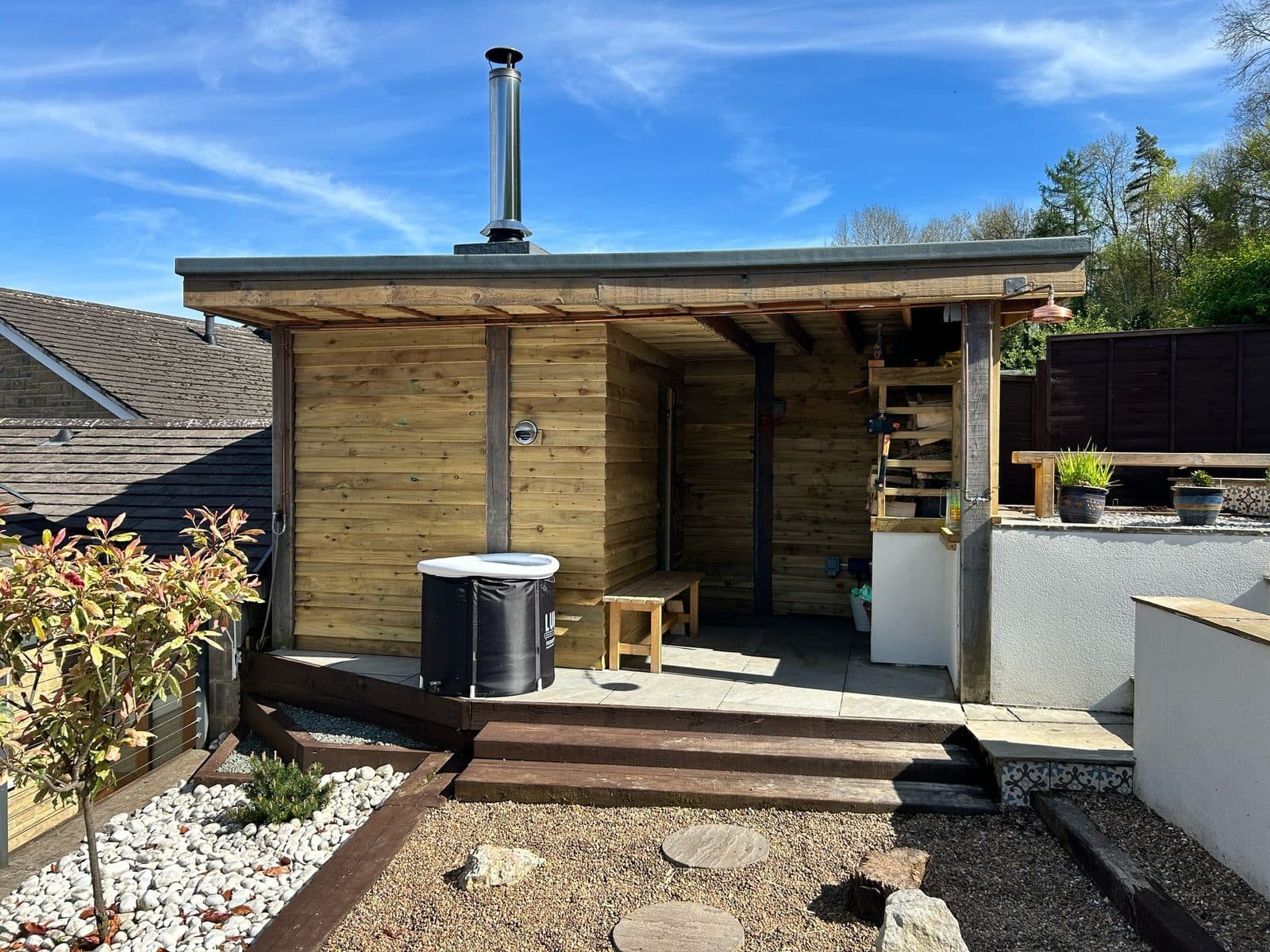
Almost no quote includes the base, and it is not optional. A sauna needs a level, load-bearing, free-draining foundation — concrete pad, paving on a compacted sub-base, or a screw-pile or bearer arrangement. Two things are worth building in from the start: air movement underneath, because a timber building sitting on damp ground rots from below, and drainage away from the structure, because saunas produce water and so does British weather.
Ask the supplier for their base specification before you order, and have it ready before delivery day. A sauna sitting on pallets waiting for a base is a sauna getting wet.
Where to put it
Practical siting considerations that people wish they had thought about: distance from the house on a cold night in a towel; the flue's position relative to your neighbours' windows and prevailing wind; somewhere to store and season a winter's firewood; and where you will actually stand to cool down. Boundary distances are also a planning question, covered below.
The rules you inherit as the buyer
Short section, mostly routing — but with one point that has to be made before you order rather than after.
These obligations sit with you, the owner, not with the supplier. A salesperson saying no permission is needed is not a defence if they turn out to be wrong, and they are not the one who receives the enforcement notice. Establish the position for your own site before paying a deposit.
- Planning permission. Often not required for a garden sauna under permitted development, but "often" is doing real work in that sentence — it depends on siting, size, height, boundary distance, and whether you are in a conservation area, a National Park or a listed property's curtilage. Our planning permission guide covers it, including the outbuilding rules that decide most cases.
- Building regulations. Approved Document J covers solid-fuel appliances — flue, hearth, clearances to combustibles and air supply. Whether your sauna is in scope turns on the exempt-building rules, and the answer is not always the intuitive one. The stoves guide sets out what J actually asks for.
- Smoke control areas. This is the one to settle before ordering. No wood-fired sauna stove is on the Defra exempt-appliance list — none, in any UK nation. We searched the complete approved lists for England, Wales, Scotland and Northern Ireland; the word "sauna" does not appear in any of them, and neither does any major sauna stove manufacturer. So if you are in a smoke control area, there is no wood-fired stove that solves the problem, and no supplier can sell you one that does. Whether the rules reach a garden sauna at all is a genuinely unsettled question, and our smoke control guide works through it honestly, including what nobody yet knows.
If you are buying to run public or paid sessions, the position changes substantially — insurance, risk assessment and duties to guests all arrive at once. The business guide and the insurance guide are the starting points.
Warranty, aftercare and what fails
Three different things get called a guarantee, and they are worth separating. Your statutory rights under the Consumer Rights Act cannot be signed away and exist whether or not anything is written down. A warranty or guarantee is a voluntary extra the seller or manufacturer offers on top; it can be generous or nearly worthless, and the duration tells you very little on its own.
What to establish about any warranty offered:
- What it covers separately — structure, stove, glass and workmanship are often on different terms, and the headline number is usually the longest of them.
- What voids it. Commonly: burning wet or treated wood, modifying the stove or flue, siting it somewhere unsuitable, or failing to carry out stated maintenance.
- Who honours it — the supplier or a manufacturer abroad — and what happens if the supplier ceases trading.
- Whether spare parts are available, and for how long. This is a real buying criterion. A stove whose door glass, rope seal and grate can be bought in five years' time is a different proposition from one whose importer has moved on.
What actually fails, and whose fault it is
Most problems that show up in years two to five are ownership problems rather than manufacturing ones, and knowing which is which before you buy tends to prevent them:
- Moisture damage from inadequate ventilation or a failed vapour barrier. The serious one. A sauna needs to dry out between uses — leave the door open after a session.
- Wet wood. Burning unseasoned timber produces less heat, more soot and more tar, shortens stove life and coats the glass. It is the commonest self-inflicted failure.
- Flue and chimney neglect. Soot builds; it needs sweeping at a stated frequency, and doing so is also usually a warranty and insurance condition.
- Stone degradation. Sauna stones break down with repeated heat cycling and need replacing periodically — a consumable, not a fault.
- Door seals, rope gaskets and hinges, which are wear items.
- Corrosion, accelerated markedly at coastal sites. Worth raising specifically if you are near the sea.
The checklist
Condensed from the sections above. Designed to be taken to a supplier, not read once.
Before you shortlist
- Sit in a wood-fired sauna for a full session.
- Decide shape, route and budget in that order.
- Check the planning and smoke control position for your own address.
- Measure the access route at its narrowest point, and the overhead clearance.
Questions for every supplier
- What is the total figure when it is standing on my base, connected and ready to light?
- Is the stove included? The flue? The stones? The flashing?
- Who sized the stove for this cabin, and against what assumptions?
- What timber, inside and outside, and what is the vapour barrier?
- What is the insulation, and how thick?
- How long is the bench, and can an adult lie down on it?
- What is the current lead time, and what happens if it slips?
- Do you build these yourselves, and can I see the workshop?
- Can I speak to two customers whose saunas are over a year old?
- What is your base specification?
- Who carries the risk in transit, and when does it pass to me?
- What exactly does the warranty cover, what voids it, and who honours it?
- Are spare parts available, and for how long?
Before you pay the deposit
- Check the legal entity on Companies House, not just the trading name.
- Get the specification, total price, lead time and warranty in writing.
- Pay by credit card where the price is over £100 and not over £30,000.
- Assume you have no right to cancel unless you are buying stock at a distance.
Next steps
Three places to go from here, depending on what is still open:
- If the question is money — the cost guide has real 2026 figures checked against live UK supplier pages, including what the cheap end actually buys.
- If the question is the stove — the stoves guide covers sizing, stone mass, materials and what UK regulation asks of you.
- If the question is who to buy from — our directory of 68 UK sauna builders is the starting point, and the guide to choosing a builder covers the selection itself.
And the recommendation that costs least and changes most: book a session at a wood-fired sauna near you before committing to anything. Sitting in one for an hour settles questions about size, heat and bench height that no specification can.
Frequently asked questions
- Not reliably. Some UK suppliers build the stove into the advertised price and others sell it as a separate item, and the difference is large enough to make two quotes uncomparable. The flue kit, stones and flashing are also frequently priced separately. Ask for a single total figure covering the sauna standing on your base, connected and ready to light.
- Often not. The 14-day cancellation right under the Consumer Contracts Regulations 2013 applies only to distance and off-premises contracts, so ordering in a showroom is outside it entirely. More importantly, the right does not apply to goods made to the consumer's specifications or clearly personalised — which covers most made-to-order sauna builds. Of the 68 UK builders in our directory, 53 do custom work and only 12 sell a kit, so most sauna buying in Britain falls outside the cancellation right. Treat a deposit as committed money.
- Among the builders in our directory who publish a lead time, the range runs from about one to two weeks at the stock end to three to six months for bespoke work, with six to twelve weeks common in the middle. Lead time tracks the route rather than the price: stock and kits ship quickly, made-to-order and bespoke builds take months. If you want the sauna working for winter, ask about lead time before anything else.
- Frequently not, because many garden saunas fall under permitted development as outbuildings — but it depends on size, height, siting, boundary distance and whether the property is listed or in a conservation area or National Park. The obligation sits with the owner rather than the supplier, so establish the position for your own address before paying a deposit rather than relying on a salesperson's assurance.
- No. We searched the complete Defra approved-appliance lists for England, Wales, Scotland and Northern Ireland and no sauna stove appears on any of them, nor does any major sauna stove manufacturer. In a smoke control area there is therefore no wood-fired stove that resolves the problem. Whether smoke control rules reach a garden sauna at all is a separate and genuinely unsettled question.
- Where you can, yes. Section 75 of the Consumer Credit Act 1974 makes the card issuer jointly and severally liable with the supplier for misrepresentation or breach of contract, and it applies where the item's cash price is more than £100 and not more than £30,000. It works even if only part of the price goes on the card. Debit card chargeback is a weaker, time-limited scheme rule rather than a statutory right.
- Access. A delivered cabin arrives as a large rigid object on a lorry, and the commonest costly surprise is a good sauna that cannot reach the spot it was bought for. Measure the narrowest point of the whole route, the overhead clearance and the turning space before ordering, and establish in writing whether a crane is needed and who pays for it.
Does a wood-fired sauna price usually include the stove?
Can I cancel a sauna order within 14 days?
How long does a wood-fired sauna take to arrive in the UK?
Do I need planning permission for a garden sauna?
Is any wood-fired sauna stove Defra exempt for a smoke control area?
Should I pay a sauna deposit by credit card?
What is the most common expensive mistake when buying a sauna?
Sit in one before you buy
An hour in someone else's sauna will tell you more about size, heat and bench height than any specification. These listings run public or communal sessions.
 Holding image
London, London
Skuna Sauna Boat is a wood-fired floating sauna moored at West India Quay, Canary Wharf, operating two docked sauna…
 Holding image
Bristol, South West
Fire & Ice Wellness operates two wood-fired saunas at Westbury Wildlife Park in Westbury-on-Trym, Bristol, set within a…
 Holding image
Brighton, South East
Beach Box Spa is an all-year-round, wood-fired public beach sauna spa operating three saunas — Leil (a converted…
Holding imageStornoway, Scotland
Saltbox Sauna operates three mobile wood-fired saunas along the coastline of Lewis and Harris in the Outer Hebrides,…
Holding imageRhosneigr / Llanberis, Wales
Sawna Bach is a family-run wood-fired sauna operator with two fixed sites in North Wales: a beach sauna at Porth Tyn…
Holding imageChristchurch, South West
Slomo is a multi-site sauna and contrast therapy operation founded by Bestival creators Robby and Josie da Bank,…
Related guides
How Much Does a Wood-Fired Sauna Cost in the UK?
Real 2026 prices for wood-fired saunas — kits, delivered barrels, stoves, self-builds and running costs — checked against live UK supplier pages, with no sauna to sell you.
Building & planningWood-Fired Sauna Stoves Explained (UK)
How sauna stoves work, how to size one, and what UK law actually asks of you — checked against manufacturer specifications and primary legislation, with no stove to sell you.
Building & planningHow to Choose the Right Sauna Builder
What to ask, what to look for, and common mistakes to avoid when commissioning a sauna build in the UK.
Browse the directory
The monthly digest
New saunas and new guides, once a month. No spam, unsubscribe any time. Your address is used only for the digest — privacy notice.